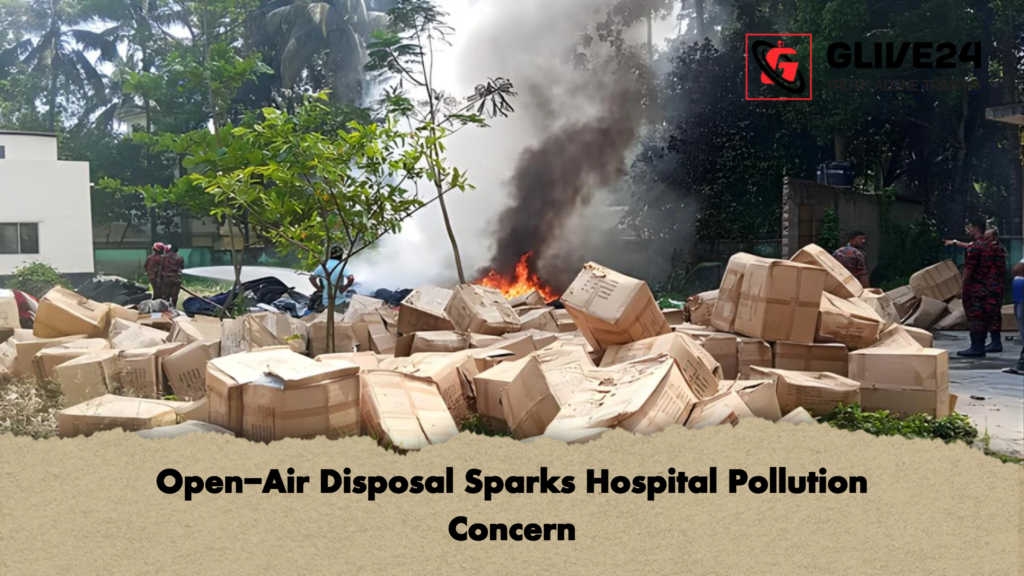
A large quantity of expired medical supplies, including N95 masks and personal protective equipment (PPE), was destroyed by burning in the open courtyard of Faridpur Medical College Hospital in southern Bangladesh, triggering severe environmental and health concerns among patients, healthcare workers, and visitors.
The disposal operation, which took place from Monday morning until late afternoon, released thick black smoke across the hospital premises. Eyewitnesses reported that the smoke engulfed wards and outdoor areas, causing immediate discomfort. Several people experienced coughing, eye irritation, and breathing difficulties. Patients undergoing treatment and their attendants were particularly affected.
One visitor, Aminul Haque, who had brought his wife from Nagarkanda for treatment, described the situation as distressing. He said that dense smoke suddenly spread across the hospital compound, making it difficult to breathe and causing a burning sensation in the eyes.
According to hospital sources, the destruction was carried out with assistance from the fire service between 10:00 am and 4:00 pm. Authorities stated that prior approval had been obtained from the Ministry of Health and Family Welfare. However, officials were unable to provide a complete list of the destroyed items at the time of reporting.
Omar Faysal, assistant director of the hospital and member secretary of the destruction committee, stated that such disposal had not taken place since 2016. He explained that expired and unusable medical, surgical, and radiological (MSR) linen items accumulated in various wards were identified, documented through a condemnation committee, and submitted for ministerial approval. Following clearance, the items were destroyed in the presence of representatives from the district administration, public works department, and environment authorities.
He further confirmed that a total of 39,570 items across 16 categories were incinerated. However, he could not produce the official approval documents or the full inventory when requested.
The burning took place just 20–30 metres from a newly constructed nine-storey hospital building. Residents and staff reported that nearby vegetation, including at least two coconut trees, was damaged due to heat and smoke exposure.
A visit to the site revealed cartons of PPE and KN95 mask packs being burned in large piles. Packaging indicated that each carton contained 50 PPE sets, weighing approximately 13.5 kilograms. The supplies had been imported from China in 2020 with a declared shelf life of two years. In addition, used bedsheets, pillow covers, curtains, and other unusable hospital materials were also disposed of in the fire. A fire service team was present to control the blaze and prevent it from spreading.
Items Destroyed (Summary)
| Category | Description | Quantity |
|---|---|---|
| PPE kits | Imported protective suits (2020 batch) | Included in total |
| KN95 masks | Respiratory protective masks | Included in total |
| Linen items | Bedsheets, pillow covers, curtains | Included in total |
| Medical MSR items | Miscellaneous expired supplies | Included in total |
| Total items | 16 categories combined | 39,570 units |
The open burning of medical waste has raised serious questions regarding compliance with environmental and waste management regulations. Experts noted that under Bangladesh’s Medical Waste Management Rules (2008), such waste must be treated and destroyed using controlled methods such as incineration in designated facilities. Open-air burning is considered a violation of these standards.
Environmental laws, including the Bangladesh Environment Conservation Act of 1995, also prohibit activities that generate harmful air pollution. Legal provisions under the Penal Code further classify actions causing public nuisance and environmental harm as punishable offences.
Local civic group leader Awlad Hossain criticised the incident, stating that medical waste must be handled through proper procedures and that such irregularities from responsible institutions were unacceptable, especially within a major healthcare facility.