
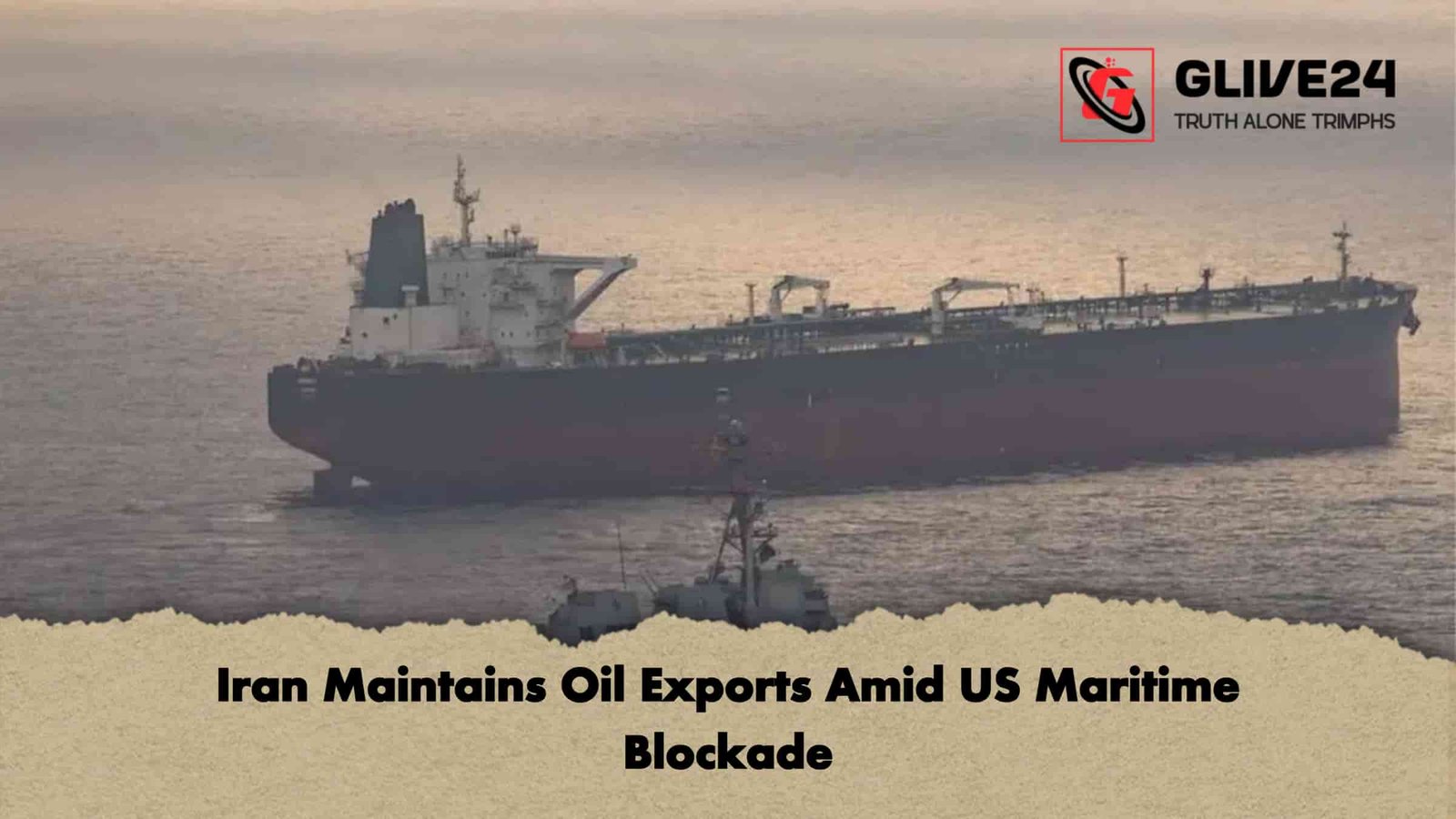
Iran has continued loading crude oil at its export terminals, with approximately 4.6 million barrels of oil reportedly handled, according to maritime intelligence data from the analytics firm TankerTrackers. The figures suggest that export operations have remained active despite restrictions linked to a United States naval blockade.
The assessment is based on satellite imagery analysis conducted by TankerTrackers, which monitors oil infrastructure activity, including tanker movements, storage levels, and loading operations at key Iranian export facilities. This remote sensing approach enables continuous observation of maritime logistics even in areas where direct access is limited or restricted.
According to the analysis, the recorded loading volume of roughly 4.6 million barrels indicates ongoing utilisation of Iran’s export infrastructure. The activity observed at terminals is consistent with sustained operational throughput rather than a temporary halt or slowdown in exports. The data further suggests that Iran has been able to maintain sufficient logistical coordination to support continued crude oil handling under constrained maritime conditions.
TankerTrackers also noted that the accumulation of crude oil at export terminals may provide Iran with additional short-term storage flexibility. This effectively creates a temporary buffer, allowing the country to manage fluctuations in shipping schedules and external pressures on its export routes. However, the report does not specify individual terminal breakdowns or vessel-level distribution of cargo.
The findings come against the backdrop of continued United States efforts to restrict Iranian oil exports. These measures include maritime enforcement actions and broader sanctions aimed at limiting Iran’s ability to transport crude oil through international shipping lanes. Despite these developments, the satellite-derived data indicates that export-related activity has not ceased.
No independent verification of individual shipment destinations or buyer details was included in the report, and the analysis is confined to observable physical activity at ports and associated tanker movements.
Reported export activity overview
| Category | Detail |
|---|---|
| Reporting source | TankerTrackers (maritime analytics firm) |
| Data collection method | Satellite imagery analysis |
| Observed crude oil volume | Approximately 4.6 million barrels |
| Infrastructure monitored | Iranian export terminals |
| Operational context | Ongoing United States naval blockade and export restrictions |
| Key implication | Temporary increase in storage flexibility at terminals |
| Scope of data | Terminal-level activity; no vessel-specific breakdown provided |
The analysis is based entirely on satellite monitoring of physical infrastructure and maritime traffic patterns, as compiled by TankerTrackers, and reflects observed activity during the reported period.