
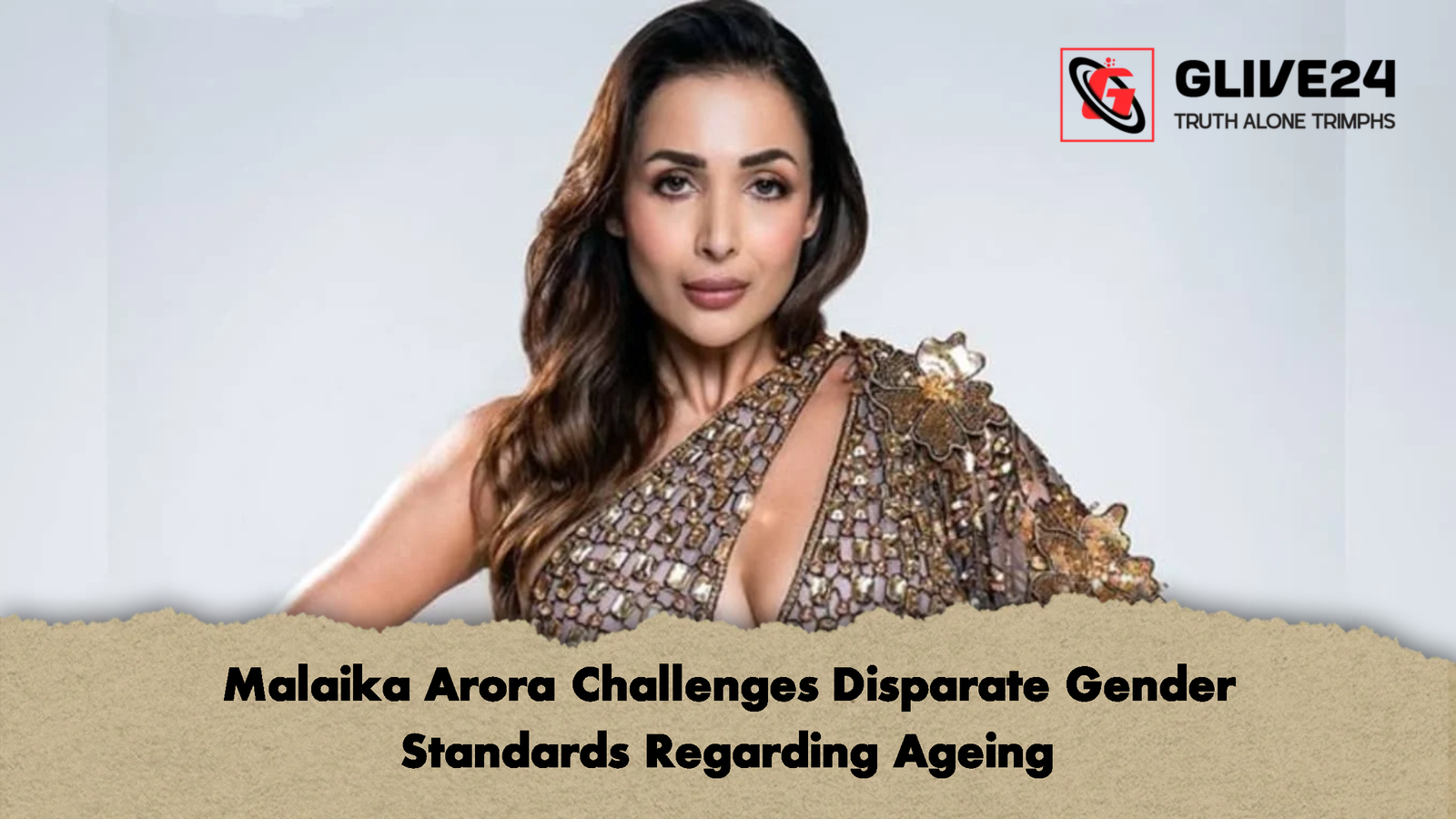
For over three decades, Malaika Arora has remained a prominent figure within the Indian entertainment industry. From her seminal performance in “Chaiyya Chaiyya” to the widespread success of “Munni Badnaam Hui,” Arora has sustained a significant profile in cinema and television. Despite being 52 years of age, her recent participation in the track “Poison Baby” last year demonstrated that her professional vitality remains intact. While her physical fitness is a frequent subject of public interest, Arora has recently utilised her platform to address the deeper societal implications of ageing in the spotlight.
Appearing on the talk show “The Right Angle Show,” the actress and entrepreneur discussed the intersection of aesthetic maintenance, maturity, and the societal pressures placed upon women. When asked if the concept of growing older occupies her thoughts amidst the frequent praise for her appearance, Arora offered a comprehensive view of her psychological journey.
Personal Growth and Future Aspirations
Arora acknowledged that her relationship with her age has fluctuated throughout her career. “There was a time when I was preoccupied with the number,” she admitted. “But I have reached a stage where it simply does not enter my mind. I am focused on my professional output and engaging in the work I truly value.”
She articulated that she is currently experiencing what she considers to be the most rewarding phase of her life. Rather than viewing her age as a limitation, she framed her current status as a period of celebration and continued ambition. “I feel I am in the midst of the most fulfilled chapter of my life. There is still much I intend to accomplish and explore; therefore, these external metrics no longer hold weight for me.”
Confronting Gender-Based Double Standards
A primary focus of the interview was the evident disparity in how society perceives ageing in men versus women. Arora critiqued the tendency to define a woman’s value and career trajectory by her age—a scrutiny she highlighted as being conspicuously absent for male professionals in the industry.
Expressing her opposition to this inherent bias, she argued that the intrusive questions regarding beauty and relevance should be applied equally across genders if they are to be asked at all.
“These inquiries are almost exclusively directed at women,” Arora observed. “A man is rarely, if ever, questioned in this fashion. Women are constantly asked, ‘You were at your peak during your youth; how do you feel now? Do you still find yourself attractive?’ I have yet to see a male peer undergo a similar interrogation regarding his continued appeal at a certain age.”
Prioritising Psychological and Emotional Health
Moving beyond the physical, Arora suggested that an individual’s internal state is far more significant than any numerical milestone. She advocated for a holistic approach to beauty that prioritises mental and emotional stability over purely superficial appearances.
Arora concluded by noting that her daily drive is fueled by a desire for purpose rather than vanity. “External appearance is not the defining factor. While the public may focus on that, the emotional and mental aspects are what truly matter. My daily priority is how I feel when I wake up and what my mind requires for the day. I do not spend my time in front of the mirror assessing my looks; I seek to do work that provides inspiration to myself and makes my family proud.”
Through these reflections, Arora continues to advocate for a shift in the media landscape, moving away from age-centric narratives toward a more equitable appreciation of professional longevity and personal well-being.