
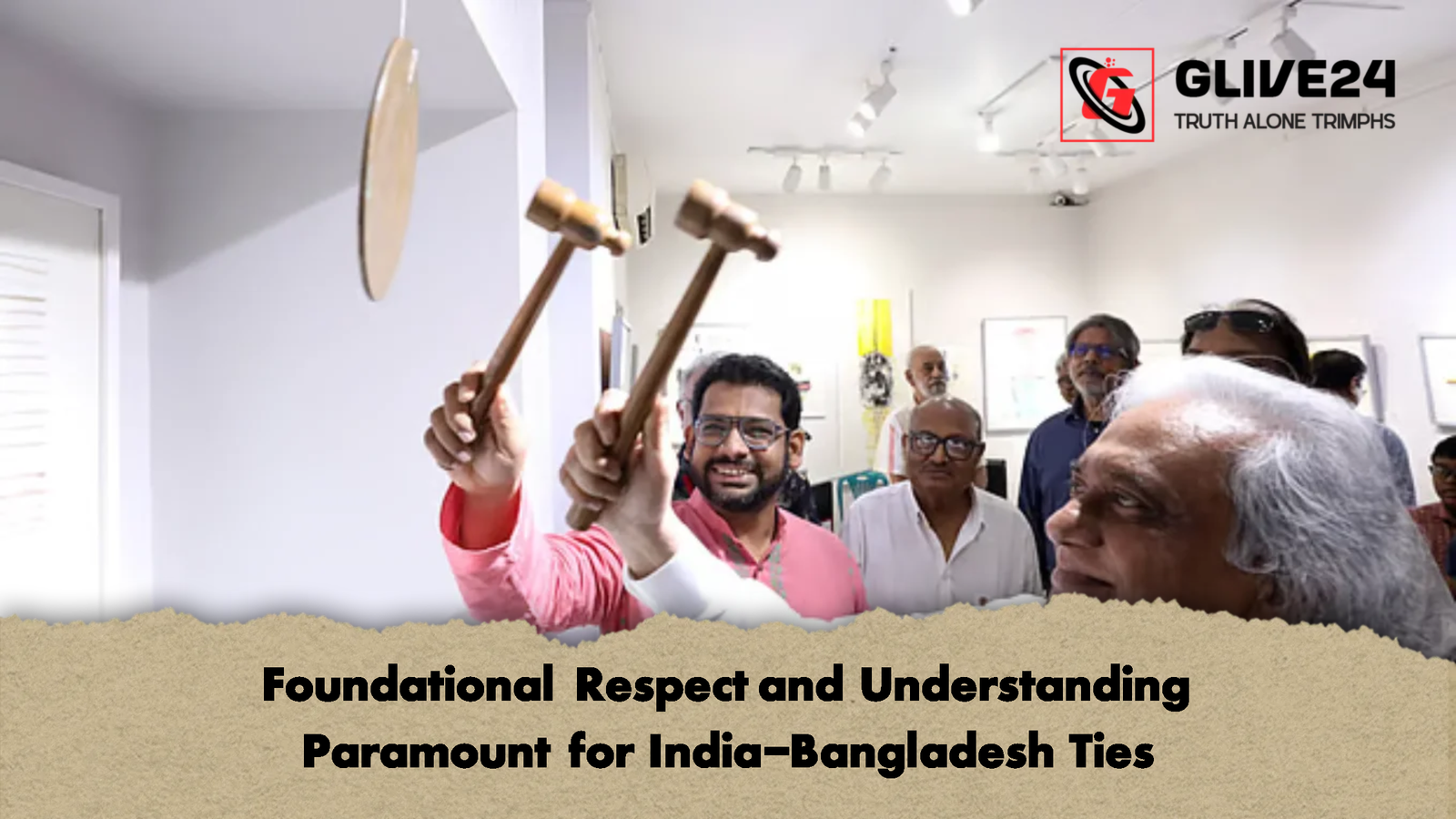
The Acting High Commissioner of India to Bangladesh, Pawan Badhe, has identified mutual respect and comprehensive understanding as the indispensable pillars for sustaining the positive momentum in the bilateral relationship between the two neighbours. Speaking at a diplomatic and cultural engagement in Dhaka on Saturday, 2 May, Mr Badhe observed that while recent years have yielded significant diplomatic advancements, the enduring strength of this partnership rests upon a shared commitment to acknowledging each other’s strategic perspectives and national interests.
The Acting High Commissioner noted that collaborative ventures in border security, infrastructure, and regional logistics have already produced tangible benefits. He asserted that these initiatives transcend mere diplomatic transactions, serving instead as the structural components for a more integrated and economically resilient South Asia.
Cultural Diplomacy and Societal Synergy
Mr Badhe’s remarks were delivered during his keynote address at the inauguration of a solo art exhibition by the distinguished artist Ranjit Das, held at Gallery Kaya in Uttara. The exhibition, featuring 65 contemporary works, provided a symbolic venue for the diplomat to discuss the multifaceted nature of the India-Bangladesh bond.
According to the Acting High Commissioner, the bilateral trajectory can achieve further elevation through consistent dialogue and deepened mutual trust. He placed particular emphasis on:
People-to-People Contact: Enhancing direct interaction between the citizens of both nations.
Cultural Exchange: Utilizing the arts to bridge societal divides and foster shared identity.
Youth Engagement: Encouraging the active participation of the younger generation to secure the future of the partnership.
Mr Badhe further commended Bangladesh’s ongoing developmental trajectory, reiterating India’s intent to remain a consistent partner in the nation’s economic progress. He expressed a firm belief that the combined influence of both states would act as a stabilising anchor for South Asian security.
Expansion of Multi-Sectoral Cooperation
In an increasingly complex global environment, the Acting High Commissioner argued that regional cooperation has moved from a preference to a necessity. He called for a coordinated approach among all stakeholders—including the media, academia, and the private sector—to ensure the relationship remains sustainable and effective. He reminded the assembly that the link between the two nations is rooted in much more than shared borders.
“The history, culture, and interpersonal relationships between the people of Bangladesh and India have deepened this bond beyond geographical proximity,” Mr Badhe stated. Moving forward, both administrations are focused on intensifying cooperation across several critical domains:
Trade and Investment: Focusing on the simplification of customs protocols and the promotion of cross-border industrial ventures.
Energy Security: Prioritising the enhancement of power grid connectivity and joint investments in renewable energy.
Connectivity: Improving multi-modal transport links, including rail, road, and maritime waterways, to streamline regional transit.
Academic Collaboration: Expanding scholarship programmes and fostering joint research initiatives between educational institutions.
The “Stick Drawings” Exhibition at Gallery Kaya
The formal opening of the exhibition was led by Abul Khair Litu, Chairman of the Bengal Foundation. Mr Litu emphasised that such gatherings serve as a vital conduit for intellectual and emotional exchange between creators and the public. He voiced his commitment to supporting initiatives that elevate the standard of artistic discourse within the region.
Providing a technical critique of the collection, the Director of Gallery Kaya, Gautam Chakraborty, highlighted Ranjit Das’s mastery of minimalism. He noted that the artist’s “Stick Drawings” utilise precise lines and strategic negative space to evoke deep emotional resonance, describing Das as a “formidable and essential presence” in contemporary Bangladeshi art.
The exhibition, titled “Stick Drawings and Others”, showcases a diverse array of media, including watercolour, charcoal, ink, and mixed media. It also features a specialized portfolio titled “Folding,” containing 29 distinct pieces. The artist, Ranjit Das, attributed the depth of the collection to his extensive travels and his deep connection with the natural landscapes and mountains of the region.
The exhibition is currently open to the public daily from 11:30 am to 8:00 pm at Gallery Kaya. It stands as a clear example of how cultural diplomacy continues to play a vital role in reinforcing the diplomatic ties between India and Bangladesh.