The public health landscape in Bangladesh is currently grappling with a severe measles outbreak, with recorded infections exceeding 32,000 cases and a death toll reaching at least 250 since mid-March 2026. A recent investigative report by the journal Science indicates that the majority of fatalities are among children. The crisis is largely attributed to a significant national vaccine shortage, which experts trace back to administrative changes in procurement strategies enacted by the previous interim government.
Table of Contents
Strategic Divergence in Vaccine Procurement
Historically, Bangladesh was lauded globally for its paediatric immunisation success, maintained through stable partnerships with UNICEF and Gavi, the Vaccine Alliance. The standard protocol involved direct procurement of Measles-Rubella (MR) vaccines through UNICEF to ensure a reliable and certified supply chain.
According to Science, this established framework was disrupted in September 2025 when the interim administration, under Dr Muhammad Yunus, ended the direct agreement with UNICEF in favour of an open tender system. This transition faced immediate pushback from international health bodies. Rana Flowers, UNICEF’s Representative to Bangladesh, reportedly alerted then Health Adviser Nurjahan Begum to the potential for institutional destabilisation. Subsequent bureaucratic delays in the new tender process resulted in a total cessation of vaccine imports, leading to the depletion of national reserves and the collapse of routine immunisation schedules.
Healthcare Infrastructure Under Duress
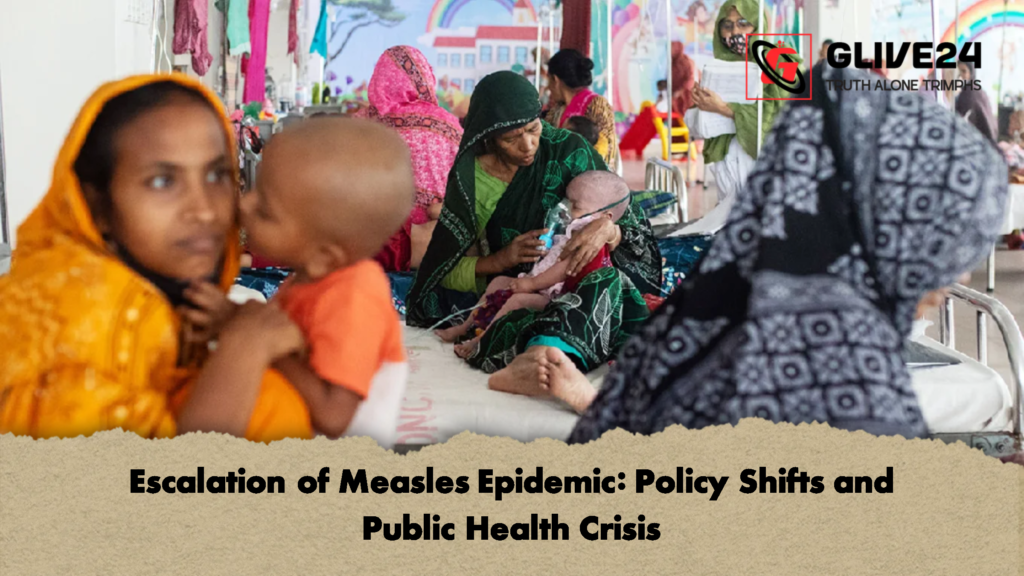
The surge in cases has pushed Dhaka’s medical facilities to a breaking point. Infectious disease units at major centres, including Dhaka Shishu (Children’s) Hospital, have exceeded their bed capacity. Consequently, many paediatric patients are receiving treatment on hospital floors.
A tragic focal point of this crisis occurred on 7 April 2026, when a six-month-old infant named Risa succumbed to the virus. Her twin sister, Ruhi, remains in critical condition in the Intensive Care Unit. Clinicians have noted that the lack of prior immunisation has led to particularly aggressive clinical progressions of the disease in these young patients.
Path of Transmission and Compound Vulnerabilities
The World Health Organisation (WHO) has tracked the origin of the current wave to January 2026, starting within Rohingya refugee settlements near the Myanmar border. The virus has since spread to 58 of the 64 districts in Bangladesh.
ASM Alamgir, former Chief Scientific Officer at the IEDCR, highlighted that the mortality rate is being driven higher by a secondary crisis: malnutrition. The suspension of three national Vitamin A distribution campaigns since 2024 has left millions of children with weakened immune systems, significantly reducing their ability to survive a measles infection.
Legal Scrutiny and Administrative Defence
The scale of the outbreak has led to demands for accountability. On 12 April 2026, a formal complaint was filed with the Anti-Corruption Commission (ACC) by Advocate Biplob Kumar Das, alleging gross negligence and corruption in the mismanagement of vaccine stocks.
In response to inquiries from Science, former Health Adviser Sayedur Rahman defended the 2025 policy shift, stating the open tender system was intended to foster transparency and move away from emergency-style legislation. However, the administration has yet to account for the specific procedural bottlenecks that halted the vaccine supply for several months.
Reinstatement of Direct Procurement and Emergency Interventions
The current government, which took office on 17 February 2026, has moved to reverse the previous procurement policies. Ziauddin Hyder, Special Assistant to the Prime Minister on Health, confirmed that direct procurement via UNICEF was officially reinstated in April to replenish stocks.
Emergency containment measures currently underway include:
-
Targeted Campaigns: Immunisation drives began on 5 April in identified “red zones” with the highest infection rates.
-
National Expansion: A broader drive for children aged six months to five years was launched on 20 April.
-
Policy Recommendations: Senior health advisers, including Mohammad Mushtuq Husain, have recommended the formal declaration of a ‘Public Health Emergency’ to streamline the distribution of medical resources.
While these interventions are now active, health experts warn that because the virus is already so widely disseminated, the epidemic may not plateau for several more weeks.