
Khabor Wala Desk
Published: 10th May 2026, 3:36 PM
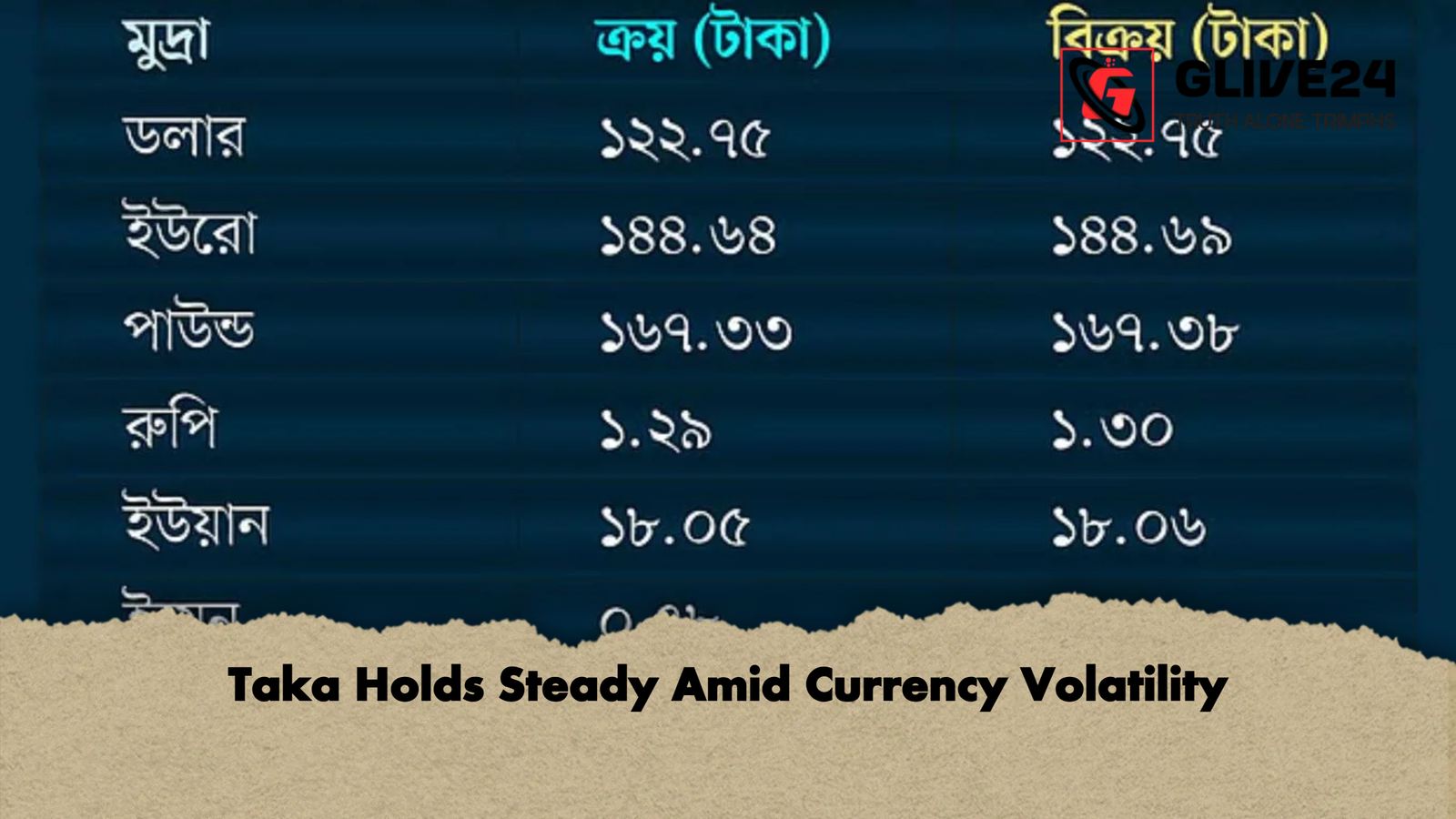
Foreign exchange markets in Bangladesh continue to experience persistent fluctuations as global economic uncertainty, including ongoing geopolitical tensions in the Middle East, exerts pressure on currency valuations. On Sunday, trading in the domestic currency market remained active, with most major foreign currencies showing an upward trend against the Bangladeshi Taka.
According to data released by Bangladesh Bank, the US Dollar remained unchanged today, with the average exchange rate standing at BDT 122.75 per USD. The Dollar has been exhibiting a pattern of moderate volatility over the past several months, although a gradual upward drift has been observed over the last month. This reflects continued demand for foreign currency driven by import obligations and external payment requirements.
Beyond the US Dollar, most major currencies registered gains in the domestic market. The Euro, British Pound, Chinese Yuan, Australian Dollar, Indian Rupee, and Singapore Dollar all showed signs of appreciation against the Taka. In contrast, the Japanese Yen remained stable, showing no notable movement in today’s trading session.
Market analysts note that such fluctuations are influenced by both external and domestic factors, including global interest rate expectations, import demand, energy prices, and remittance inflows. The pressure on the Taka is further shaped by seasonal trade cycles and ongoing adjustments in foreign exchange reserves.
It is also important to highlight the divergence between official exchange rates published by the central bank and the slightly higher rates observed in the open market. This gap continues to reflect supply-demand imbalances in the foreign currency market. As a result, importers, exporters, and businesses engaged in international trade often experience varying transaction costs depending on the channel through which currency is exchanged.
Currency movements directly affect the cost structure of businesses in Bangladesh, particularly those reliant on imported raw materials, fuel, and machinery. At the same time, remittance inflows from expatriate workers play a stabilising role, helping to partially offset external payment pressures.
| Currency | Rate / Status (BDT) | Daily Movement |
|---|---|---|
| US Dollar (USD) | 122.75 | Unchanged |
| Euro (EUR) | Not specified | Increased |
| British Pound (GBP) | Not specified | Increased |
| Chinese Yuan (CNY) | Not specified | Increased |
| Australian Dollar | Not specified | Increased |
| Indian Rupee (INR) | Not specified | Increased |
| Singapore Dollar | Not specified | Increased |
| Japanese Yen (JPY) | Not specified | Stable |
Overall, the foreign exchange market remains sensitive to global developments, and traders expect continued short-term volatility as international and domestic economic conditions evolve.

Comments