Khabor Wala Desk
Published: 19th May 2026, 11:53 PM
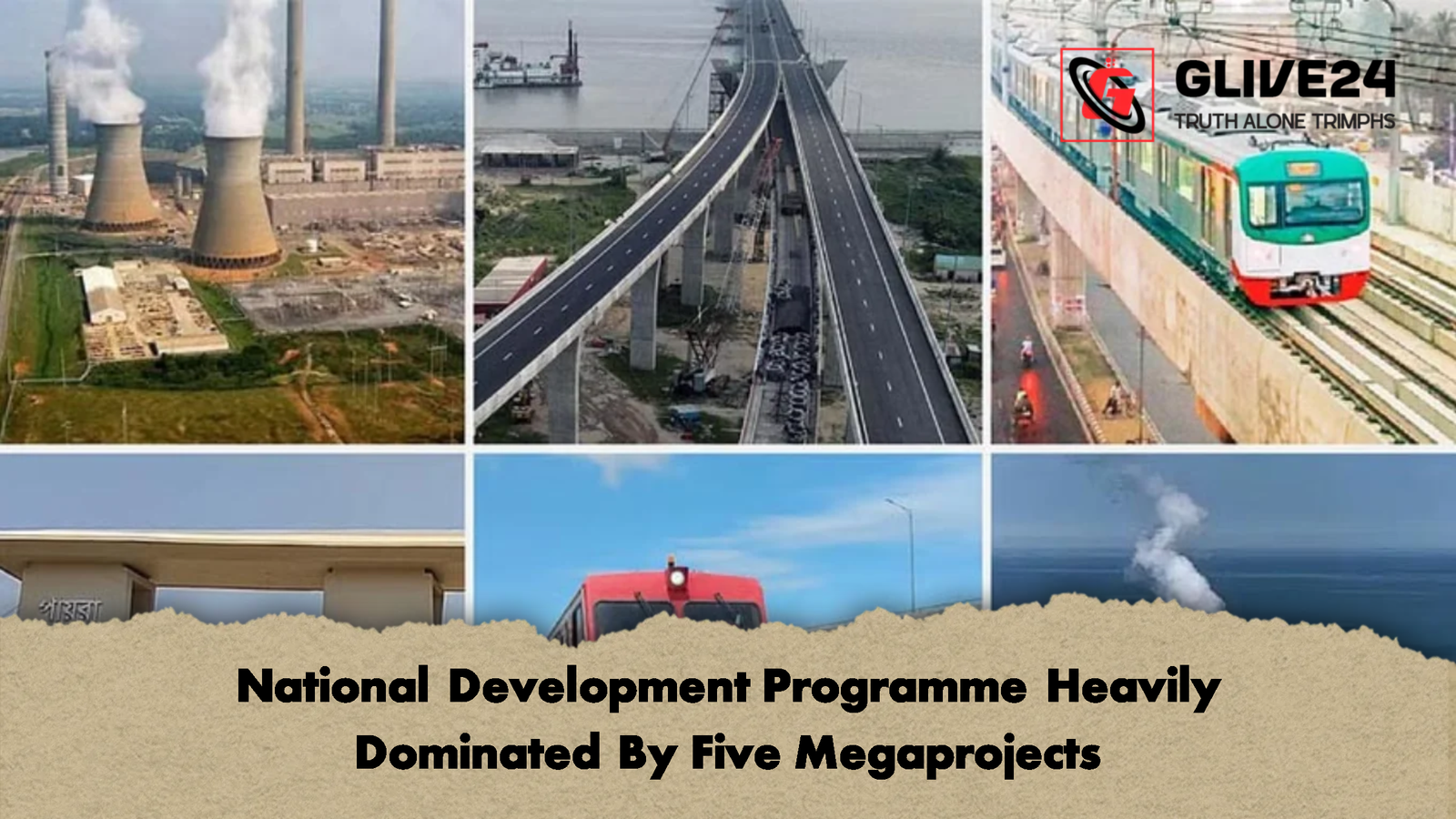
The Government of Bangladesh has approved an Annual Development Programme (ADP) budget of 300,000 crore takas for the 2026-27 financial year. Although this developmental framework allocates funds to a total of 1,105 projects across the country, approximately 12.5 per cent of the entire fiscal layout is concentrated within just five megaprojects. These strategic initiatives—which include the Rooppur Nuclear Power Plant, two metropolitan rail lines, the Matarbari Port, and urban electricity distribution networks—have been collectively allocated nearly 35,000 crore takas.
Table of Contents
The Rooppur Nuclear Power Plant project has been granted the highest individual financial allocation for the upcoming fiscal year. The government has earmarked 15,499 crore takas for this specific initiative, with the largest portion of these funds being covered by external foreign loan assistance. The cumulative expenditure for the atomic installation has already surpassed 1,39,000 crore takas. As of June last year, the overall physical progress of the facility stood at 68.28 per cent, and the state administration anticipates that all final construction work will be completed by June 2028.
Macroeconomists note that whilst substantial allocations for capital-intensive infrastructure are standard, ensuring expenditure efficiency remains critical as loan dependency escalates. Dr A. B. Mirza Azizul Islam, an economist and former financial adviser to a caretaker government, observed that when massive projects fail to meet their specified completion deadlines, total costs inevitably rise, thereby prolonging the national debt burden.
The project receiving the second-highest financial allocation within the new ADP is the Dhaka Mass Rapid Transit (MRT) Line-5 Northern Route, which has been granted 7,350 crore takas. Despite spanning a seven-year development timeline, the project’s actual physical progress stands at just 7.70 per cent.
A comparable trend is visible in the MRT Line-1 project, which has been allocated 3,910 crore takas for the fiscal year, despite its total physical implementation remaining below the 10 per cent threshold. Infrastructure analysts attribute these prolonged delays and subsequent cost escalations in the metropolitan rail network to protracted land acquisition processes, frequent alterations to engineering designs, and a systemic lack of inter-agency coordination. Experts warn that if these execution issues persist, fiscal pressure on the national exchequer will intensify.
The Matarbari Port Development project has secured the third-highest allocation in the ADP, with 4,839 crore takas designated for its continuation. The state framework aims to establish Matarbari as a deep-sea port and a primary regional logistical hub.
However, external industry specialists emphasise that the construction of maritime port infrastructure alone will not yield the projected macroeconomic benefits. They argue that the state must ensure simultaneous and robust integration with national road networks, railway corridors, and adjacent industrial zones to achieve true economic viability.
Separately, the fifth-highest allocation of 3,393 crore takas has been directed to the Expansion and Strengthening of Power System Network project within the Dhaka Power Distribution Company Limited (DPDC) perimeter. The administration stated that this capital deployment is critical to establishing an uninterrupted electrical supply throughout the capital city and its surrounding suburban sub-districts.
Professor Selim Raihan from the Department of Economics at the University of Dhaka observed that whilst an infrastructure-driven growth model is a significant economic pathway, it must be directly linked with employment generation, industrial productivity, and private sector investment. Without these integrated economic links, high-expenditure projects may fail to deliver their anticipated returns.
Data provided by the Planning Commission indicates that the ADP for the next financial year relies heavily on projects financed by foreign aid. Given that a major portion of the funding for large infrastructure projects is sourced via external loans, officials express concern that execution delays could increase interest payment liabilities and escalate overall project costs.
In response to these structural challenges, the Secretary of the Planning Commission, S. M. Shakil Akhter, stated that the commission is placing greater emphasis on stringent project selection and rigorous implementation monitoring to enhance the qualitative standards of development expenditure. Independent analysts conclude that the principal challenge for the administration in the next financial year will be the efficient execution of this ambitious development programme.




Comments