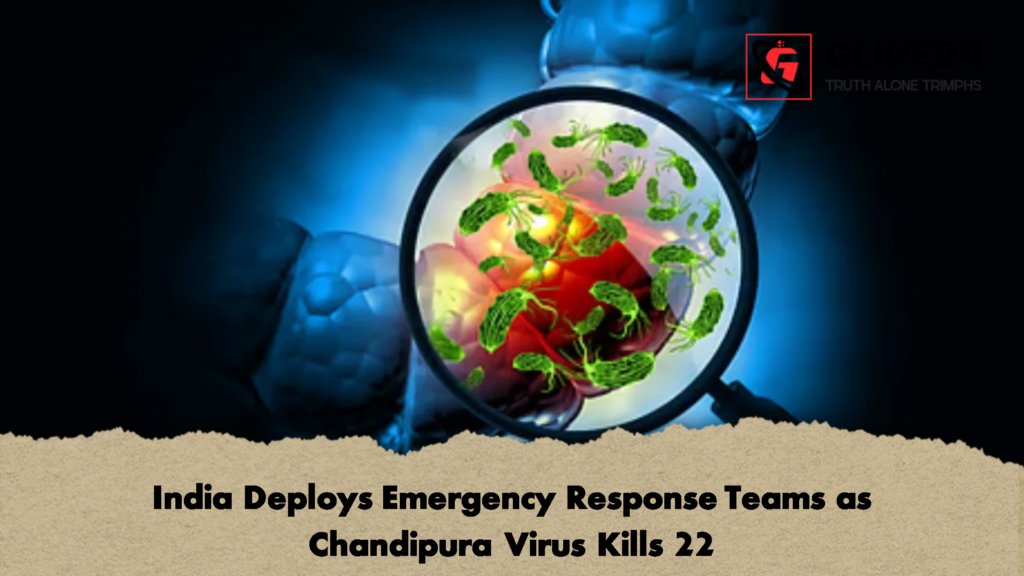
At least 22 children have died in India following an outbreak of the brain-inflaming Chandipura virus, prompting federal health authorities to deploy specialised national response teams to the hardest-hit states of Gujarat and Rajasthan.
In an official statement released on Wednesday, India’s Ministry of Health and Family Welfare confirmed that multi-disciplinary expert teams have been sent to work alongside local healthcare agencies. These units are tasked with strengthening disease control measures, managing clinical treatment for affected patients, and reinforcing public health safeguards across the impacted regions.
According to the World Health Organisation (WHO), Chandipura virus is a vector-borne pathogen primarily transmitted by sandflies, mosquitoes, and ticks during the monsoon season. The virus presents a particular hazard to children under the age of 15, frequently causing acute encephalitis—a severe inflammation of the brain that can progress rapidly from flu-like symptoms to critical illness or death within 24 to 48 hours.
Gujarat has emerged as the epicentre of the current surge. State Health Minister Praful Pansheriya reported that health personnel have tested 184 blood samples thus far, confirming 35 positive cases of Chandipura virus within the state. Neighbouring Rajasthan has also recorded fatalities, with local health authorities confirming two deaths linked to the infection over the past month.
To curb further transmission, health officials across both states have intensified epidemiological surveillance, accelerated diagnostic testing, and launched targeted vector-control drives using insecticides to eliminate sandfly and mosquito breeding grounds. Public awareness campaigns have also been stepped up to help parents recognise early warning signs. Medical specialists advise seeking immediate clinical care if a child displays high fever, seizures, altered mental state, vomiting, or acute neurological distress.