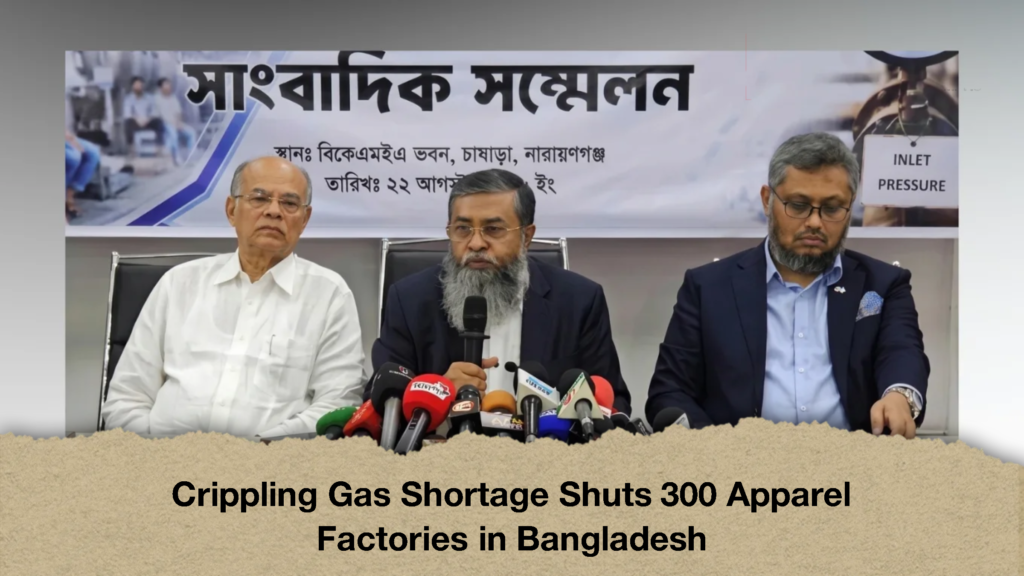
An acute shortage of natural gas across Bangladesh’s premier manufacturing corridors has brought heavy industrial activity to a standstill, forcing nearly 300 readymade garment factories to shut down entirely. Sounding a grave warning on Saturday evening, Mohammad Hatem, President of the Bangladesh Knitwear Manufacturers and Exporters Association (BKMEA), stated that factory owners find themselves pushed to the brink as prolonged power outages derail production schedules and drive international buyers towards rival sourcing destinations.
Addressing journalists at the trade body’s headquarters in Dhaka, Hatem outlined the scale of disruption crippling the knitwear sub-sector. He noted that overall export shipments have plummeted by 40 to 50 per cent over the past month, resulting in direct output losses estimated between 1.5 million and 2 million units. With factory floors remaining dormant and commercial turnover declining, manufacturers face severe liquidity shortages that threaten their ability to disburse regular monthly wages to hundreds of thousands of garment workers.
The current supply crisis originated around the 20th of last month and has persisted unabated for over four weeks. In several heavily concentrated industrial clusters across Gazipur, Narayanganj, and Savar, pipeline pressure has dropped to zero, rendering industrial boilers, dyeing houses, and knitting facilities inoperative. While state energy authorities had previously indicated that supplies would stabilise by the 10th of this month, the relief lasted barely forty-eight hours before distribution collapsed once again.
This persistent unreliability has triggered alarm among global apparel retailers who depend on rigid production cycles to stock autumn and winter collections. Facing severe delivery defaults and mounting shipping delays, several international fashion brands have begun reallocating purchase orders away from Bangladesh to competing markets across South and Southeast Asia. Exporters now face punitive penalties, including demands for expensive air freight shipments, alongside the risk of permanently losing long-term retail partners.
To mitigate the escalating crisis and prevent systemic insolvencies, the BKMEA leadership put forward a six-point charter of emergency proposals to the government:
The association requested permission for export-oriented factories to settle their combined utility bills for June and July across 12 equal monthly instalments without incurring surcharge penalties. It also sought an immediate moratorium on disconnecting industrial utility lines in the event of delayed payments during this disruption. Additionally, the trade body called for weekly government briefings to provide clarity on energy supply timelines and curb market speculation.
On fuel distribution, the BKMEA urged authorities to divert compressed natural gas away from private vehicles and reserve it solely for essential public transit until industrial supply lines recover. The leadership also pressed for decisive administrative action against illegal pipeline tappings, noting that state distributor Titas Gas experiences an estimated 8 to 10 per cent system loss, largely driven by systematic fuel theft. Lastly, the association appealed to the central bank to instruct financial institutions not to classify distressed apparel units as loan defaulters during this unforeseen emergency.
Prominent industry figures joined the media briefing, including former BGMEA president Kazi Moniruzzaman, BKMEA Executive President Fazlee Shamim Ehsan, alongside Vice-Presidents Morshed Sarwar Sohel and Ashiqur Rahman, all calling for prompt governmental measures to safeguard the nation’s core foreign exchange earner.