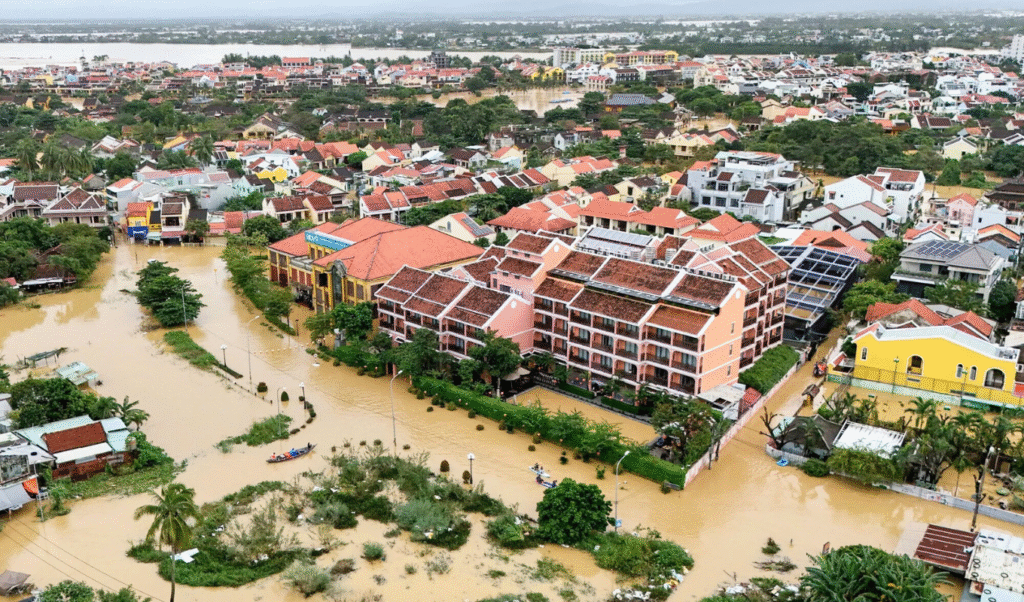
The death toll from a week of relentless flooding and record-breaking rainfall in central Vietnam has climbed to 40, officials confirmed on Tuesday, as yet another powerful storm threatens to strike the already devastated region.
The country’s central belt has been submerged under torrential rain, transforming streets into waterways, bursting riverbanks, and inundating several of Vietnam’s most iconic historical landmarks. In one 24-hour period alone, rainfall reached an astonishing 1.7 metres (5 feet 6 inches), setting a new national record.
According to the Ministry of Environment’s disaster management agency, fatalities have been reported across Hue, Da Nang, Lam Dong, and Quang Tri provinces, with six people still missing.
The crisis is far from over. Meteorologists warned that Typhoon Kalmaegi is expected to make landfall in the early hours of Friday morning, bringing further devastation to the already waterlogged region.
Vietnam typically endures intense monsoon rains between June and September. However, scientists have increasingly linked the growing frequency and ferocity of such extreme weather events to human-induced climate change.
Ordinarily, Vietnam experiences about ten typhoons or tropical storms annually, whether striking directly or brushing past its coastline. Yet Typhoon Kalmaegi marks the thirteenth storm to affect the nation in 2025, underscoring an alarming escalation.
Currently battering the Philippines, Kalmaegi has already claimed at least two lives and displaced hundreds of thousands there. The Vietnamese national weather bureau warned that the storm could make landfall with winds reaching up to 166 kilometres per hour (100 miles per hour) when it approaches on Thursday.
Meanwhile, parts of central Vietnam remain cut off due to landslides triggered by the earlier flooding, leaving remote communities isolated and struggling for aid. Nearly 80,000 homes are still underwater, according to the disaster agency. In addition, more than 10,000 hectares (25,000 acres) of crops have been destroyed, while over 68,000 cattle have perished.
The government has mobilised military and rescue teams to provide relief supplies and evacuate residents from the most vulnerable areas as the country braces for the arrival of Typhoon Kalmaegi.