Khabor Wala Desk
Published: 11th November 2025, 3:23 PM
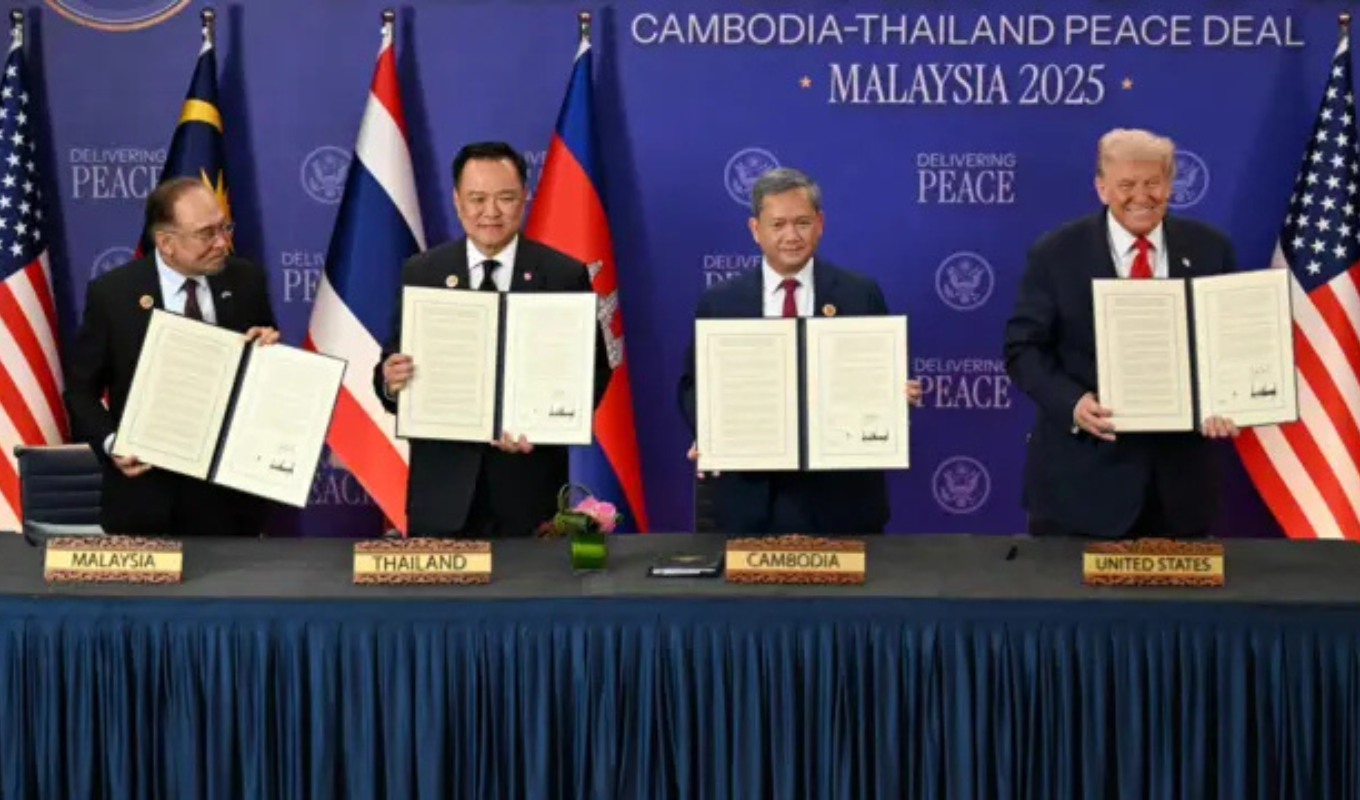
Thailand’s army stated on Tuesday that “hostilities still remain” with Cambodia, following Bangkok’s decision to suspend the implementation of a US-backed peace deal after a landmine blast wounded four Thai soldiers.
The peace agreement, brokered by former US President Donald Trump in October, was designed to de-escalate a conflict that saw intense clashes in July, resulting in at least 43 deaths and displacing around 300,000 civilians on both sides of the border.
Under the terms of the pact, both nations agreed to withdraw heavy weapons from the border region, allow ceasefire monitors access, and for Thailand to return 18 Cambodian troops it had captured. However, the suspension of the agreement by Thailand has raised questions about the future of the peace process.
Cambodia described the situation along the border as “calm”, but Thailand’s response indicated a return to heightened tensions.
Table of Contents
“The truth has become clear that hostilities still remain,” said General Pana Klaewblaudtuk, Chief of the Royal Thai Army (RTA), in a statement.
“The Thai Army needs to suspend the joint declaration to safeguard our right to self-defence,” he added, referring to the peace pact. Thailand has repeatedly accused Cambodia of laying new landmines along their shared border, in violation of the Ottawa Convention, which prohibits the use of anti-personnel mines.
The RTA reported that four soldiers were injured by a landmine explosion on Monday in Sisaket province, near the border. The presence of landmines, particularly those that have injured Thai soldiers, was a key factor in the tensions that flared in July, sparking clashes over a long-standing territorial dispute involving several ancient border temples.
Cambodia’s Ministry of Defence expressed “regret” over the landmine explosion but insisted that the munitions were remnants from past conflicts.
“After the incident, both military forces on the front lines communicated with each other, and as of now, the situation remains calm,” the ministry said in a statement. It also reiterated Cambodia’s commitment to the peace deal, which was signed in Kuala Lumpur on October 26, under the mediation of US President Trump and Malaysian Prime Minister Anwar Ibrahim, as chair of the ASEAN regional bloc.
Despite Cambodia’s reassurances, Thailand’s Prime Minister Anutin Charnvirakul confirmed that he would delay the release of the 18 captured Cambodian soldiers, which was a key component of the peace agreement. The delay marks a setback for the deal’s implementation.
Anutin chaired a National Security Council meeting in Bangkok on Tuesday morning, and was scheduled to travel to Sisaket later to visit the injured soldiers. Foreign Minister Sihasak Phuangketkeow told reporters that the suspension of the deal’s implementation would be reported to both the United States and Malaysia.
“It is also important that Cambodia take responsibility by showing regret, participating in the investigation, and ensuring this does not happen again,” Sihasak said.
Since the truce was agreed on July 29, the ceasefire has largely held, but analysts warn that a lasting peace deal addressing the core territorial dispute remains elusive. The border dispute, which centres around several historic temples, continues to be a source of deep friction between the two nations, and the terms of a final resolution remain unclear.
As the peace process faces challenges, both sides appear committed to their respective positions, and the future of the agreement hinges on the resolution of these ongoing tensions.
No related posts available.
Comments