Khabor Wala Desk
Published: 2nd June 2026, 12:30 AM
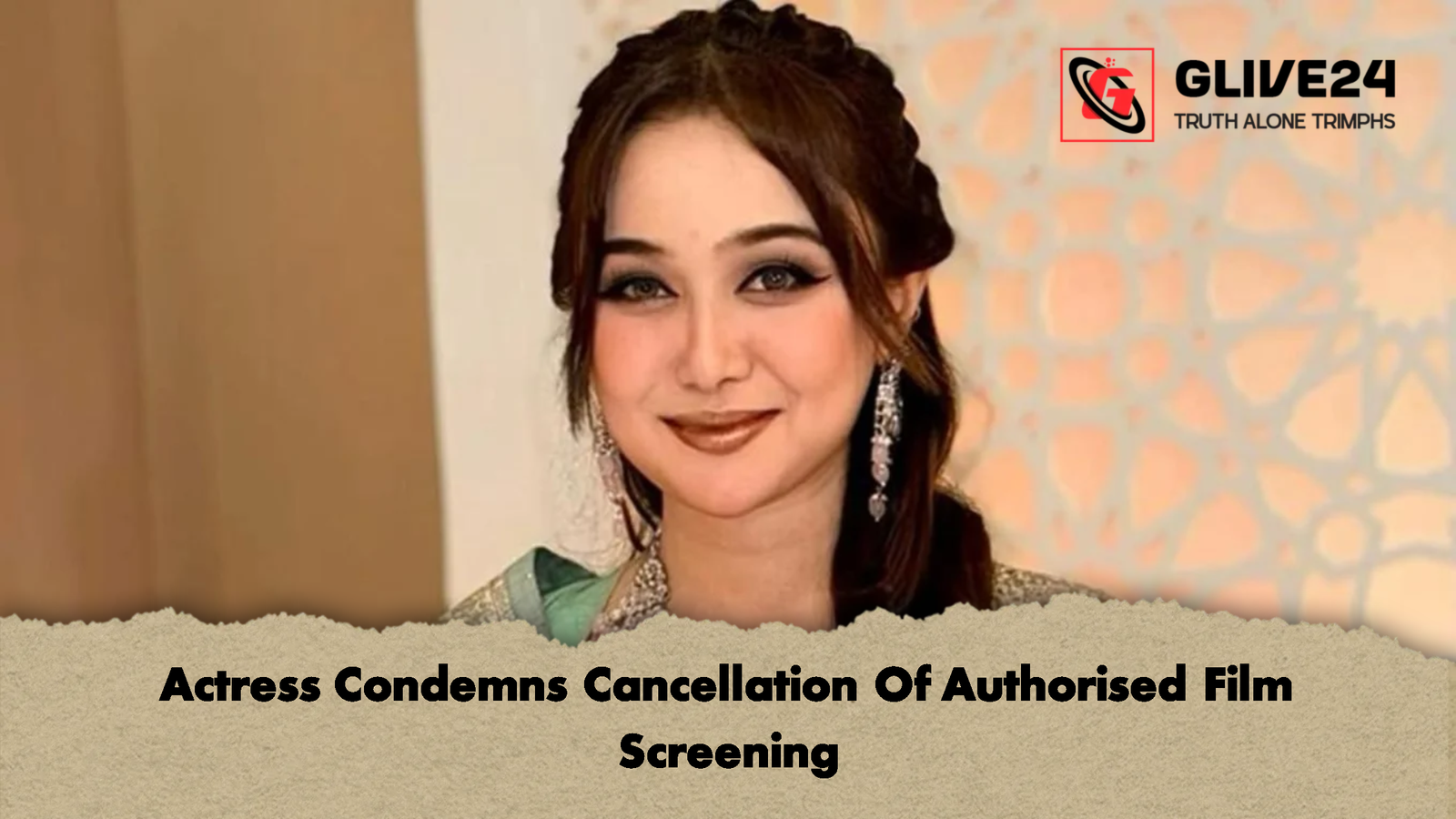
A wave of sustained protests by directors, artists, cultural activists, and members of the public has intensified following the cancellation of a screening of the film Bonalata Express, directed by Tanim Noor, in the Brahmanbaria District. Joining the widespread public discourse, contemporary television actress Rukaiya Jahan Chomok formally expressed her condemnation regarding the administrative interference in the film’s exhibition.
On Monday evening, 1 June 2026, at approximately 21:00 hours, the actress published a public statement via her official Facebook account to contest the decision of the local authorities.
In her published social media post, Rukaiya Jahan Chomok drew a sharp contrast between state law enforcement and the censorship of cultural events. She stated that the administration is unable to prevent sexual violence, yet it successfully suppresses the exhibition of a motion picture. She further remarked that in a nation completely devoid of melody, destructive elements are bound to emerge.
The commentary from the prominent actress accumulated significant traction across various digital platforms, with numerous citizens and cultural commentators endorsing her perspective. The ongoing online discourse has increasingly centered around the protection of artistic freedom, constitutional freedom of expression, and the preservation of unrestricted cultural practices within the country.
The controversy originated from a special screening of Bonalata Express organized by the Brahmanbaria Film Society. The exhibition was scheduled to take place at the premises of the Annada Government High School. The organizing committee asserted that all necessary logistical preparations had been fully finalized after securing prior formal permission from the school administration.
However, a particular faction initiated an aggressive online campaign on social media platforms, raising objections against the themes of the film. Following this digital opposition, the venue authorities summarily revoked the previously granted permission, forcing the organizers to indefinitely postpone the event.
On the exact same day, a parallel screening of Bonalata Express had been organized by a group of local youth in the Taltala village situated within the Kasba Upazila of Brahmanbaria District. According to allegations raised by the local organizers, that event was similarly shut down following direct intervention from the local sub-district administration, who cited security apprehensions arising from the online controversy.
The double cancellation has triggered formal opposition from a coalition of ten major socio-cultural organizations based in the Brahmanbaria District. In a comprehensive joint press statement, the coalition characterized the administrative actions as explicitly counterproductive to cultural development and described the pattern of interventions as a dangerous omen for freedom of expression.
The formal statement reminded authorities that the Brahmanbaria District has historically maintained a prestigious reputation for its vibrant cultural activities and communal harmony. The region is notable for being the ancestral domain of legendary figures such as the classical music maestro Ustad Allauddin Khan and the prominent poet Al Mahmud. The leaders asserted that the suppression of a legally certified film in such a historically progressive district remains profoundly disappointing.
Furthermore, the leaders of the cultural bodies emphasized that Bonalata Express has been officially cleared for public viewing under the explicit provisions of the Bangladesh Film Certification Act, 2023. The cinematic project has previously been screened across multiple domestic and international venues, receiving critical acclaim.
The organizers noted the irony that the director, Tanim Noor, who is himself a native of the Brahmanbaria District, was denied the fundamental right to exhibit his creative work to the residents of his own home district.
The joint resolution defined cinema as a complete and independent art medium, stating that the unrestricted practice of art, literature, and culture serves as a foundational pillar of any democratic society. The alliance declared that cultural activities must never be allowed to be compromised or dictated by the intolerance or extremist attitudes of any unrepresentative groups.
The ten signatory bodies that jointly issued the protest include:
Brahmanbaria Anushilan Sangskritik Kendra
Khelaghar
Udichi District Sangsad
Jatiya Rabindra Sangeet Sammilan Parishad
Bangladesh Mahila Parishad
Abaroni
Kabir Kolom
Charan
Sonali Sokhal
Ajker Sangskriti
The public intervention by Rukaiya Jahan Chomok has brought renewed national focus to the incident. Prominent figures within the national cultural sector continue to echo her sentiments, demanding that the state machinery guarantee a safe, tolerant, and collaborative environment to facilitate the practice of arts and culture.


Comments