Khabor Wala Desk
Published: 2nd December 2025, 3:29 AM
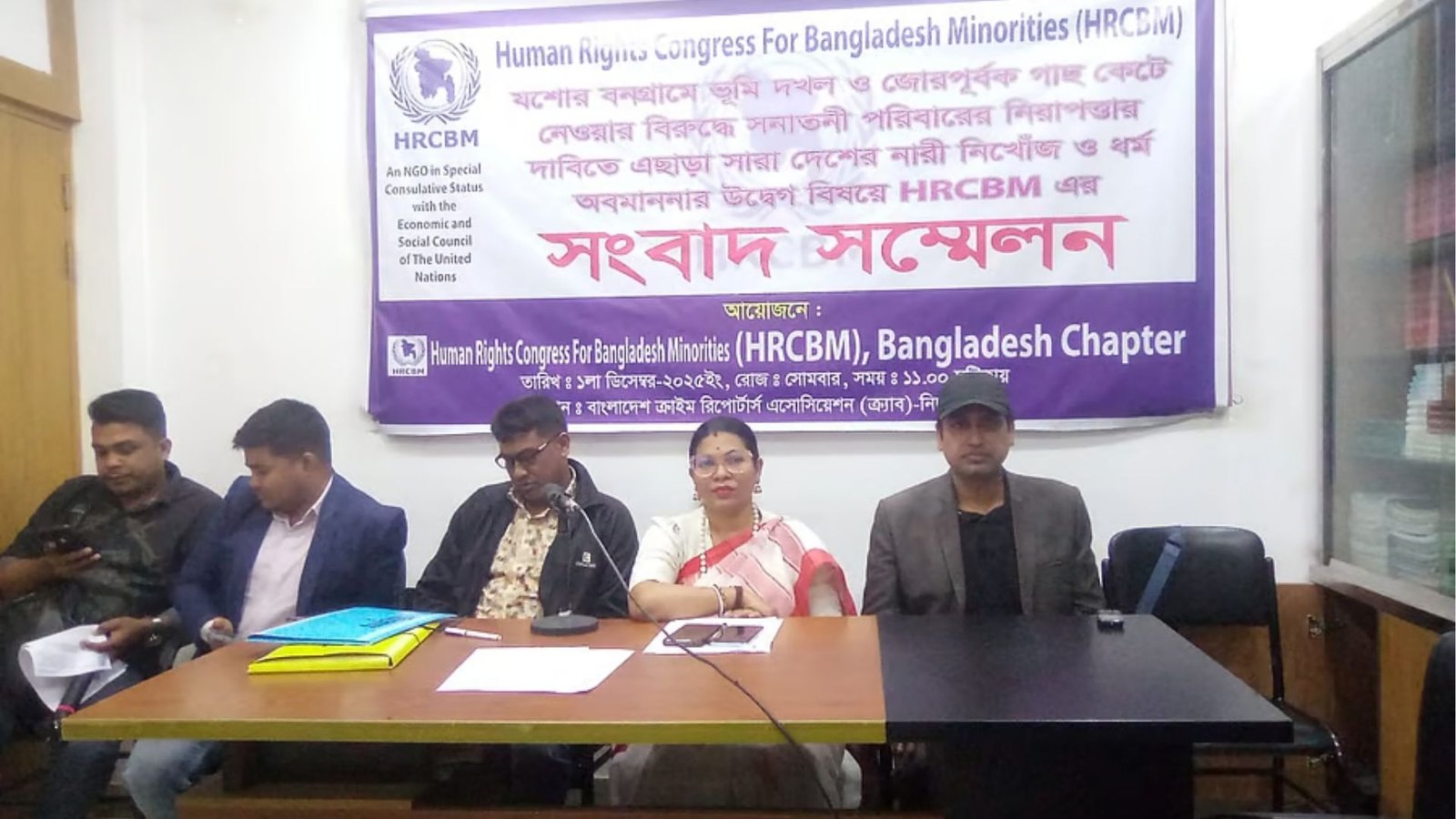
The targeting of minority communities under the pretext of blasphemy continues to be a pressing concern in Bangladesh. According to the Human Rights Centre for Bangladesh Monitoring (HRCBM), 73 incidents of alleged blasphemy affecting minority individuals have been documented over the first eleven months of this year. Of these, 40 have led to formal legal proceedings, five have no registered cases, and detailed investigations into 23 remaining incidents are ongoing.
Several incidents illustrate the social repercussions faced by minorities. One prominent case occurred on 23 October in Dacope, Khulna. Purayan Mondal, a minority community member, was arrested over alleged blasphemy, although investigations revealed that the derogatory comments were actually made online by a person named Abdur Rahman about the Hindu deity, Goddess Kali. Mondal’s response to Rahman’s post led to his arrest. Mondal remains in prison, while the original offender remains free. This incident reflects the systemic vulnerability of minority individuals in such legal disputes.
The report also highlights the everyday threats to minority citizens’ property and livelihood. In Jessore’s Abhaynagar Upazila, Shanti Rani Bhadra, an elderly widow, had trees cut down forcibly from her land. Although she filed a complaint, the police have yet to register a formal case. HRCBM emphasises that minorities often cannot feel secure on their own property.
In a further disturbing development, a tenth-grade girl from a minority community in Thakurgaon was allegedly abducted on 27 November while returning home after an examination. The girl remains missing. HRCBM presented this case as an example of the insecurity faced by young minority women in Bangladesh.
Lawyers and human rights experts warn that the misuse of blasphemy allegations is widespread. Legal professional Laki Bachhar noted that the real number of victims may be higher than what HRCBM has documented, as the report only includes cases directly reported by victims or their representatives.
The HRCBM report demonstrates that the social and legal framework often fails to protect minority communities, leaving them vulnerable to discrimination, intimidation, and violence. Reforms to the blasphemy law, improved policing, and community awareness are vital to protect these marginalized groups from further victimisation. The data underscores a broader societal issue of inequality and insecurity, highlighting the urgent need for both legal and social intervention.


Comments