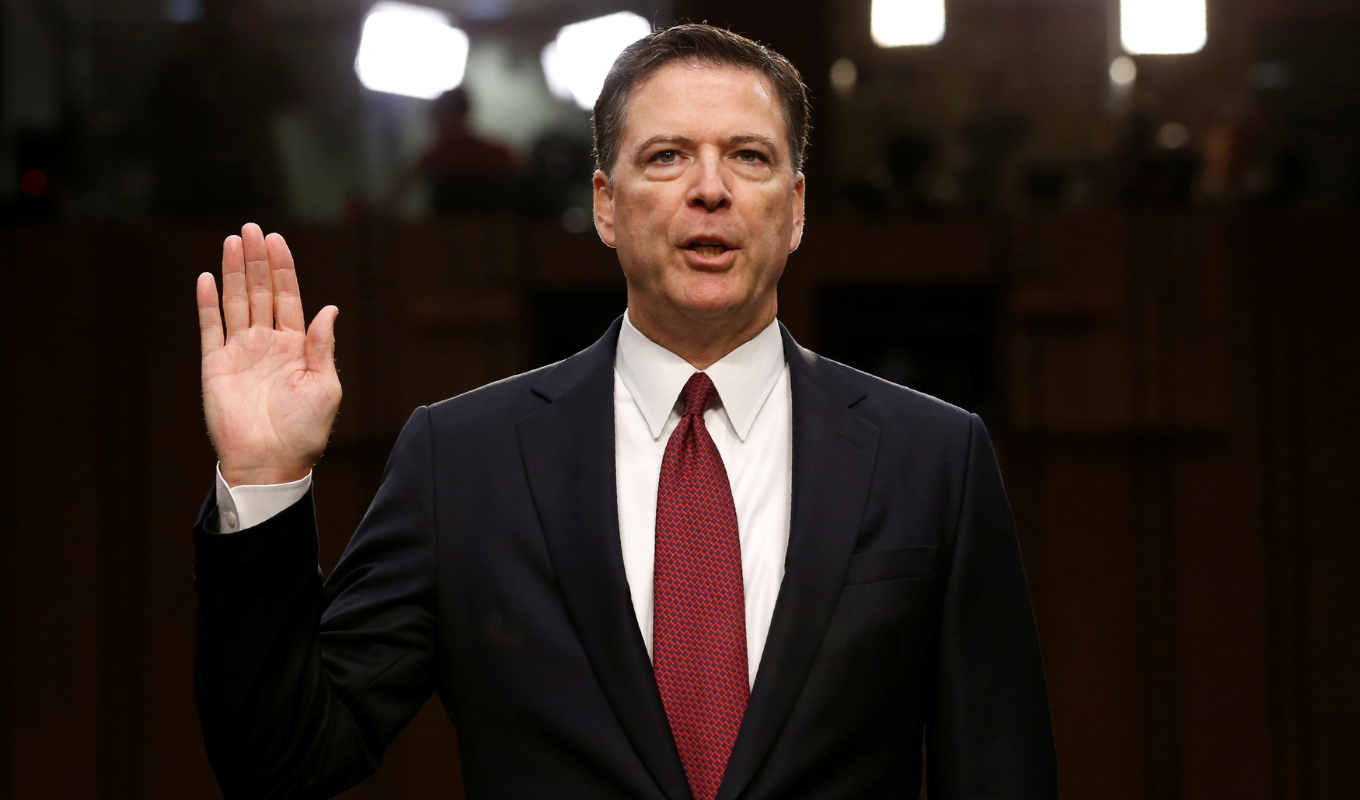
A United States federal judge has temporarily barred prosecutors from reusing previously obtained evidence to seek a fresh indictment against former FBI director James Comey, dealing a procedural setback to the Justice Department amid renewed political tensions in Washington.
In a four-page order issued on Saturday, District Judge Colleen Kollar-Kotelly ruled that the government may not, at least until Friday, access or rely upon certain communications involving Comey and his close associate and former legal adviser, Daniel Richman. The decision effectively prevents prosecutors from swiftly repackaging earlier evidence to pursue new charges.
The ruling comes against the backdrop of sustained pressure from President Donald Trump, who returned to office in January and has repeatedly urged the Justice Department to pursue legal action against Comey and other figures he regards as political opponents. Comey, now 64, has long been a target of Trump’s criticism, dating back to his dismissal as FBI director in 2017.
Comey had been charged in September with lying to Congress and obstructing a congressional proceeding. However, that case unravelled last month after a judge found that the prosecutor who brought the charges had been unlawfully appointed, rendering the prosecution invalid. Prosecutors have since explored alternative avenues to revive the case.
Judge Kollar-Kotelly’s latest order centres on the handling of digital evidence obtained from Daniel Richman, a law professor and long-time confidant of Comey. The court accepted arguments from Richman’s legal team that the government violated his Fourth Amendment rights against unreasonable searches and seizures by retaining a complete copy of his personal computer files, rather than limiting its review to material covered by a lawful warrant.
By restricting access to those communications, the judge has, for the time being, blocked the administration from relying on the same evidence to construct a new indictment. Legal analysts note that while the order is temporary, it raises broader questions about evidence handling and prosecutorial conduct, particularly in politically sensitive cases.
Comey was originally appointed FBI director in 2013 by former president Barack Obama. His tenure ended abruptly when Trump dismissed him in 2017, at a time when the FBI was investigating potential links between Trump’s 2016 election campaign and Russia. That decision itself became a focal point of political and legal controversy.
The Comey case is not the only instance in which prosecutions involving Trump critics have encountered judicial resistance. In a separate matter, proceedings against New York Attorney General Letitia James also stalled after a court similarly ruled that the prosecutor involved had been unlawfully appointed.
Key developments at a glance
| Date | Event |
|---|---|
| 2013 | Comey appointed FBI director |
| 2017 | Comey dismissed by President Trump |
| September | Comey charged with lying to Congress |
| Last month | Case collapses over unlawful appointment |
| Saturday | Judge blocks reuse of evidence |
Taken together, these rulings highlight the legal and constitutional hurdles facing efforts to revive or initiate prosecutions, even amid strong political pressure, and underscore the judiciary’s role in scrutinising the methods used by the executive branch to pursue high-profile cases.
Comments