
Khabor Wala Desk
Published: 29th December 2025, 1:36 PM
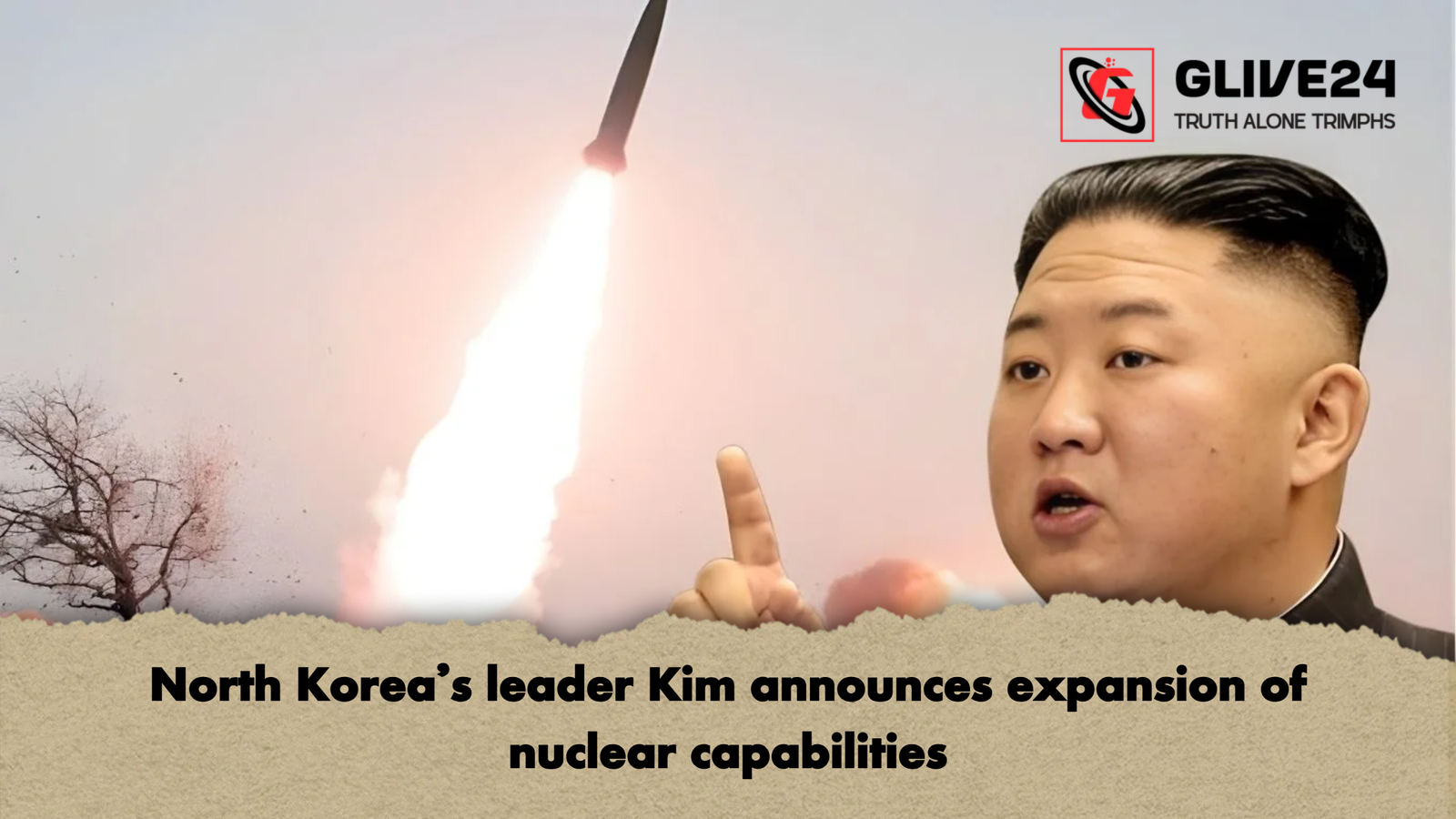
North Korea has conducted what it claims to be a successful long‑range strategic cruise missile test over its western maritime zone, in another clear display of Pyongyang’s growing military confidence. Leader Kim Jong‑un personally oversaw the operation, later announcing that the country’s nuclear warfighting capacity would continue to advance “without limit or pause.”
According to the state‑run Korean Central News Agency (KCNA), several cruise missiles were launched on Sunday, flying along a predetermined route before striking their designated target with “high accuracy”. KCNA reported the event on Monday, noting that Kim praised the outcome and emphasised that continuous evaluation of nuclear deterrent tools was a “responsible duty of a sovereign state” facing external security threats.
South Korea’s military confirmed the incident, stating that multiple projectiles were fired from Pyongyang’s Sunan region early in the morning. Seoul sharply condemned the launch, warning that North Korea could stage further large‑scale provocations or strategic weapons tests as the year draws to a close. Analysts believe the timing is significant, with major political events approaching in Pyongyang.
In early 2026, North Korea is scheduled to hold the ninth Workers’ Party Congress, an event at which the next five‑year state development blueprint is expected to be introduced. Experts suggest that Kim Jong‑un is attempting to project military strength ahead of the congress, showcasing both technological progress and domestic authority.
Only days before the latest test, Kim visited an under‑construction 8,700‑tonne nuclear‑powered submarine, a vessel described by state media as a key asset for future deterrence. His daughter Kim Ju‑ae accompanied him during the inspection — a move that has fuelled ongoing speculation about her potential position as heir to the leadership.
Standing inside the submarine construction facility, Kim issued a sharp warning, asserting that South Korea’s push to develop its own nuclear‑powered submarine fleet posed a direct threat. He vowed that Pyongyang would respond sternly to any strategic challenge, signalling a hardened stance in regional security dynamics.
| Event / Development | Date / Period | Significance |
|---|---|---|
| Cruise missile launch over western sea | Reported 29 December | Demonstrates expanding long‑range precision capability |
| Inspection of 8,700‑tonne nuclear submarine | Previous Thursday | Highlights submarine‑based nuclear ambitions |
| Increasing Russia alignment post‑2019 | Since failed Trump summit | Indicates strategic distancing from West and strengthened Moscow ties |
| Anticipated Workers’ Party Congress | Early 2026 | Likely announcement of future military and economic roadmap |
Since the collapse of Kim Jong‑un’s 2019 summit with former US President Donald Trump, North Korea has steered away from negotiations and instead intensified its military modernisation programme. Its deepening alignment with Russia — including military support for the war in Ukraine and political backing from the Kremlin — has emboldened Pyongyang, according to international observers.
Frequent missile drills and nuclear‑focused rhetoric are now shaping a tense environment surrounding the Korean Peninsula. Beyond troubling Seoul, these actions place renewed diplomatic pressure on Washington, which continues to call for denuclearisation talks that North Korea currently shows no interest in resuming.
Kim has made it clear that no international sanction or warning will deter his pursuit of what he envisions as one of the world’s strongest nuclear forces. With more tests anticipated, the region appears set for a period of heightened uncertainty, raising fears that a miscalculation could spark a wider confrontation.


Comments