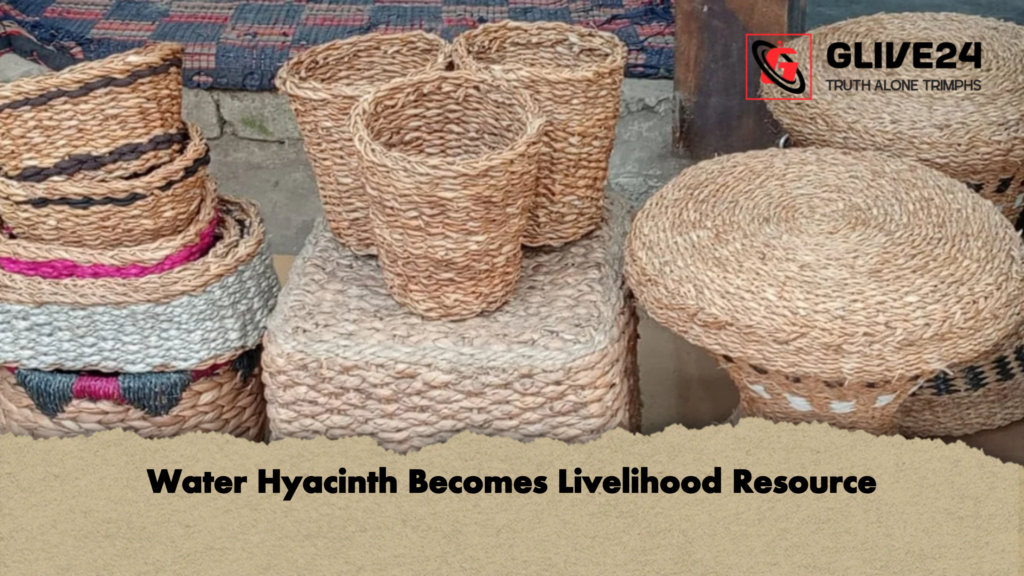
Once considered a nuisance in Bangladesh’s waterbodies, the water hyacinth—known locally as kochuripana—has emerged as a source of livelihood and economic opportunity. With its orchid-like blossoms, the plant was previously regarded as a threat to aquatic ecosystems, but innovative local initiatives have transformed it into a valuable natural resource.
Historical records indicate that a Brazilian traveller introduced water hyacinth to Bengal in the late 18th century. Its rapid proliferation quickly spread the plant across nearly all ponds, rivers, and wetlands of Bangladesh. For decades, it was considered a burden, obstructing waterways and affecting fishing. However, in the village of Khord Muradpur in Payraband, Mithapukur Upazila of Rangpur, perceptions are changing.
At the Begum Rokeya Memorial Handicraft Showroom, adjacent to Begum Rokeya’s birthplace, artisans use water hyacinth stalks to craft a variety of decorative and functional items, including baskets, plant pots, mats, and gift items. The products, sold at prices ranging from 150 to 550 Bangladeshi Taka depending on size and design, are popular souvenirs among visitors. Parveen Begum, the showroom manager, explained that the initiative has empowered many unemployed youths and underprivileged women, transforming their livelihoods and creating new income opportunities.
Uses and Benefits of Water Hyacinth :
| Sector | Applications & Benefits |
|---|---|
| Handicrafts | Baskets, plant pots, mats, decorative items |
| Culinary | Cooked as vegetables, included in traditional dishes in parts of Asia |
| Agriculture & Aquaculture | Floating vegetable cultivation, fish feed, organic fertiliser, livestock feed |
| Environment & Infrastructure | Water purification, pothole filling, strengthening paved roads, cement post reinforcement |
| Health & Wellness | Enhances skin radiance, treats eczema, improves hair health, relieves tooth and throat pain, controls cholesterol, boosts lactation, regulates menstruation, assists weight management, stops bleeding |
Abid Karim Munna, Deputy Director of Bangla Academy and agricultural specialist overseeing the Begum Rokeya Memorial Centre, highlighted the plant’s versatility. He noted its effectiveness in water purification, aquaculture, agriculture, construction, and even culinary use.
Rafiqul Islam Dulal, General Secretary of the Begum Rokeya Memorial Library, added, “Once dismissed as a worthless weed, water hyacinth is now a national asset. Across Bangladesh, dried stalks are being turned into bags, mats, and various ornamental products, providing both employment and income.”
What was once a threat to Bangladesh’s waterways has thus been transformed into an emblem of sustainable development, demonstrating the potential of rethinking natural resources as economic opportunities.