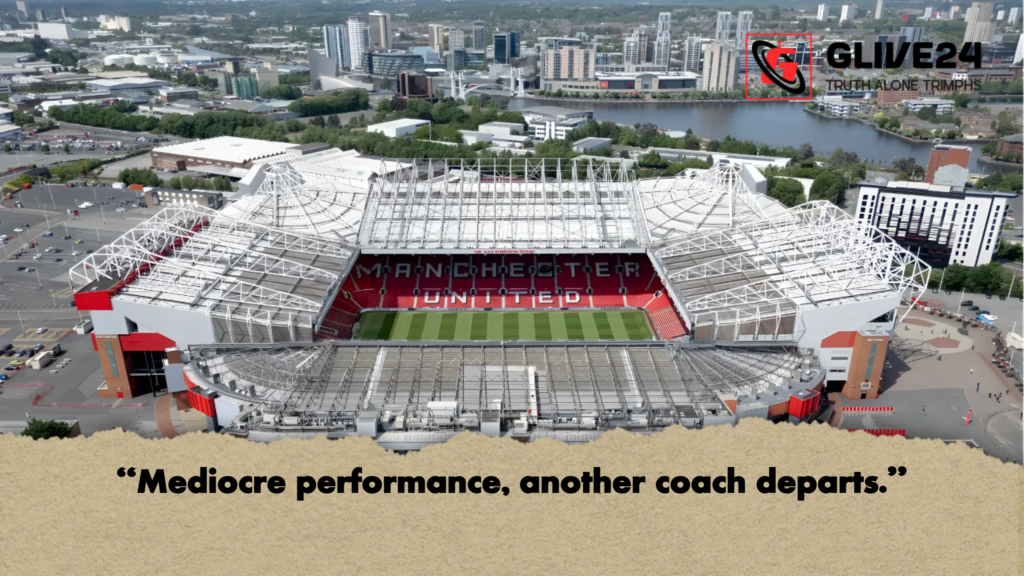
The “Impossible Dream” banner that frequently adorns the Stretford End at Old Trafford was conceived as a tribute — a fan-led homage to the unparalleled reign of Sir Alex Ferguson, the man who transformed Manchester United into the dominant force of English football. Thirteen years after his retirement, however, that phrase has taken on a far less romantic meaning.
Replacing Ferguson has become football’s great unsolved riddle.
Since the legendary Scot stepped down in 2013 after delivering a staggering 13 Premier League titles, Manchester United have drifted through a succession of managers, ideologies and rebuilds — none of which has restored the club to the summit of English football. The Premier League trophy has remained stubbornly out of reach, while rivals have surged ahead with clarity and conviction.
The job, once the most coveted in the game, increasingly resembles a poisoned chalice.
The latest casualty is Portuguese head coach Ruben Amorim, whose turbulent and ultimately uninspiring 14-month spell came to an abrupt end on Monday. His departure marks yet another chapter in a long-running saga of false dawns, middling results and mounting frustration among supporters.
Into the breach steps Darren Fletcher. A former United midfielder and current under-18s head coach, Fletcher will take charge of the first team on an interim basis, beginning with Wednesday night’s Premier League trip to Burnley. In doing so, the Scot becomes the 11th permanent or interim manager to lead United since Ferguson’s departure.
For Fletcher, the appointment is both an honour and a burden. A five-time Premier League winner under Ferguson, he did not hesitate to seek the counsel of his old manager before accepting the role.
“I’ve got a really good relationship with Sir Alex, so it’s probably the first person I phoned,” Fletcher revealed. “I wanted to get his blessing, to be perfectly honest. He deserves that respect.”
The 41-year-old described recent events as “surreal”, admitting that the circumstances of his elevation sit uncomfortably alongside his pride at leading the club he served with distinction as a player.
“It’s an amazing honour to lead a Manchester United team,” he said. “Not in the way I imagined it would happen — but I’ve got a job to do.”
For United supporters, hope now rests not in grand declarations but in the faint possibility that stability, coherence and identity might finally return. Until then, the Impossible Dream endures.
Manchester United: Before and After Ferguson
| Era | Years | Managers | Premier League Titles |
|---|---|---|---|
| Sir Alex Ferguson | 1986–2013 | 1 | 13 |
| Post-Ferguson | 2013–Present | 11 | 0 |