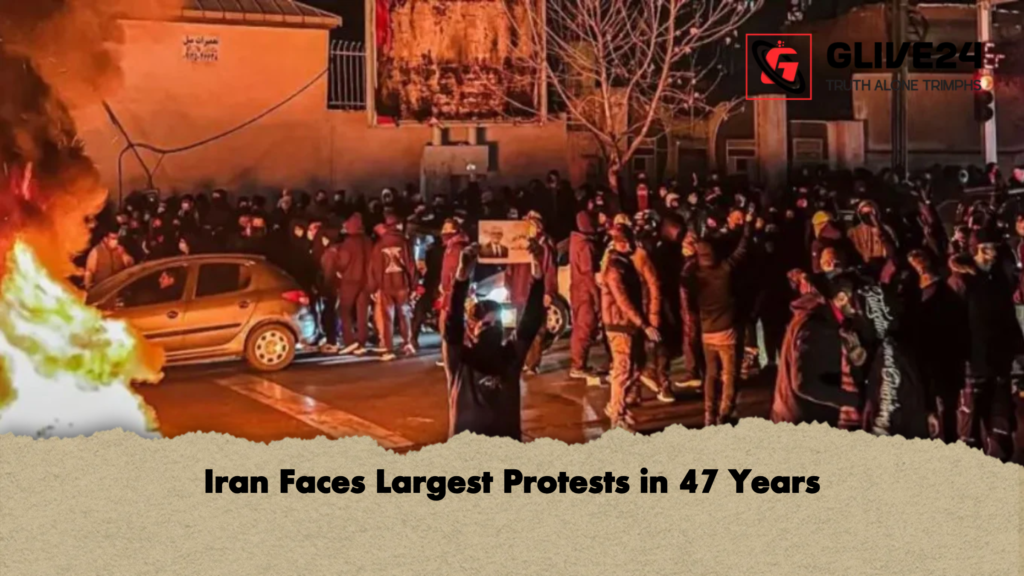
Iran is witnessing a government-opposition movement that analysts and eyewitnesses describe as unprecedented in the Islamic Republic’s 47-year history. The protests, which have spread across the country, have prompted a severe crackdown by Iranian authorities. In response, former US President Donald Trump publicly expressed support for the demonstrators, a move that led Tehran to threaten attacks on American interests and their regional allies.
Experts note that the scale and intensity of these protests distinguish them from previous movements. Sociologist Eli Khorsandfar explains, “Unlike prior movements, the demonstrations are not confined to major cities. Numerous smaller towns, previously unheard of in international discourse, are now active centres of protest.”
Historically, Iran has experienced waves of civil unrest with differing characteristics:
| Year | Movement | Geographical Focus | Socioeconomic Base | Duration & Impact |
|---|---|---|---|---|
| 2009 | Green Movement | Major cities | Middle class | Limited, urban-centred protests |
| 2017-2019 | Economic Protests | Poorer regions | Low-income communities | Sporadic, localised unrest |
| 2022 | Mahsa Amini Movement | Nationwide | Mixed | Widespread, medium-term |
| 2025 | Current Movement | Nationwide, including smaller towns | Middle class & poor | Broad, long-lasting, sustained |
The current wave began in late December 2025 with strikes by Tehran’s business community, triggered by the sharp devaluation of the Iranian rial. The unrest quickly spread to the western provinces and other regions, drawing in middle-class citizens burdened by high inflation and severe economic difficulties. Protesters have openly called for the removal of Supreme Leader Ayatollah Ali Khamenei, chanting slogans such as “Down with Tyranny.” Exiled Iranian leader Reza Pahlavi’s appeals have also influenced the movement, though analysts suggest the protests reflect a broader frustration at the lack of alternative leadership within the Islamic system rather than a call to restore monarchy.
This movement is notable for another unprecedented factor: direct foreign attention. Trump’s explicit support and warnings mark a significant departure from past international reactions, while Iran’s weakened regional alliances have increased the country’s diplomatic isolation. Analysts also highlight the impact of recent conflicts with Israel and US military actions, which have further eroded public confidence in the government. The reputation of the Islamic Revolutionary Guard Corps has suffered, amplifying popular anger.
Khorsandfar emphasises that the most remarkable change is the role of women: “For the first time on this scale, women are openly taking to the streets, confronting fear and asserting their presence. This represents a major challenge to Iran’s traditionally repressive political system.”
As the protests continue, they appear set to leave a lasting imprint on Iran’s political and social landscape, signalling not only domestic upheaval but also a reshaping of regional dynamics.