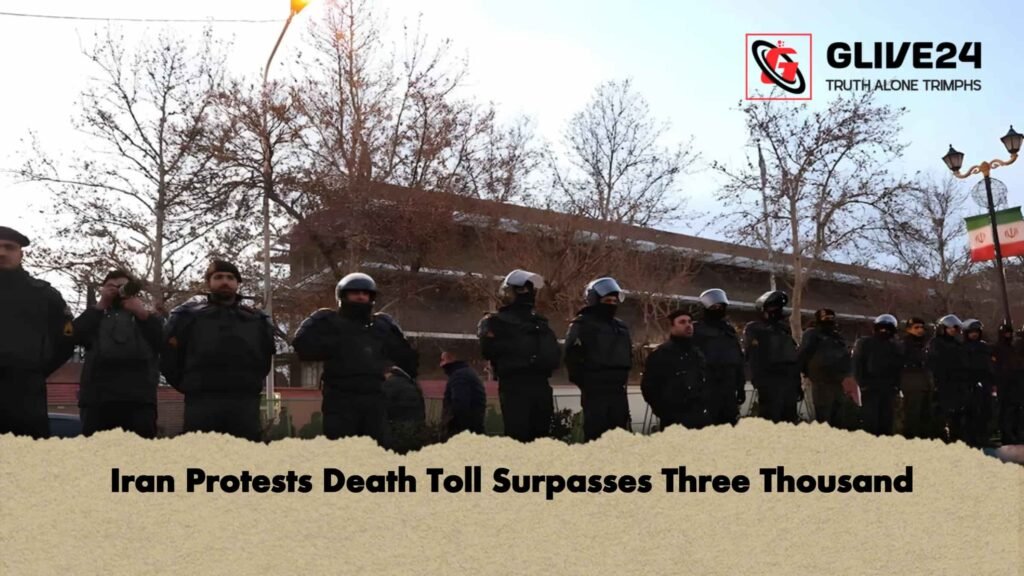
The death toll from the widespread protests currently engulfing Iran has risen to at least 3,090, according to a report released on Saturday, 17 January, by the international human rights organisation HRAA. Of those fatalities, 2,885 were active protesters, 155 were civilians not directly participating, and 50 were members of the security forces.
Human rights groups have indicated that large-scale demonstrations have temporarily subsided across various cities, following government crackdowns and intensified military-security operations. State media confirmed that authorities have escalated arrest campaigns and reinforced security measures in response to growing civil unrest.
Residents in major urban centres, including Tehran and northern cities near the Caspian Sea, reported that streets were largely calm, although drone surveillance over the capital remains ongoing. No significant demonstrations were observed on Thursday or Friday, suggesting a temporary lull in public activity.
Origins and Spread of the Protests
The unrest began on 28 December, initially as demonstrations against Iran’s deepening economic crisis. Within a short period, the movement evolved into calls for the overthrow of the Islamic Republic’s ruling structure. Analysts have described the protests as the most severe challenge to internal stability since the 1979 Islamic Revolution, highlighting the depth of political discontent.
Internet and Communication
Network monitoring firm NetBlocks reported that after nearly 200 hours of internet blackout, connectivity partially resumed on Saturday morning. However, only about two percent of normal traffic has returned, limiting communications for citizens, both domestically and abroad, who have been attempting to contact relatives and share information.
Protest-Related Fatalities
| Category | Deaths | Percentage (%) |
|---|---|---|
| Protesters | 2,885 | 93.5 |
| Civilians | 155 | 5.0 |
| Security Forces | 50 | 1.5 |
| Total | 3,090 | 100 |
Experts caution that, even with partial reopening of social media and communication channels, the flow of information remains severely restricted. The international community continues to monitor the human rights situation and government response, warning that the combination of political unrest and humanitarian pressure could intensify if unaddressed.
The ongoing crisis underscores the fragility of Iran’s domestic stability, drawing both national and global scrutiny. Analysts suggest that unless the underlying economic and political grievances are urgently addressed, further escalation of unrest is likely.