
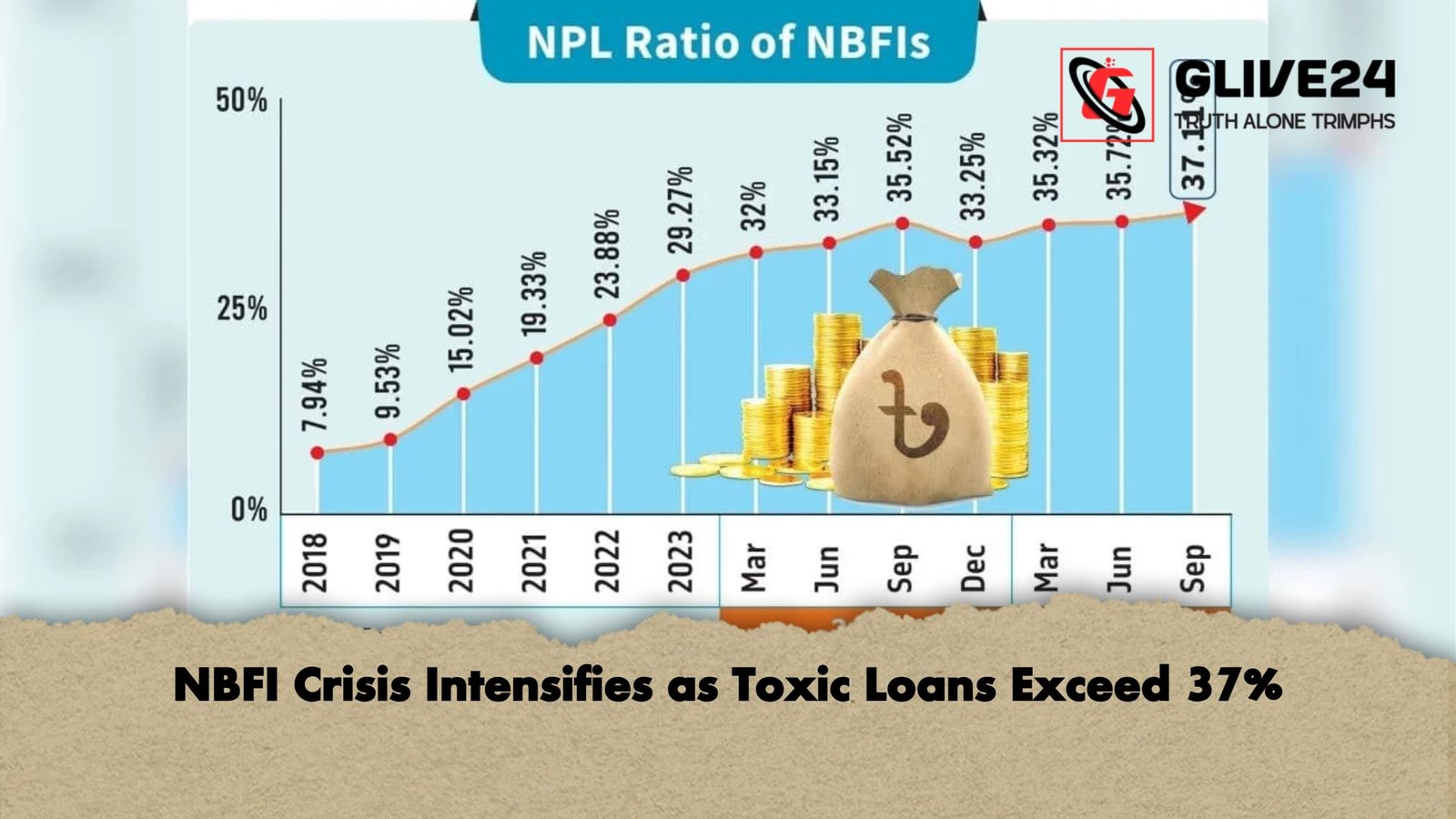
The structural integrity of Bangladesh’s Non-Bank Financial Institution (NBFI) sector has reached a critical tipping point. According to the latest figures released by the Bangladesh Bank, Non-Performing Loans (NPLs) surged to a staggering Tk 29,408 crore by the end of September 2025. This mountain of bad debt now accounts for 37.11% of the sector’s total credit portfolio, effectively meaning that more than one in every three pounds lent by these institutions is now considered “at risk” or defaulted.
A Rapid Quarterly Deterioration
The velocity at which the sector’s health is declining has sent shockwaves through the financial community. In the brief three-month window between June and September 2025, classified loans grew by Tk 1,867 crore. Analysis suggests that this is not merely a legacy issue; rather, both old and newly issued credit facilities are slipping into default at a rate that far outpaces overall loan growth.
| Financial Metric | June 2025 | September 2025 | Quarterly Shift |
| Total Outstanding Loans | Tk 77,094 cr | Tk 79,251 cr | +Tk 2,157 cr |
| Classified Loans (NPLs) | Tk 27,541 cr | Tk 29,408 cr | +Tk 1,867 cr |
| NPL Ratio | 35.72% | 37.11% | +1.39% |
| Total Sector Assets | Tk 100,721 cr | Tk 99,493 cr | -1.22% |
Stripping Away the Mask of Stability
Golam Sarwar Bhuiyan, Chairman of the Bangladesh Leasing and Finance Companies Association (BLFCA), has been candid about the reasons behind this statistical explosion. He argues that the “rot” was present for years but was deliberately concealed through “cosmetic” rescheduling and regulatory leniency.
Following the significant political shift on 5 August 2024, the central bank adopted a more stringent, transparent approach. “The true level of distress is finally being disclosed,” Bhuiyan noted. He highlighted that many elite borrowers, who had secured massive loans through political patronage, have since fled the country, triggering immediate defaults across their portfolios.
The Liquidity Trap and Inevitable Liquidations
The deepening crisis has triggered a crisis of confidence amongst the public. Fearing for the safety of their savings, depositors have begun withdrawing funds at an alarming rate, further starving the NBFIs of the liquidity they need to operate.
In a decisive, albeit painful, move to protect the wider economy, the central bank has earmarked nine high-risk institutions for liquidation. These include FAS Finance, Bangladesh Industrial Finance Company (BIFC), Premier Leasing, Fareast Finance, GSP Finance, Prime Finance, Aviva Finance, People’s Leasing, and International Leasing.
The government has capped the fiscal support for this process at Tk 5,000 crore, a move intended to ensure the liquidation does not place an unmanageable burden on the national exchequer. As the sector’s total assets continue to shrink and profitability remains elusive, the path to recovery appears increasingly narrow for the remaining players in the market.