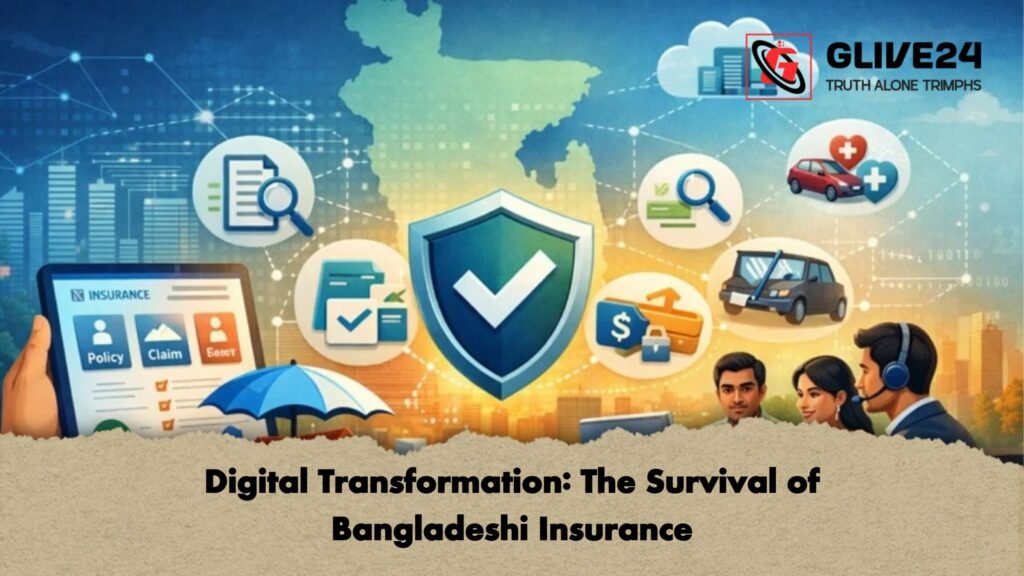
In the rapidly evolving financial landscape of Bangladesh, digital integration has transitioned from a modern convenience to a daily necessity. As citizens become accustomed to managing their lives via mobile handsets—from grocery shopping to instantaneous bank transfers—their expectations for all financial services have heightened. For an insurance sector traditionally tethered to physical ledgers and manual verification, the shift to specialized insurance software is no longer a matter of choice; it is the fundamental condition for institutional longevity.
Table of Contents
Building a Seamless Digital Backbone
At its core, modern insurance software is an integrated ecosystem that orchestrates the entire lifecycle of a policy. It consolidates underwriting, risk assessment, premium billing, and reporting into a unified digital stream. The primary strength of this transition is the creation of an organized, visible workflow. By replacing vague verbal updates with time-stamped digital logs, companies can ensure that every decision is verifiable and every document is securely archived. This transparency allows management to make data-driven decisions while providing customers with the clarity they deserve.
Healing the Trust Deficit
The most significant barrier to the growth of insurance in Bangladesh is the “trust gap,” primarily fueled by frustrating claims experiences. When a loss occurs, the arduous process of manual verification, repeated document requests, and lack of status updates often leads to public disillusionment.
Software solutions bridge this gap by making the claims process entirely “trackable.” When a policyholder can monitor the verification and approval stages in real-time, the perceived reliability of the institution soars. By reducing the time required for settlement and minimizing human error, digital tools can systematically rebuild the industry’s reputation.
The Digital vs. Manual Paradigm
| Operational Area | Traditional Manual System | Integrated Software Solution |
| Data Integrity | Risk of loss, physical damage, and duplication. | Encrypted cloud storage with automated backups. |
| Customer Interaction | Required physical visits or call centre queues. | 24/7 self-service portals and mobile apps. |
| Claims Processing | Opaque, slow, and prone to “missing” files. | Transparent, tracked, and automated validation. |
| Risk Management | Based on intuition and historical snapshots. | Real-time analytics and predictive modeling. |
| Operational Cost | High expenditure on paper, logistics, and labor. | Significant long-term savings through automation. |
Navigating Local Complexities
Implementing a digital solution in Bangladesh requires a nuanced understanding of the local “eco-system.” A successful platform must integrate seamlessly with local Mobile Financial Services (MFS), accommodate agent-centric sales models, and handle specific national documentation types. While off-the-shelf international software offers stability, it often requires significant localization to be effective on the ground.
Beyond the Software: Change Management
Technology is merely a tool; its efficacy depends on the hands that wield it. To avoid creating a “digital version of an old problem,” insurance companies must invest in Change Management. This involves comprehensive staff training, a shift in organizational culture toward transparency, and a rigorous focus on data privacy. As insurers handle sensitive personal and medical information, robust cybersecurity must be the foundation of any digital initiative.
Ultimately, the goal of digital transformation in Bangladesh’s insurance sector is to restore faith. When technology is used not as a “showpiece” but as a vehicle for honest, efficient service, insurance can finally become a cornerstone of the nation’s financial security.