
Khabor Wala Desk
Published: 22nd January 2026, 5:20 AM
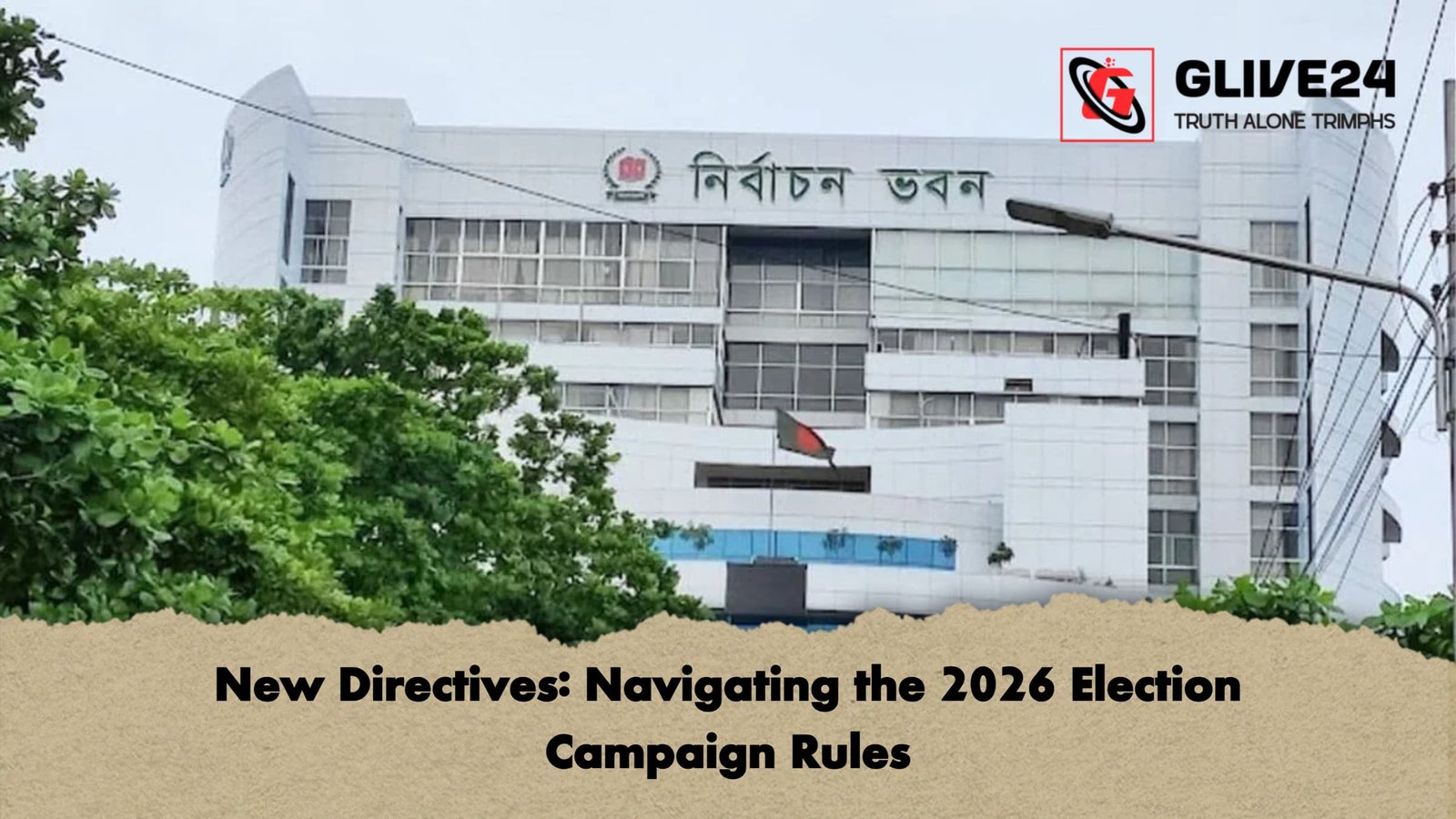
As the clock struck midnight on Thursday, 22 January 2026, the official three-week campaign period for the 13th National Parliamentary Election began across Bangladesh. However, unlike the boisterous and often chaotic cycles of the past, this year’s electioneering is governed by the stringent ‘Political Parties and Candidates Code of Conduct 2025’.
To enforce these mandates, the Election Commission (EC) has mobilised a high-level oversight network. Judicial and executive magistrates, alongside electoral inquiry committees, are now patrolling the 298 contested seats to ensure that no candidate—regardless of their political stature—oversteps the legal boundaries.
Table of Contents
In a major shift, the EC has prioritised environmental sustainability and urban aesthetics. The traditional practice of plastering walls with paper posters has been banned. Instead, candidates must adhere to specific material guidelines.
Biodegradable Materials: All banners and festoons must be made of cloth or jute.
Plastic Ban: The use of PVC, Rexine, or polythene for campaign materials is strictly prohibited to prevent drainage blockages and environmental degradation.
Limited Branding: Promotional materials may only feature the photographs of the candidate and their respective party chief; no other local or senior leaders’ images are permitted.
| Category | Allowed | Forbidden |
| Transport | Essential logistical vehicles | Bus, truck, and motorcycle rallies; “showdowns” |
| Aviation | Top party leaders only (President/Sec Gen) | Helicopters for candidates; drones; quadcopters |
| Social Media | Registered accounts; factual posts | AI deepfakes; hate speech; character assassination |
| Public Order | Meetings with 24-hour prior notice | Torchlight processions; blocking rival rallies |
| Timeframe | 2:00 PM to 8:00 PM (for microphones) | Use of loudspeakers outside specified hours |
For the first time, the Election Commission has introduced specific clauses to govern the use of Artificial Intelligence (AI). Candidates are prohibited from using AI or “deepfake” technology to create misleading content, distort an opponent’s appearance, or fabricate election-related data.
Furthermore, all digital assets—including social media IDs, email addresses, and account handles—must be pre-registered with the Returning Officer. This transparency is intended to curb the spread of misinformation and “coordinated inauthentic behaviour” targeting religious minorities or specific gender groups.
The “showdown” culture, characterised by massive convoys of buses and trucks, has been effectively outlawed. Candidates are forbidden from organising motorcades or boat rallies that disrupt public transit. Even traditional torchlight processions, long a staple of grassroots mobilisation, are now banned.
Election Commissioner Brigadier General (Retd) Abul Fazl Md. Sanaullah emphasised that the mobile courts have the authority to rescind a candidate’s eligibility on the spot for severe violations. “We urge everyone to follow the rules,” he stated. “The electoral inquiry committee is vigilant, and justice will be swift for those who attempt to sabotage the level playing field.”
With polling day set for 12 February, candidates now have precisely 20 days to engage with voters before the mandatory 48-hour pre-election silence begins.


Comments