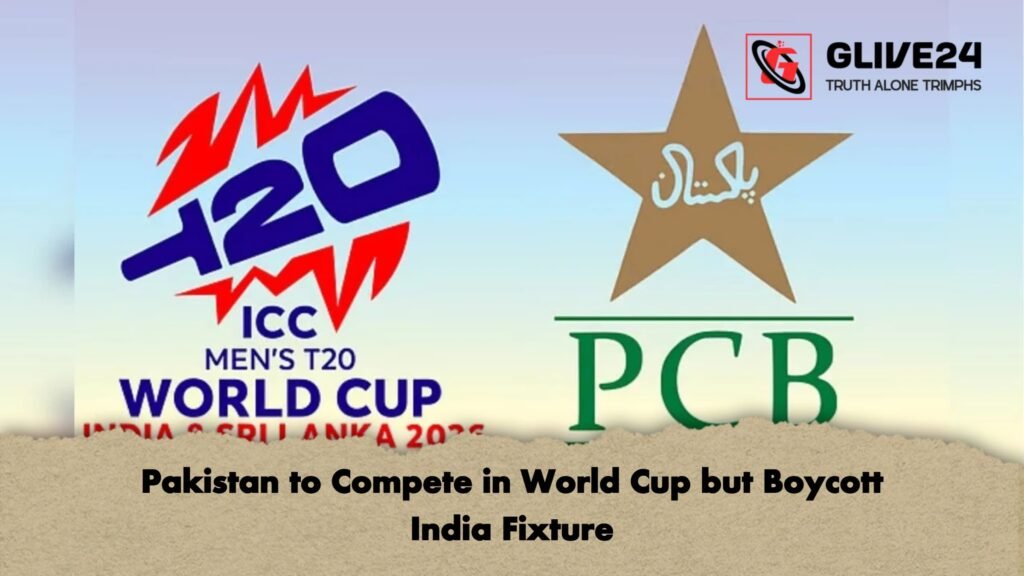
In a stunning escalation of cricketing diplomacy, the Government of Pakistan has formally announced that while the national team will participate in the 2026 ICC T20 World Cup, they will strictly boycott their high-profile fixture against arch-rivals India. The decision was made public late last night via official statements on the government’s X (formerly Twitter) and Facebook accounts, sending shockwaves through the sporting world.
Table of Contents
A Principled Stand over Bangladesh’s Exclusion
The root of this unprecedented move lies in the geopolitical fallout involving the Bangladesh Cricket Board (BCB). Tensions began when the BCCI allegedly influenced the removal of Bangladeshi pacer Mustafizur Rahman from the Kolkata Knight Riders (KKR) in the IPL. Subsequently, the BCB cited security concerns and requested a venue change for the World Cup. When the ICC refused and ultimately expelled Bangladesh from the tournament on 24 January—replacing them with Scotland—Pakistan became their sole vocal ally.
Mohsin Naqvi, Pakistan’s Interior Minister and PCB Chairman, had previously labelled the exclusion of Bangladesh as a “grave injustice.” Following high-level consultations with Prime Minister Shehbaz Sharif, the government concluded that a full withdrawal was unnecessary, but a symbolic boycott of the Indian match was essential to register their protest against the ICC’s perceived pro-India bias.
Group A Dynamics and the ‘Walkover’ Impact
Pakistan has been placed in Group A, and under the original schedule, they were set to face India in a blockbuster clash on 15 February 2026. By refusing to take the field, Pakistan will forfeit the match, handing India two vital points without a ball being bowled.
| Date | Opponent | Location | Status |
| 7 February | Netherlands | Sri Lanka | Confirmed |
| 10 February | USA | Sri Lanka | Confirmed |
| 15 February | India | Sri Lanka | Boycott (Forfeit) |
| 18 February | Namibia | Sri Lanka | Confirmed |
Technical Ramifications for Pakistan
Under ICC Playing Condition Clause 16.10.7, the consequences of a boycott are severe. While India will gain the win points, Pakistan’s Net Run Rate (NRR) will suffer a significant blow. For the purposes of NRR calculation, Pakistan will be treated as having played the full 20 overs without scoring a single run, potentially jeopardising their chances of progressing to the Super Eight stage if they slip up in their remaining fixtures.
Financial and Historical Context
Since 2012, the ICC has consistently placed India and Pakistan in the same group to maximise broadcast revenue, as their encounters are the most-watched sporting events globally. If this boycott holds, it will mark the first time since 2010 that a major ICC tournament has concluded without a head-to-head battle between the two giants.
As of this morning, neither the BCCI nor the ICC has issued a formal response to Pakistan’s declaration. The cricketing world now waits to see if the ICC will impose further sanctions or attempt a last-minute mediation.