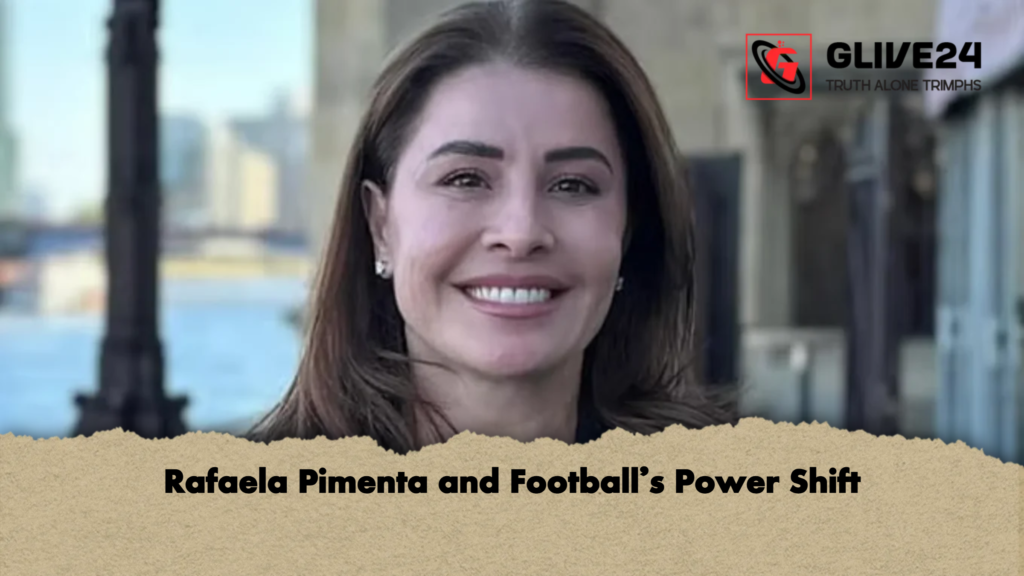
Rafaela Pimenta has never sprinted across a pristine pitch, celebrated a last-minute goal, or barked instructions from the technical area. Yet few figures exert more influence over modern football than this 53-year-old Brazilian agent. In 2026, she became the only football personality included in Forbes’ prestigious “Fifty Over Fifty” list, an annual ranking published every January that honours 50 women worldwide for exceptional impact, authority and leadership in their respective fields.
Pimenta’s inclusion places her alongside Oscar-winning actress Penélope Cruz and Dame Sarah Mullally, the first female Archbishop of Canterbury. That a football agent—moreover, a woman in a male-dominated industry—features in such company underlines the scale of her influence. Often described as the game’s first female “super-agent”, Pimenta represents some of the most valuable assets in world football. Her client list includes Manchester City’s prolific striker Erling Haaland, Liverpool head coach Arne Slot, and teenage Mexican prodigy Gilberto Mora, already regarded as one of North America’s brightest prospects.
Key Profile: Rafaela Pimenta
| Category | Details |
|---|---|
| Name | Rafaela Pimenta |
| Age | 53 |
| Nationality | Brazilian |
| Profession | Football agent |
| Forbes Recognition | Fifty Over Fifty (2026) |
| High-Profile Clients | Erling Haaland, Arne Slot, Gilberto Mora |
| Distinction | Football’s first female “super-agent” |
Following her Forbes recognition, Pimenta spoke candidly to BBC Sport about her work and the changing realities of football. Central to her critique is the modern transfer system, which she believes has tilted decisively in favour of clubs. According to Pimenta, players are increasingly powerless during transfer windows, often trapped by financial demands that override sporting or personal needs. She argues that while transfers are essential to football’s ecosystem, the balance of power has been lost. At the end of every window, she says, there is always at least one player left in tears—someone who needed a move but was blocked because a club demanded “another million pounds”.
Pimenta contrasts today’s market with a more “human” past, when personal relationships between players and club executives could help resolve difficult situations. Now, football has become an uncompromising business in which players are treated primarily as assets. Assets, she notes, have no voice, emotions or personal needs. The true challenge for the modern game is to reconcile the commercial value of players with their identity as human beings.
She also highlights how transfers themselves have grown vastly more complex. Deals that once took place behind closed doors over 18 hours now require months of preparation. Contracts must account for labour regulations, tax regimes and local laws across multiple jurisdictions. Players, Pimenta observes, effectively operate as small companies, with commercial opportunities beyond the pitch often eclipsing sporting concerns.
As Haaland’s agent, she sees this transformation first-hand. The Norwegian striker runs his own digital platforms, including a YouTube channel with more than 1.28 million subscribers. Where once a monthly magazine interview sufficed, today’s players juggle constant media exposure, sponsorships and investor expectations. For agents, the margin for error is vanishingly small. In Pimenta’s words, one mistake can erase years of work; the transfer market, like the pitch, remembers only the last result.
Pimenta’s career was forged alongside the late, controversial agent Mino Raiola. Though many assumed she simply inherited his role after his death, she insists she always operated independently. She recalls being the only person willing to say “no” to Raiola—a stance she feared would end their partnership within minutes. Instead, it lasted 35 years.
Being a woman, however, brought persistent challenges. Decision-making roles were once almost exclusively male, with only a handful of exceptions. Progress has been made, but gender bias remains. Pimenta has also spoken forcefully about abuse and injustice faced by women in football, citing the Luis Rubiales case following Spain’s 2023 Women’s World Cup triumph. For her, not only the act itself but the delay in accountability was deeply alarming.
Her message to women in football today is uncompromising: never accept abuse or discrimination. Pimenta says her fight is no longer just for herself, but for the next generation—so they do not have to endure what she did.