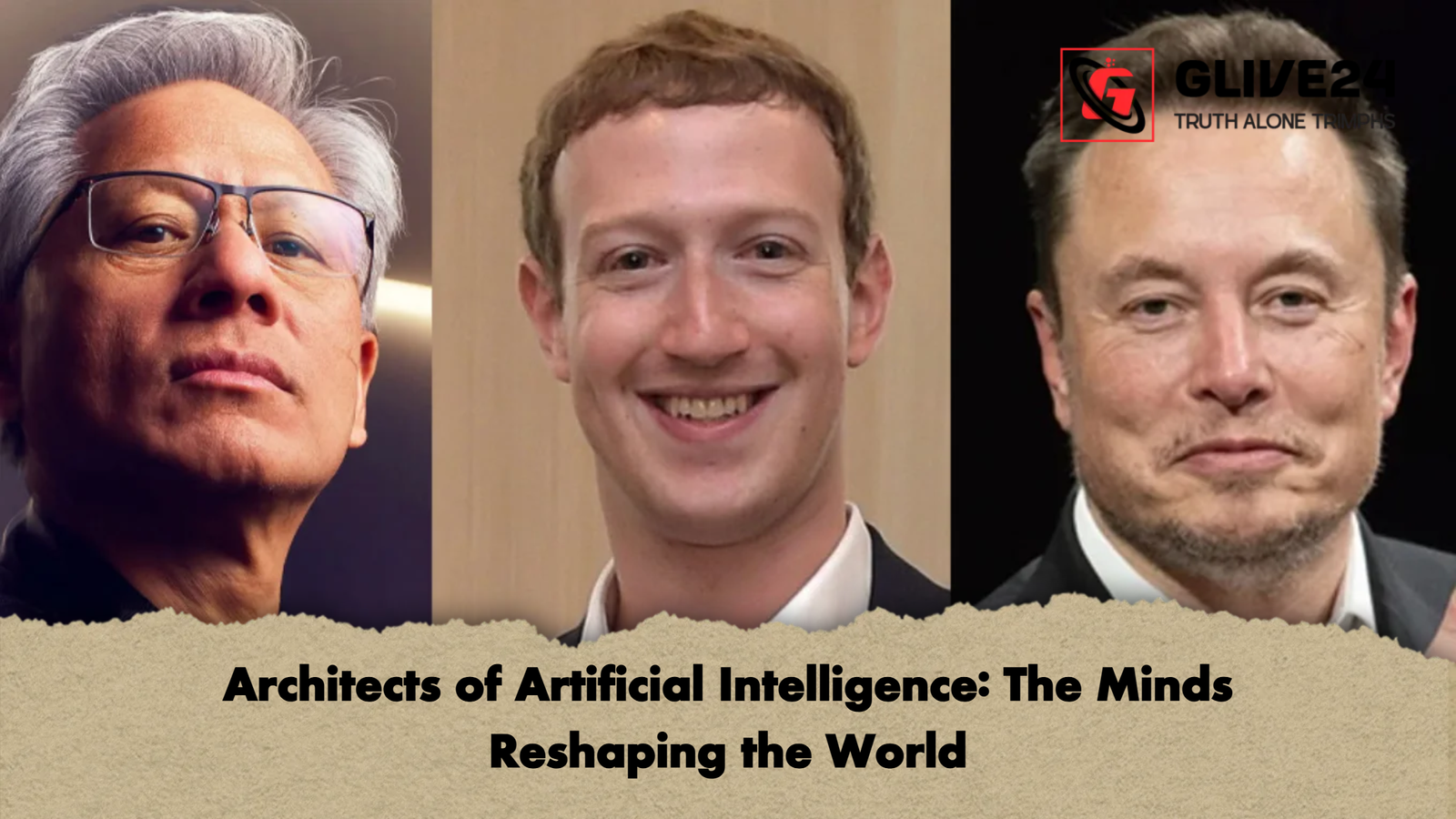
For the first time in its storied history, Time magazine has declined to name a single individual as its “Person of the Year” for 2025. Instead, the publication has chosen to honour a collective force: the architects of artificial intelligence. These figures, described by Time as the “AI Architects,” are the individuals whose work has propelled artificial intelligence from academic laboratories into the very fabric of everyday life.
According to Time, 2025 marks the decisive moment when artificial intelligence ceased to be a distant promise of the future and became an inescapable reality of the present. AI now influences how people work, learn, communicate, and make decisions. The transformation, the magazine argues, is permanent.
Table of Contents
Not One Person, but a Power :
This editorial choice is highly unusual. Traditionally, Time has recognised presidents, activists, innovators, or cultural icons. This year, however, the magazine has acknowledged that no single figure can encapsulate the scale of change underway. Instead, it has recognised an entire technological movement.
Editor-in-Chief Sam Jacobs writes that artificial intelligence has fundamentally altered human productivity and cognition. “AI has reshaped the way people work, think, and decide,” he notes, adding that the momentum of this transformation cannot be reversed.
Who Are the “AI Architects”?
The term “AI Architects” refers to the pioneers who have led the development, deployment, and global expansion of artificial intelligence technologies. These individuals have not only advanced research but also ensured that AI tools are widely accessible to the public.
| Name | Organisation | Key Contribution |
| Sam Altman | OpenAI | Popularisation of generative AI |
| Jensen Huang | Nvidia | AI hardware and chip innovation |
| Demis Hassabis | Google DeepMind | Scientific and research-driven AI |
| Mark Zuckerberg | Meta | AI integration in social platforms |
| Elon Musk | xAI | Advanced AI systems and safety debates |
| Dario Amodei | Anthropic | Ethical and safe AI development |
| Fei-Fei Li | Stanford University | Human-centred AI research |
| Lisa Su | AMD | High-performance AI computing |
Time credits these leaders with bringing AI out of research environments and placing its power into the hands of ordinary users.
Why AI Has Become Indispensable :
Artificial intelligence is no longer merely software; it has evolved into a global digital infrastructure. By 2025, platforms such as ChatGPT reportedly serve more than 800 million users worldwide. AI now writes code, assists in medical diagnosis, accelerates scientific research, supports education, enhances journalism, and reshapes creative industries. In essence, it amplifies human capability and efficiency across sectors.
Impact on Industry and the Global Economy:
AI is driving what many describe as a new industrial revolution. Vast data centres are being constructed, and the semiconductor industry has reached unprecedented levels of strategic importance. Companies like Nvidia and AMD have become central pillars of the global economy, while nations increasingly view AI leadership as a determinant of future geopolitical power.
Risks, Ethics, and Growing Concerns:
Despite its promise, AI presents serious challenges. Time highlights increasing risks to data privacy, the spread of deepfakes and misinformation, job displacement, and mental health concerns linked to overuse. Experts warn that without robust regulatory frameworks and ethical oversight, these issues may intensify.
A New Language of Power :
Artificial intelligence is no longer confined to technology—it has entered the realm of politics and global influence. Governments, particularly in the United States and other major economies, are rapidly increasing investment in AI. As Time concludes, artificial intelligence is fast becoming the language of future power, shaping not only economies but the trajectory of civilisation itself.