
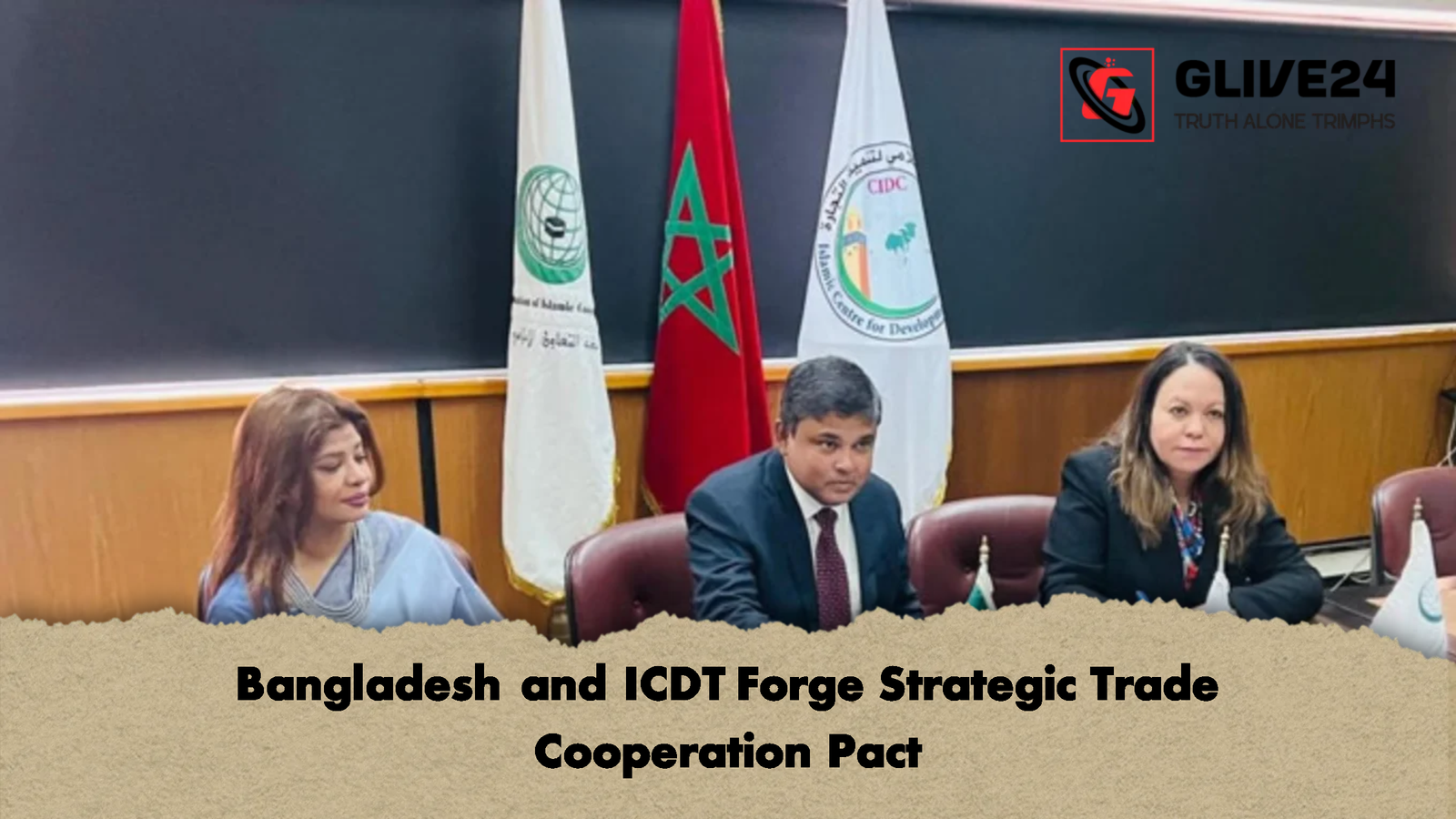
The Bangladesh Foreign Trade Institute (BFTI) and the Islamic Centre for Development of Trade (ICDT) have signed a Memorandum of Understanding (MoU) aimed at deepening cooperation in trade and investment development across member states of the Organisation of Islamic Cooperation (OIC).
The agreement was formally concluded on Friday at the ICDT headquarters in Casablanca, Morocco. It marks a significant milestone in strengthening institutional collaboration in areas such as economic research, policy development, trade facilitation, and capacity building within the wider OIC framework.
Table of Contents
Signing ceremony and delegation details
The MoU was signed on behalf of Bangladesh by Ambassador and Permanent Representative to the OIC, M. J. H. Javed. The ICDT was represented by its Director General, Latifa Elbouabdellaoui. The ceremony was attended by senior officials from both sides, including Bangladesh Ambassador to Morocco, Sadia Faizunnesa, as well as high-ranking representatives of ICDT.
The event underscored the growing engagement between Bangladesh and key OIC institutions, reflecting a shared commitment to enhancing economic cooperation among developing and emerging economies.
About ICDT
The Islamic Centre for Development of Trade, established in 1984 as a subsidiary organ of the OIC, is mandated to promote trade and investment cooperation among member states. The organisation focuses on research, policy coordination, trade promotion, and capacity development, with the broader objective of fostering economic integration across the Islamic world.
Pre-signing discussions and strategic outlook
Prior to the signing, the Bangladeshi delegation outlined the country’s strategic priorities, particularly its focus on expanding international trade, diversifying export markets, and attracting foreign investment.
The discussions reaffirmed Bangladesh’s ambition to position itself as a competitive and resilient trading nation within the global economy. The delegation also reiterated the government’s readiness to extend full cooperation to international partners in advancing trade facilitation and investment promotion initiatives.
Bangladesh further encouraged ICDT to integrate a wider range of national economic sectors and sub-sectors into its research and policy frameworks, ensuring that emerging economies such as Bangladesh are adequately reflected in analytical and development programmes.
Key areas of cooperation
| Area | Focus | Expected Outcome |
|---|---|---|
| Trade development | Market expansion and facilitation | Increased intra-OIC trade flows |
| Investment cooperation | Foreign direct investment promotion | Stronger investment linkages |
| Capacity building | Training and skills development | Enhanced professional expertise |
| Research & policy | Economic analysis and guidance | Improved policy alignment |
| Knowledge exchange | Institutional collaboration | Shared best practices |
Opportunities for professionals and institutions
Both parties welcomed the MoU as a landmark initiative expected to open new avenues for knowledge sharing, technical cooperation, and institutional engagement. The agreement is anticipated to create greater opportunities for Bangladeshi professionals to participate directly in ICDT-led programmes and initiatives.
Officials expressed confidence that the partnership would contribute to strengthening human resource development and deepening economic integration between Bangladesh and other OIC member states.
ICDT’s commitments and future initiatives
The Director General of ICDT expressed appreciation for Bangladesh’s sustained engagement within OIC platforms, noting the country’s consistent and constructive contributions to multilateral economic cooperation efforts.
She described the agreement as a “historic step” and extended gratitude to all stakeholders involved in facilitating the signing.
ICDT further indicated that, in recognition of Bangladesh’s active role, it is considering including the country as a pilot participant in selected trade development initiatives. The organisation is also exploring the potential of positioning Dhaka as a regional hub for trade and investment-related activities.
Future programme framework (2026–2027)
ICDT has announced plans to develop a structured trade and investment programme for the 2026–2027 cycle, which is expected to include:
- Trade branding and promotional campaigns
- International trade exhibitions and showcases
- Technical workshops and training sessions
- Business-to-business (B2B) matchmaking forums
- Capacity-building programmes for institutions and professionals
Duration and outlook
The MoU will initially remain valid for a period of two years. Both parties have expressed optimism that, subject to mutual agreement, the partnership will be extended and further expanded to deepen institutional collaboration and enhance the scope of joint initiatives.
The agreement is widely viewed as part of Bangladesh’s broader diplomatic and economic strategy to strengthen its global trade presence and reinforce partnerships within multilateral platforms, particularly across the OIC region.