
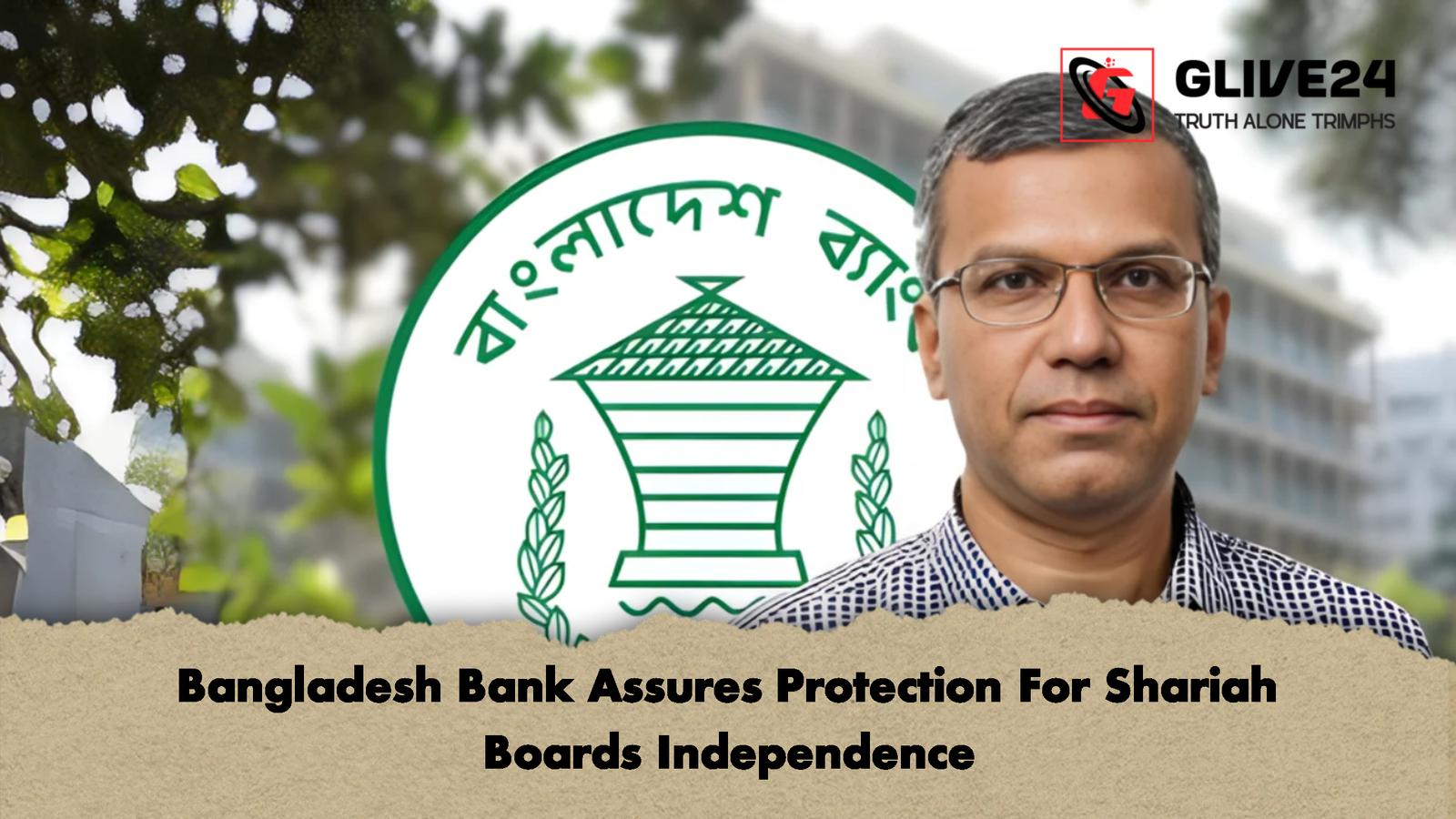
The Bangladesh Bank has pledged to ensure the independence and protection of Shariah supervisory boards as part of a broader effort to strengthen governance within the country’s Islamic banking sector. The assurance was delivered by Governor Dr. Md. Mostafizur Rahman during a high-level consultative meeting held at the central bank’s headquarters.
Addressing the session titled “Current State, Challenges and Future Directions of Islamic Banking”, the Governor called upon Shariah board members to carry out their without fear or external interference. He emphasised that the central bank would provide full institutional backing to safeguard their autonomy, enabling them to enforce Shariah compliance rigorously across financial institutions.
Table of Contents
Strengthening Governance in Islamic Finance
The Governor acknowledged that, in the past, inadequate regulatory oversight had contributed to irregularities within certain Islamic banks, including allegations of financial misconduct and money laundering. He noted, however, that Islamic banking—by virtue of its asset-backed financing model—generally carries a lower systemic risk when properly implemented.
“Ensuring robust governance is essential to restoring confidence in the sector,” he stated, adding that empowering Shariah boards would play a central role in achieving this objective.
Islamic banking operates on principles derived from Islam, prohibiting interest (riba) and promoting risk-sharing and ethical investment. As such, Shariah boards serve as critical oversight bodies, ensuring that financial products and operations comply with religious guidelines.
Key Proposals from Experts and Stakeholders
The meeting brought together prominent scholars, Shariah experts, academics, and senior banking officials, who collectively outlined a series of reform proposals aimed at enhancing transparency, accountability, and institutional resilience.
प्रमुख Recommendations Discussed
| Reform Area | Proposed Measures |
|---|---|
| Legal Framework | Enact a dedicated Islamic Banking Act |
| Regulatory Oversight | Appoint a separate Deputy Governor for Islamic banking supervision |
| Investment Approval | Require multiple Shariah board approvals for large investments |
| Board Independence | Ensure boards remain free from influence of bank directors |
| Capacity Building | Mandate minimum Islamic finance knowledge for bank |
| Audit & Compliance | Introduce regular external Shariah audits and transparent evaluation frameworks |
| Anti-Corruption | Enforce strict penalties for money laundering and major financial crimes |
| Liquidity Support | Provide terms for struggling Islamic banks |
Participants stressed that restoring depositor confidence would require visible enforcement against malpractice, particularly in cases involving large-scale financial irregularities. They also recommended establishing a transparent compliance assessment framework to monitor adherence to Shariah principles and regulatory standards.
Vision for a Regional Islamic Banking Hub
Looking ahead, policymakers and experts expressed optimism about Bangladesh’s potential to emerge as a regional hub for Islamic finance. To support this ambition, proposals were made to establish specialised research centres and well-equipped libraries dedicated to Islamic banking and finance.
There were also calls for a gradual transformation of conventional banks into Shariah-compliant institutions, allowing the financial system to evolve in line with growing demand for ethical and faith-based banking services.
Ensuring Independence and Institutional Integrity
In his closing remarks, the Governor underscored the importance of insulating Islamic banks and their oversight bodies from political and corporate influence. He urged all stakeholders to work towards building service-oriented, transparent, and accountable institutions that prioritise public trust.
The meeting concluded with a renewed commitment from the central bank to foster a stable, credible, and well-regulated Islamic banking ecosystem. Senior officials from Bangladesh Bank, along with members of Shariah boards from various Islamic banks, were present at the event.
As Bangladesh continues to expand its finance sector, the emphasis on governance, independence, and compliance is expected to play a role in shaping its long-term sustainability and global competitiveness.