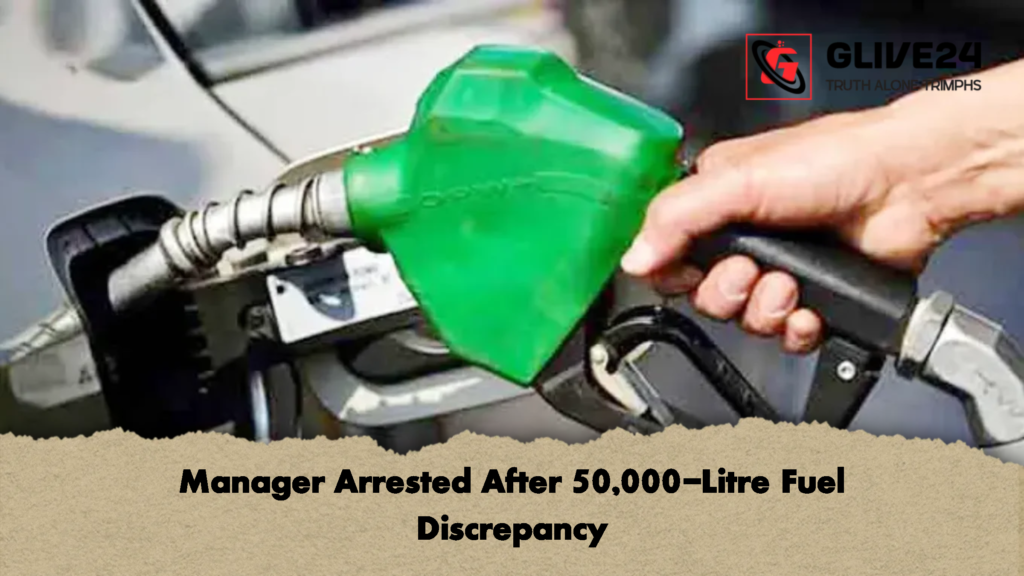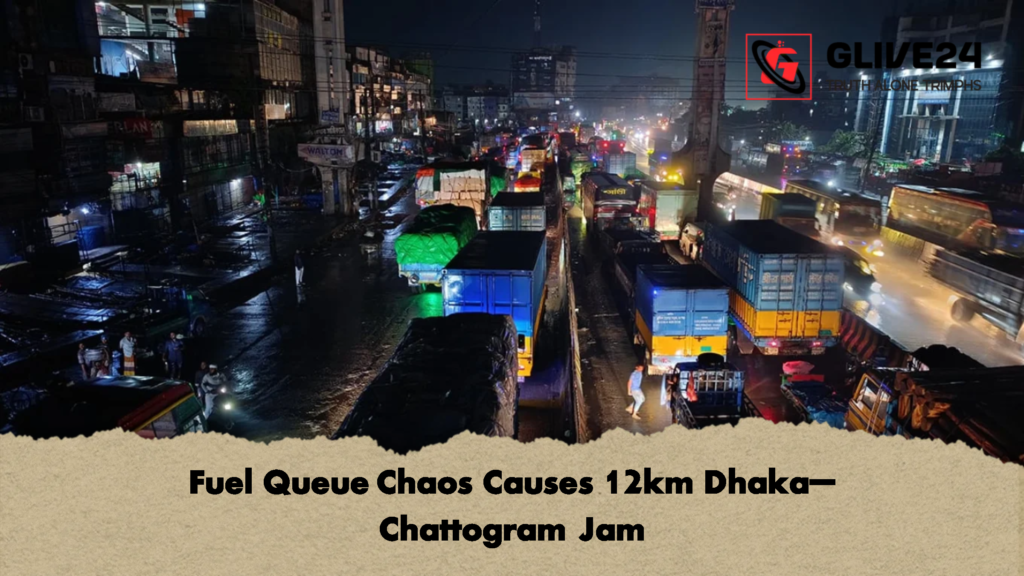
A massive tailback of vehicles formed along the Dhaka–Chattogram Highway after an unusually long queue at a fuel station in Matuail spilled onto the main carriageway, bringing traffic on the inbound lane towards the capital to a near standstill for hours.
The congestion stretched approximately 12 kilometres, from Matuail to Madanpur, as heavy vehicles queued overnight to refuel, blocking a significant portion of one of the country’s busiest transport corridors.
The incident occurred shortly after midnight on Tuesday (8 April), when the pressure of vehicles waiting at the petrol station overflowed onto the highway, creating a cascading traffic disruption that worsened as the night progressed.
Table of Contents
Breakdown of the traffic disruption
| Category | Details |
|---|---|
| Location | Matuail to Madanpur, Dhaka–Chattogram Highway |
| Distance affected | Approximately 12 kilometres |
| Time of incident | Around 12:00am, Tuesday (8 April) |
| Direction impacted | Inbound (towards Dhaka) lane |
| Primary cause | Fuel queue overflow from petrol station |
| Vehicle types affected | Buses, trucks, covered vans, private cars |
| Weather factor | Heavy rainfall reported |
| Control authority | Highway Police (Shimrail Camp) |
Queue at fuel station spills onto highway
According to traffic authorities, the disruption began when a petrol station in Matuail became overwhelmed by vehicles attempting to refuel. As the queue lengthened beyond the station’s capacity, vehicles began lining up directly on the highway, gradually obstructing the Dhaka-bound lane.
Shimrail Highway Police Camp Traffic Inspector Julhas Uddin confirmed that officers were deployed to manage the situation but struggled to restore normal flow due to the scale of the congestion and persistent rainfall.
“The queue at the fuel station extended onto the highway, and heavy rain made the situation even more difficult to control. Our personnel were on-site, but the traffic could not be brought under control,” he said.
Traffic paralysis spreads across key route
Local sources and eyewitnesses reported that commercial vehicles—including freight trucks, covered vans, and long-distance passenger buses—began queuing well before midnight in anticipation of refuelling. However, as space within the station filled up, vehicles spilled onto the highway, effectively occupying a large portion of the inbound lane.
The resulting obstruction severely reduced road capacity, causing vehicles to slow to a crawl before eventually coming to a near standstill. As the night progressed, the jam extended across multiple critical points, including Matuail, Signboard, Shimrail, and Kanchpur, reaching as far as Madanpur.
Drivers described prolonged delays, with some reporting that they remained stuck in the same position for hours with minimal movement.
Drivers and passengers bear the brunt
Transport operators said even short-distance travel became unusually time-consuming due to the congestion. Long-distance bus services were forced to move at a very slow pace, while freight vehicles transporting goods to and from the capital experienced significant delays.
Passengers on intercity buses reported discomfort and frustration, particularly those travelling overnight when such congestion is typically less expected. Many expressed concern over the lack of effective queue management at fuel stations located along major highways.
Repeated concerns over highway fuel stations
Local residents and transport workers have long raised concerns about fuel stations situated directly alongside busy highways. They argue that inadequate management of refuelling queues frequently leads to spillover onto main roads, creating dangerous bottlenecks.
In many cases, they say, there is no structured system to prevent vehicles from waiting on the highway itself, forcing through-traffic to share space with stationary queues.
Call for coordinated traffic management
Affected drivers and passengers have urged authorities to implement stricter control measures, including designated queuing zones within fuel station premises and stronger enforcement to prevent spillover onto national highways.
They also stressed that even minor operational mismanagement on this heavily trafficked corridor can quickly escalate into kilometre-long congestion, disrupting supply chains and passenger movement across the country.
Experts and commuters alike have called for coordinated action between the Highway Police, local administration, and fuel station operators to ensure that such incidents do not recur, particularly along the vital Dhaka–Chattogram route, which serves as the country’s primary commercial artery.