
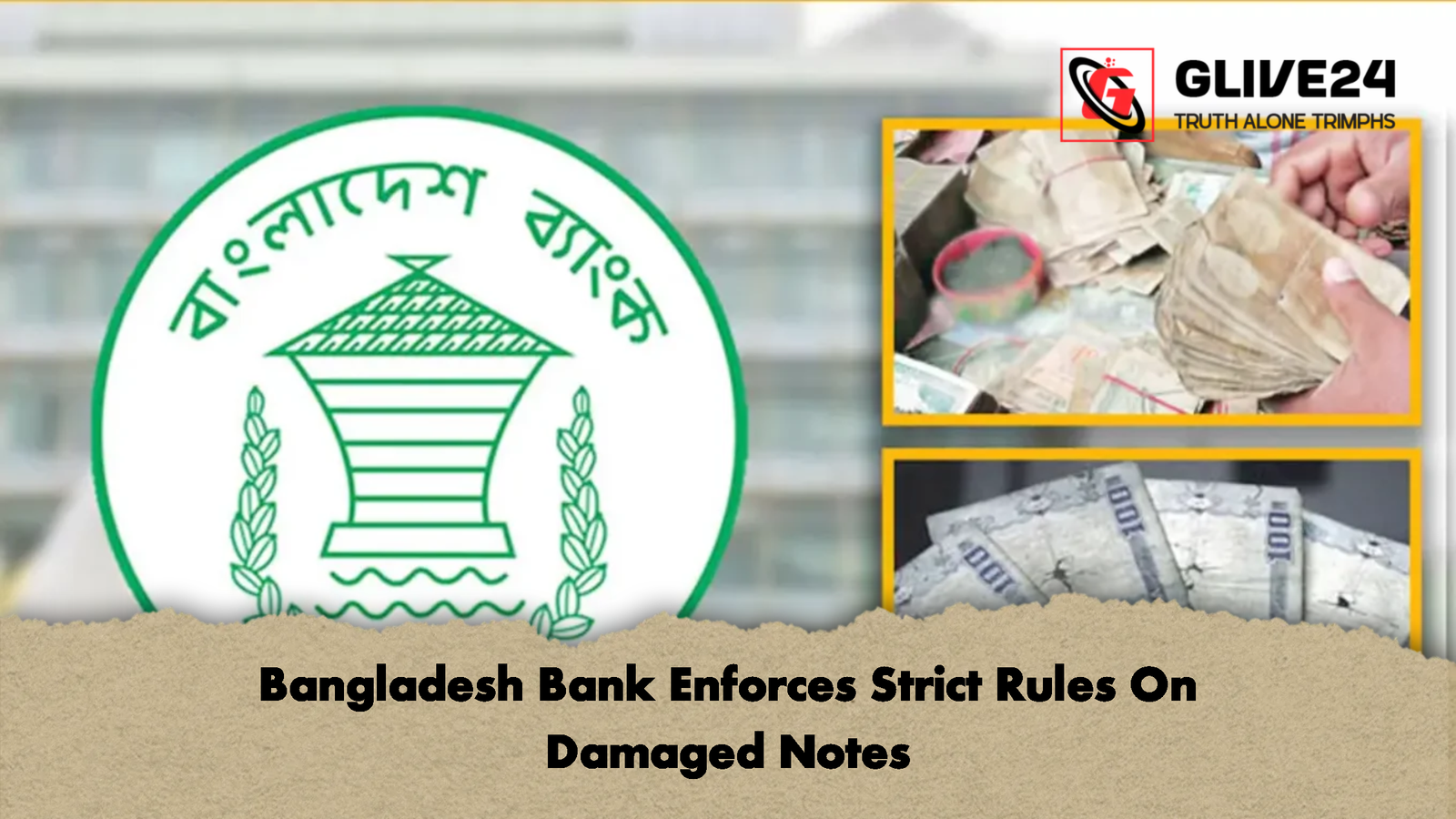
The Bangladesh Bank has introduced a stringent directive compelling all scheduled banks to accept and exchange torn, mutilated, and soiled banknotes, warning of strict penalties for non-compliance. The move comes in response to mounting public dissatisfaction over the widespread circulation of damaged currency, which has increasingly disrupted everyday financial transactions across the country.
Issued on Sunday (12 April), the directive reinforces existing regulations while signalling a more assertive enforcement stance by the central bank. Officials have made it clear that any reluctance or negligence on the part of bank branches will not be tolerated, as such practices undermine trust in the financial system and inconvenience millions of cash-dependent citizens.
Table of Contents
Strengthening Currency Management Nationwide
The directive forms part of the broader “Clean Note Policy”, an initiative designed to improve the quality and usability of currency in circulation. Despite earlier instructions, Bangladesh Bank has observed that damaged notes continue to be widely used, often due to banks refusing to accept them from customers.
To address this issue, all bank branches have now been instructed to maintain uninterrupted services for accepting defective notes and providing replacements—either fresh notes or those deemed fit for recirculation. The central bank has emphasised that this responsibility is not discretionary but a legal obligation.
Key Provisions of the Directive
| Requirement | Description |
|---|---|
| Mandatory acceptance | All torn, soiled, and mutilated notes must be accepted |
| Replacement service | Customers must receive fresh or usable notes in exchange |
| Dedicated counters | Special service points to facilitate note exchange |
| Priority denominations | Tk 5, Tk 10, Tk 20, Tk 50 notes |
| Enforcement mechanism | Legal action against non-compliant branches |
Focus on Lower-Denomination Currency
Special attention has been directed towards lower-denomination notes—Tk 5, Tk 10, Tk 20, and Tk 50—which are heavily used in daily transactions and tend to deteriorate more quickly. Banks are required to collect these notes regularly and ensure their prompt replacement through designated counters.
The central bank noted that the persistent circulation of damaged notes not only complicates transactions but also creates friction in informal markets, public transport, and small-scale retail sectors, where such denominations are most commonly used.
Legal Authority and Compliance Measures
The directive has been issued under Section 45 of the Bank Companies Act, 1991, granting Bangladesh Bank the authority to enforce compliance across the banking sector. The regulator has categorised the matter as “extremely important”, underlining its intention to adopt a zero-tolerance approach.
Banks failing to comply may face regulatory sanctions, which could include fines, administrative action, or other legal consequences. The central bank has also hinted at increased monitoring and possible inspections to ensure adherence at the branch level.
Impact on Consumers and the Economy
From a broader perspective, the directive is expected to significantly enhance customer experience within the banking system. For years, customers have complained about arbitrary refusals by banks to accept damaged notes, often leaving them with unusable cash.
Economists argue that efficient currency management is critical in an economy like Bangladesh, where a large proportion of transactions still rely on physical cash. Ensuring the smooth exchange of damaged notes will help maintain liquidity, reduce transaction barriers, and support small businesses that depend on cash flow.
Moreover, the initiative is seen as a step towards strengthening institutional accountability within the banking sector, encouraging banks to prioritise customer service alongside regulatory compliance.
Outlook and Implementation Challenges
While the directive has been widely welcomed, its success will depend on effective enforcement and consistent implementation. Bangladesh Bank is expected to monitor compliance closely and take swift action against any violations.
If properly executed, the policy could restore public confidence in the banking system, improve the quality of circulating currency, and eliminate a long-standing source of frustration for consumers. However, sustained oversight and cooperation from financial institutions will be essential to ensure that the directive delivers its intended outcomes.