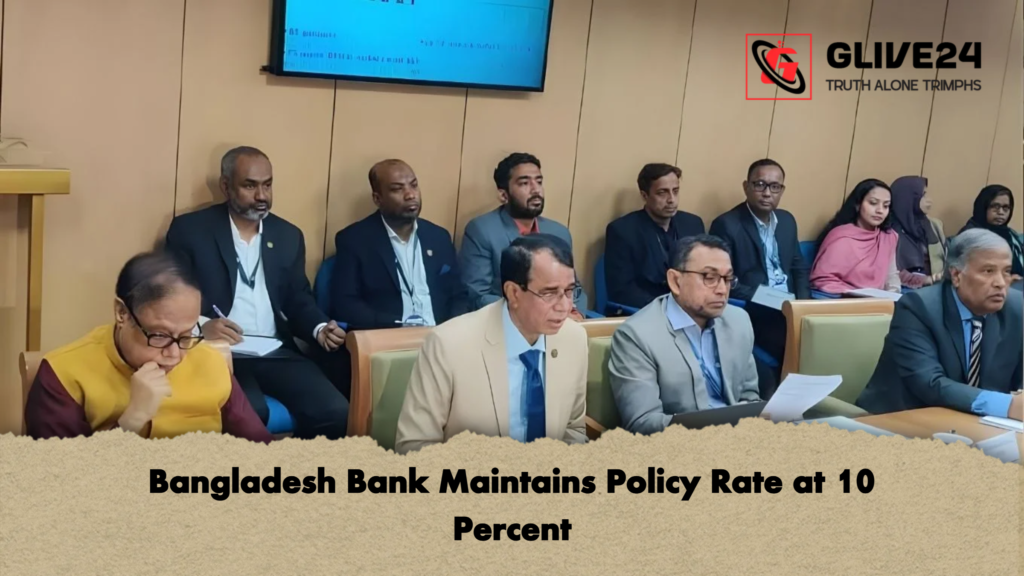
In a move aimed at controlling inflation and safeguarding economic stability, Bangladesh Bank has announced its monetary policy for the first half of the year, maintaining continuity with previous measures. The central bank has kept the policy interest rate unchanged at 10 percent. This decision is intended to regulate the flow of credit and investment in the market while supporting exchange rate stability.
Governor of Bangladesh Bank, Ahsan H. Mansur, stated, “Aside from the target of reducing inflation to 7 percent, all other indicators show that our monetary policy has been successful. We expect inflation to come under control in the coming months, and our foreign exchange reserves remain stronger than before.”
According to official figures, point-to-point inflation in January rose to 8.58 percent, up from 8.29 percent in December. Economists note that inflationary pressures are likely to persist into March due to the national parliamentary elections, the impact of February activities, and the forthcoming Ramadan season. Over the past three months, the central bank has actively sought to manage rising inflation.
The International Monetary Fund (IMF) has recommended that the policy rate should remain unchanged until inflation falls below 7 percent. In line with this guidance, Bangladesh Bank has also made minor adjustments to other interest rates while keeping the policy rate steady.
Monetary Policy Rate Structure:
| Indicator | Previous Rate | New Rate | Comments |
|---|---|---|---|
| Policy Rate | 10% | 10% | Unchanged |
| SLF Rate (Standing Liquidity Facility) | 11.5% | 11.5% | Unchanged |
| SDF Rate (Special Deposit Facility) | 8% | 7.5% | Slight reduction |
| Private Sector Credit Flow (Projection) | 7.2% | 8.5% | Increased to encourage lending |
Bangladesh Bank has long pursued a contractionary monetary policy. When inflation reached double digits at 9.52 percent in September 2022, the policy rate was raised. By July 2024, inflation surged to 11.66 percent. In response to student protests and political changes, the central bank implemented a strict contractionary policy from August 2024. This gradually reduced inflation to 8.17 percent by October 2025. However, it climbed again over the following three months, reaching 8.58 percent in January 2026.
Governor Mansur added, “Maintaining interest rates has helped stabilise the exchange rate. Remittance inflows and foreign currency supply are also rising, which is positive for the economy.”
Bangladesh Bank’s monetary policy primarily focuses on regulating money supply, credit flow, and inflation. By reviewing and announcing the policy every six months, the central bank aims to preserve economic stability during the first half of 2026.