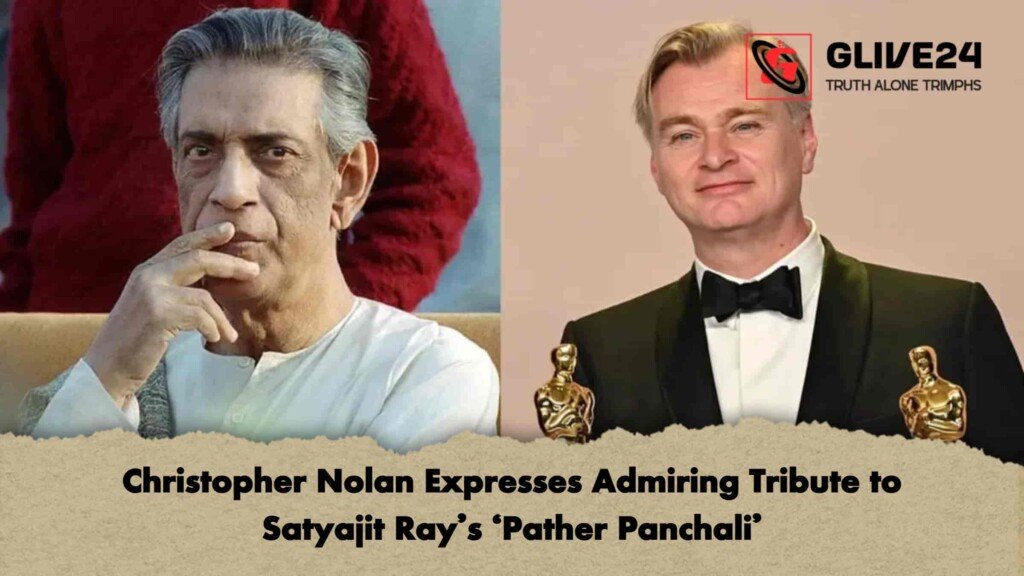
Acclaimed Academy Award-winning filmmaker Christopher Nolan has reaffirmed his deep appreciation for Indian cinema, offering glowing praise for the revered Bengali director Satyajit Ray. On a recent visit to the iconic Criterion Closet in New York, the blockbuster auteur selected Ray’s celebrated Apu Trilogy, revealing that its debut chapter, Pather Panchali, had left him utterly spellbound.
The Criterion Closet, curated by the world-renowned Criterion Collection, serves as a treasure trove containing more than a thousand masterworks of international cinematic heritage. Prominent filmmakers, performers, and creative visionaries are regularly invited to explore its shelves, picking out foundational works that have inspired their artistic journeys or sparked their creative curiosity.
In footage shared across the Criterion Collection’s official X (formerly Twitter) channel, Nolan is seen meticulously searching the vault before retrieving The Apu Trilogy collection. Reflecting on the Indian cinematic milestone, Nolan stated:
“This is Satyajit Ray’s Apu Trilogy, crafted by one of the absolute giants of Indian cinema. It opens with Pather Panchali, which is an utterly astounding film. It completely blew my mind. Having not yet seen the second and third parts of the trilogy, I am tremendously eager to take this set home and experience the rest of the narrative.”
First released in 1955, Pather Panchali marked Satyajit Ray’s groundbreaking directorial debut and laid the foundation for his masterwork trilogy. Based on Bibhutibhushan Bandyopadhyay’s celebrated classic novel, the Bengali masterpiece delivers an intimate portrait of hardship, resilience, and childhood innocence within a impoverished rural Bengali village, seen through the eyes of a young boy named Apu. Universally lauded for its poetic realism, emotional authenticity, and evocative musical score composed by Pandit Ravi Shankar, the film garnered international renown—including a special award at the Cannes Film Festival—and continues to feature prominently on lists of the greatest cinematic achievements in history. The remaining chapters, Aparajito (1956) and Apur Sansar (1959), chronicle Apu’s poignant evolution into young adulthood.
This enthusiastic endorsement highlights Nolan’s enduring engagement with the Indian subcontinent and its rich cinematic traditions. The British-American director has maintained a close relationship with the region over the years, having filmed pivotal sequences for The Dark Knight Rises in Jodhpur and Tenet in Mumbai, while actively collaborating with local archival institutions to advocate for the preservation of physical film celluloid.