
Khabor Wala Desk
Published: 18th May 2026, 1:17 PM
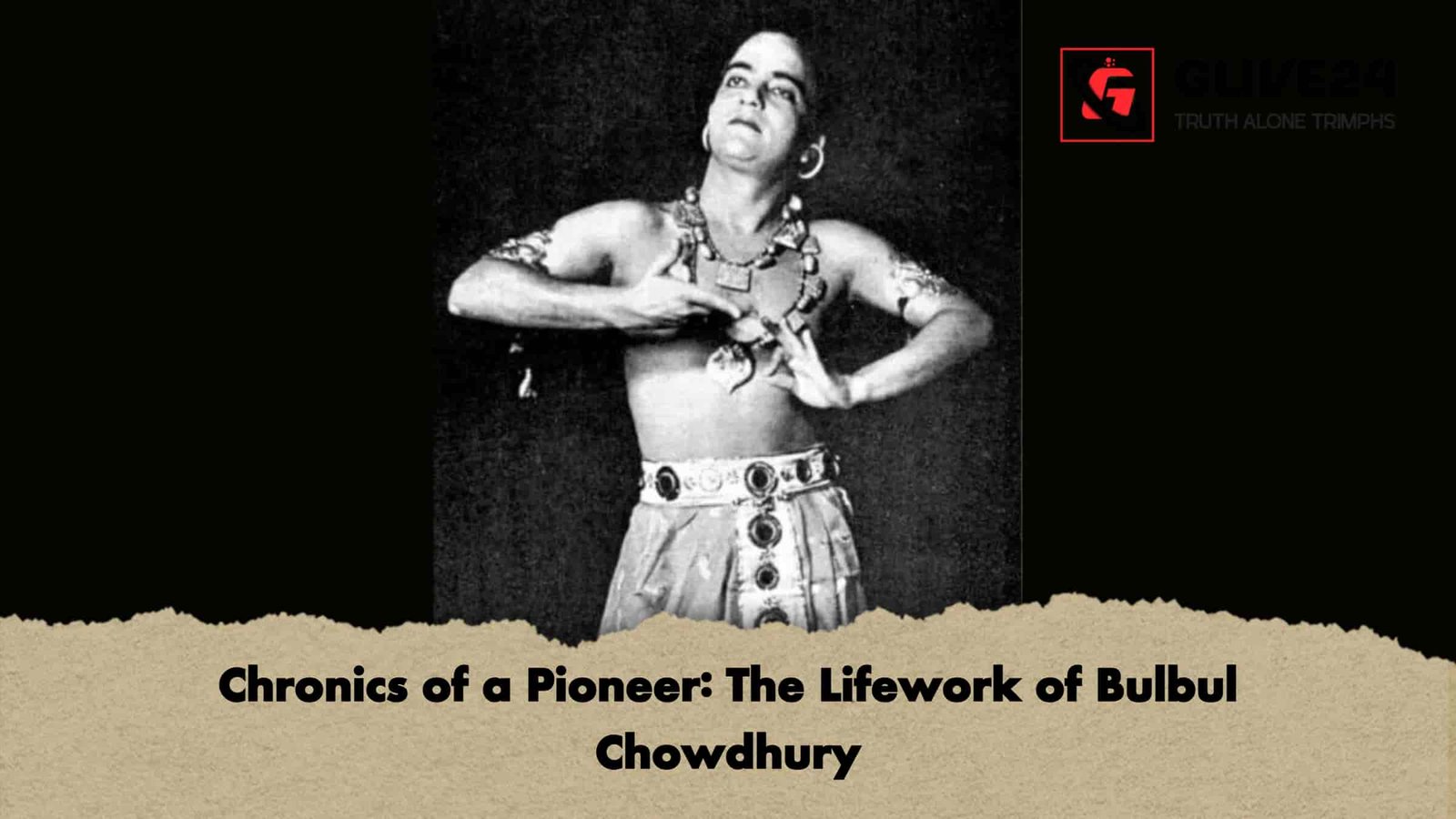
The historical narrative of South Asian performing arts places Bulbul Chowdhury among its most influential figures. Across a career defining the mid-twentieth century, he operated as a dancer, choreographer, cultural organiser, and author. He is widely credited with establishing modern dance-drama within the subcontinent, purposefully aligning physical expression with social realism, historical memory, and universal humanitarian concerns.
Born on 1 January 1919 in Chunati, a village located in the Satkania jurisdiction of Chittagong, his birth name was Rashid Ahmed Chowdhury. He subsequently adopted the professional moniker “Bulbul Chowdhury”, by which he remains شناخته in cultural history. His father, Mohammed Azamullah, was an official within the Bengal Police Service, serving as an inspector. Chowdhury’s early education began under home tutors, focusing on Arabic and Persian languages, before he matriculated through standard institutions including Howrah Primary School. He later pursued advanced academic qualifications, graduating with a Master of Arts degree from the University of Calcutta in 1943.
Chowdhury exhibited a distinct aptitude for multiple artistic disciplines—notably vocal music, sketching, and literature—from early childhood. In 1934, a competitive art exhibition hosted by Manikganj High School awarded him first prize for his paintings. Nevertheless, dance emerged as his defining professional calling. His public debut occurred during a cultural programme at the same school, where he performed a self-choreographed piece titled Chatak-Nritya (The Swallow Dance). His profile expanded rapidly during his undergraduate years at Presidency College, Calcutta, where his performances brought him into direct contact with leading musical and dance figures, including sarod virtuoso Santosh Chandra, composer Timir Baran Bhattacharya, and dance maestros Uday Shankar and Sadhana Bose.
A formative milestone occurred in 1936 when Chowdhury partnered with the dancer Sadhana Bose to stage Rabindranath Tagore’s classical dance-drama Kach O Devayani. By 1937, he was actively involved in creating institutional frameworks for the arts, spearheading the formation of the Oriental Fine Arts Association (OFA).
Chowdhury’s approach to choreography explicitly rejected the concept of dance as a superficial medium; instead, he utilised structured movement to convey historical data, secular philosophies, and contemporary socio-economic crises. His productions fused classical forms with theatrical mime and narrative themes. His subject matter was intentionally diverse and non-communal, drawing equally from Hindu and Islamic mythology, agrarian folklore, and immediate realities like the Second World War and regional famines. His wife and professional partner, Afroza Bulbul, was herself an accomplished dancer who participated directly in his touring companies.
| Chronological Phase | Geographic Venue | Institutional & Professional Milestones |
| 1934 | Manikganj, Bengal | Public debut with self-composed piece Chatak-Nritya |
| 1936 | Calcutta, Bengal | Collaborative staging of Tagore’s Kach O Devayani |
| 1937 | Calcutta, Bengal | Co-founded the Oriental Fine Arts Association (OFA) |
| 1940 | Dhaka, Bengal | Conducted regional tours, introducing modern dance-drama |
| 1941 (31 March) | Calcutta, Bengal | Formal inauguration of the Kolkata Krishti Kendra |
| 1950 – 1952 | East & West Pakistan | Executed extensive national performance itineraries |
| 1953 | Western Europe | International tour across Britain, Ireland, Holland, Belgium, and France |
Between 1934 and 1954, Chowdhury created and staged roughly 70 distinct dance-dramas. Among his most prominent compositions were Abhimanyu, Indrasabha, Sapure (The Snake Charmer), Kabi O Basanta (The Poet and Spring), Maru Sangeet (Desert Song), Fashal Utsab (Harvest Festival), Jiban O Mrityu (Life and Death), Ajanta Jagaran, Kalbaishakhi (The Nor’wester), Hafizer Swapno (The Dream of Hafiz), Kshudhita Pashan (The Hungry Stones), Mahabhubhuksha (The Great Famine), Bharat Chhar (Quit India), Anarkali, and Raasleela.
His productions, particularly during his 1953 European tour, received critical validation from the international press. Detailed reviews of his choreography were published in newspapers including Amrita Bazar Patrika, The Statesman, and Star of India within India; Dawn in Karachi; The Daily Telegraph in London; and Le Figaro in Paris. Parallel to his theatrical work, Chowdhury engaged in literary production; he published short stories and completed a wartime novel, Prachi, in 1942.
Bulbul Chowdhury died in Calcutta on 17 May 1954 at the age of 35. To safeguard his methodology and institutionalise his cultural legacy, the Bulbul Academy of Fine Arts (BAFA) was established in Dhaka on 17 May 1955, precisely one year after his death. The academy remains a principal institution for classical and modern arts education in Bangladesh.




Comments