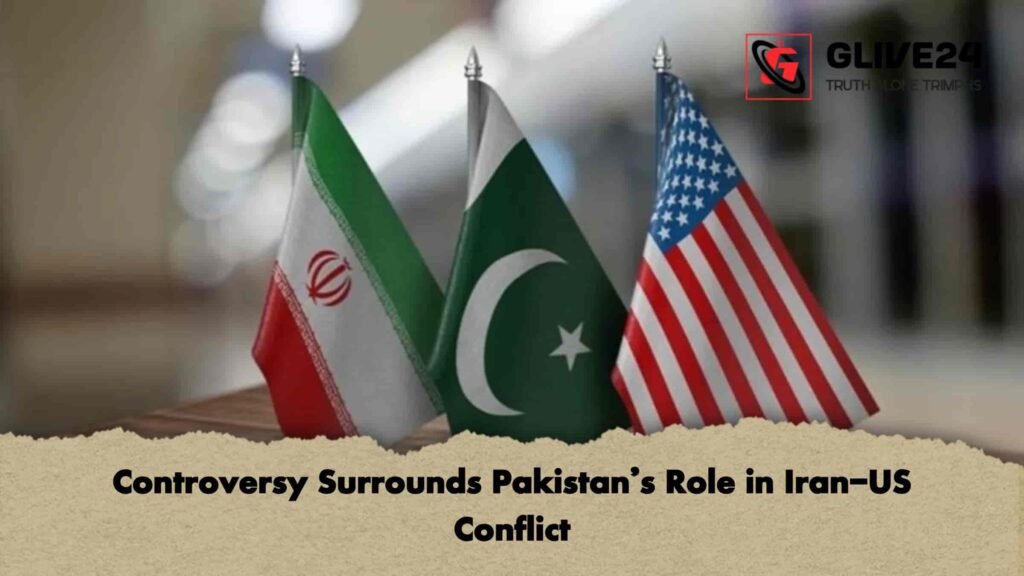
A diplomatic dispute has emerged regarding Pakistan’s involvement in the ongoing tensions between the United States and Iran. According to reports citing American officials, Pakistan allegedly permitted the Iranian military to utilise one of its strategic airbases during the height of the recent conflict. This allegation stands in direct contrast to Islamabad’s official diplomatic stance, as the Pakistani government has consistently positioned itself as a neutral mediator seeking to de-escalate hostilities between the two sovereign nations.
Table of Contents
Allegations of Military Asset Transfer
A report published by CBS News indicates that following a ceasefire announcement by United States President Donald Trump in early April, Iranian forces relocated several military assets and aircraft to the Noor Khan Airbase in Rawalpindi, Pakistan. US intelligence suggests that this move was a strategic manoeuvre intended to safeguard high-value military equipment from potential American airstrikes.
Among the hardware reportedly moved was a sophisticated RC-130 reconnaissance aircraft. These platforms are typically equipped for signals intelligence and surveillance, making them critical assets in modern aerial warfare. US officials contend that the relocation occurred almost immediately after the reduction in active hostilities, raising questions about prior coordination between Tehran and Islamabad.
Summary of Allegations and Official Responses
| Feature | Details |
| Location of Dispute | Noor Khan Airbase, Rawalpindi, Pakistan |
| Primary Allegation | Iranian use of Pakistani military facilities |
| Identified Hardware | RC-130 Reconnaissance Aircraft |
| Initial Source | CBS News Report |
| US Political Reaction | Call for re-evaluation of diplomatic trust |
| Pakistan’s Position | Categorical denial of all allegations |
Official Denials and Territorial Context
The Pakistani government has issued a firm denial regarding these claims. A senior Pakistani official clarified that the Noor Khan Airbase is situated within a densely populated urban area of Rawalpindi. The official argued that the logistical complexity of hiding or operating foreign military aircraft in such a visible and congested environment would render clandestine activities impossible. Islamabad maintains that its sole objective remains the facilitation of dialogue between Washington and Tehran.
Political Consequences in Washington
The report has elicited a sharp response from senior United States lawmakers. Republican Senator Lindsey Graham expressed significant concern, suggesting that if the reports are substantiated, Washington must reassess its reliance on Pakistan as a credible mediator. Graham remarked that the integrity of the bilateral relationship is at risk if a designated partner is found to be providing sanctuary to the military assets of an adversarial power.
The situation remains a point of contention as intelligence agencies continue to monitor regional movements. While Pakistan insists on its neutrality, the pressure from Washington suggests a growing trust deficit that could impact future diplomatic and military cooperation in South Asia. As of now, the United States administration has not officially altered its policy, but the scrutiny over the Noor Khan Airbase signifies a shift in the geopolitical monitoring of the region.