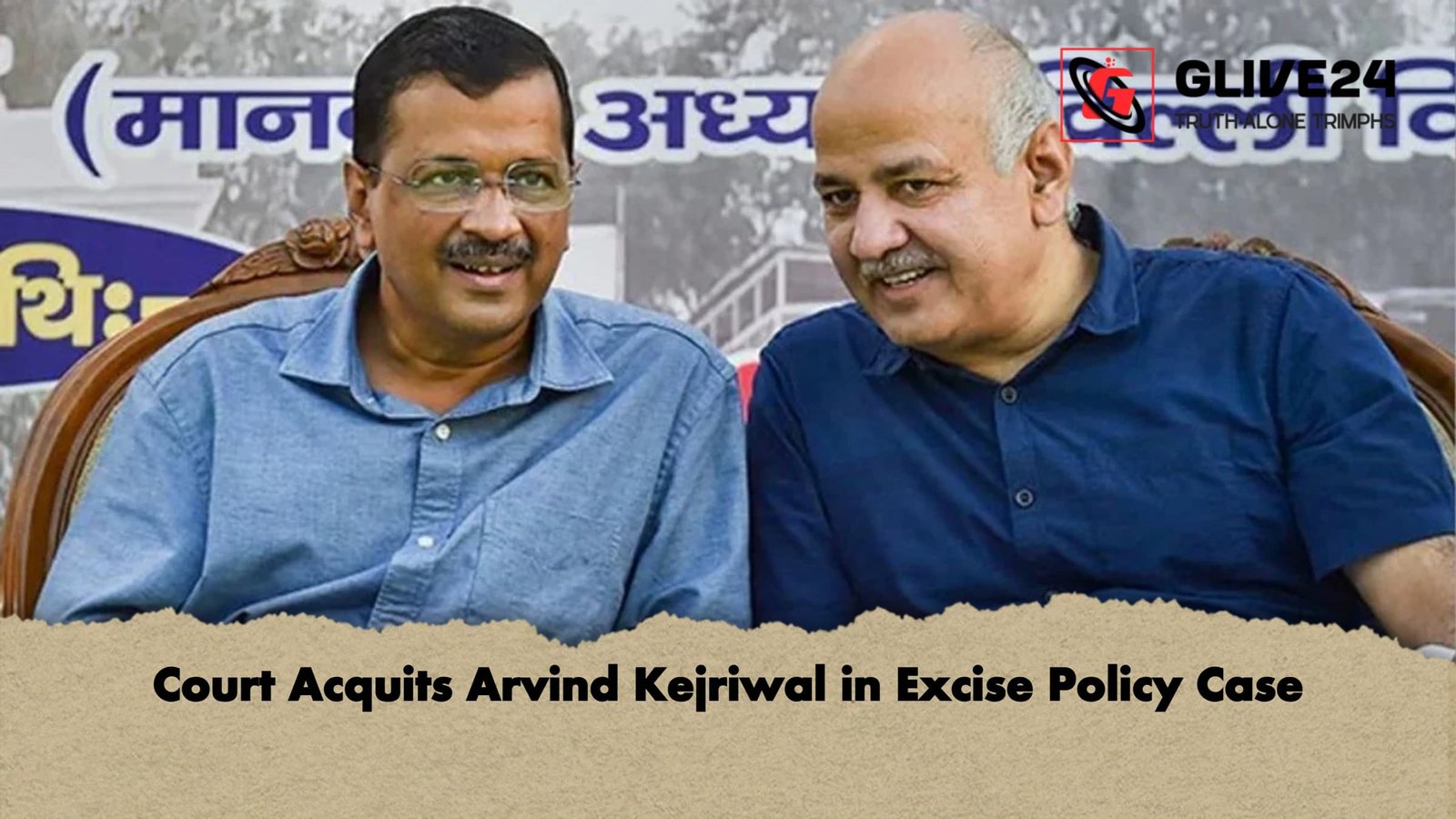
In a watershed moment for Indian politics, a Delhi court has formally acquitted the former Chief Minister of Delhi, Arvind Kejriwal, and his former deputy, Manish Sisodia, of all charges pertaining to the controversial 2021–22 excise policy. The ruling, delivered on Friday, effectively dismantles the central allegations of a “liquor scam” that have dogged the Aam Aadmi Party (AAP) leadership for over two years, providing a significant legal and moral reprieve for the embattled politicians.
Table of Contents
The Judicial Findings
Presiding Judge Jitendra Singh issued a scathing critique of the prosecution’s case, asserting that the controversial excise policy lacked any “far-reaching conspiracy or criminal intent.” The court observed that the Central Bureau of Investigation (CBI) had failed to produce substantive evidence to support the gravity of their claims.
In a notable rebuke of investigative methods, the judge criticised the CBI’s reliance on turning suspects into “approvers” (state witnesses) to build their narrative. Furthermore, the court has called for a departmental inquiry into CBI officials for naming government servant Kuldeep Singh as the primary accused without sufficient grounds.
“In cases involving such serious allegations, robust evidence is a prerequisite,” Judge Singh remarked. “Failure to present such proof erodes public confidence in our state institutions.”
Timeline of the Delhi Excise Case
The following table outlines the trajectory of the case, from the policy’s inception to the recent acquittal:
| Date | Event | Key Details |
| Nov 2021 | Policy Launch | New excise rules introduced to privatise liquor sales and increase revenue. |
| July 2022 | Investigation | LG V.K. Saxena recommends a CBI probe citing financial irregularities. |
| Aug 2022 | Policy Scrapped | Delhi government withdraws the policy amid mounting legal pressure. |
| Feb 2023 | First Major Arrest | Deputy CM Manish Sisodia arrested by the CBI. |
| March 2024 | Kejriwal Arrested | The Chief Minister is taken into custody while still in office. |
| Feb 2026 | Acquittal | Court clears both leaders, citing lack of evidence of criminal conspiracy. |
Political Fallout and Emotional Vindication
The “Delhi Liquor Policy Case” was more than a legal battle; it was a political earthquake. Critics argue that the investigation and subsequent incarcerations—Sisodia spent 18 months in custody, while Kejriwal was arrested while serving as Chief Minister—contributed heavily to the party’s recent electoral setbacks in the capital.
Speaking to a swarm of journalists outside the court in central Delhi, a visibly emotional Arvind Kejriwal broke down in tears. Having started his career as a protégé of Anna Hazare during the 2011 anti-corruption movement, Kejriwal reaffirmed his identity as a “fiercely honest” leader.
“We have always maintained that truth would eventually prevail,” Kejriwal stated. “A sitting Chief Minister was dragged from his home and thrown into jail. Mud was slung at our characters, but today, justice has been served.”
The CBI’s Next Move
The victory for AAP may yet face another hurdle. The CBI has already signaled its intent to appeal the verdict in the High Court, claiming that the lower court ignored several vital aspects of their investigation. The agency had alleged that the policy was designed to favour specific private entities by lowering registration fees and fixing profit margins in exchange for kickbacks—allegations that, for now, the court has found entirely unsubstantiated.