
A classified Ukrainian intelligence assessment has alleged that Russia has been secretly supplying Iran with high-resolution satellite imagery of sensitive military locations across the Middle East, enabling Tehran to identify and strike United States and allied targets with increased precision. The findings, reviewed by Reuters, provide one of the clearest indications yet of deepening covert cooperation between Moscow and Tehran.
According to the report, Russian reconnaissance satellites carried out at least 24 surveillance missions over 46 strategic sites in 11 countries between 21 and 31 March. These locations reportedly included American military bases, airfields, and key energy installations. Ukrainian analysts suggest a consistent pattern: within days of these surveillance operations, Iranian forces launched ballistic missile and drone strikes against several of the observed targets.
Western and regional security officials have supported claims of heightened Russian satellite activity in the region. They further indicated that intelligence gathered from these missions was likely shared with Iran. Saudi Arabia emerged as a primary focus, accounting for nine surveillance passes. Five of these concentrated on the area surrounding King Khalid Military City near Hafar Al-Batin, where analysts believe efforts were made to identify elements of the United States’ advanced air defence systems.
Surveillance Activity Overview
| Region/Country | Number of Missions | Key Targets Observed |
|---|---|---|
| Saudi Arabia | 9 | Military bases, air defence systems |
| Turkey, Jordan, Kuwait, UAE | 2 each | Airfields, infrastructure |
| Israel, Qatar, Iraq | 1 each | Strategic installations |
| Bahrain, Diego Garcia | 1 each | Naval and military facilities |
| Strait of Hormuz | Ongoing | Maritime and energy routes |
The Strait of Hormuz, through which roughly one-fifth of global oil and liquefied natural gas supplies pass, has also been under sustained surveillance. The assessment claims that Iran has imposed an undeclared restriction on maritime traffic, permitting passage primarily to vessels it does not consider hostile.
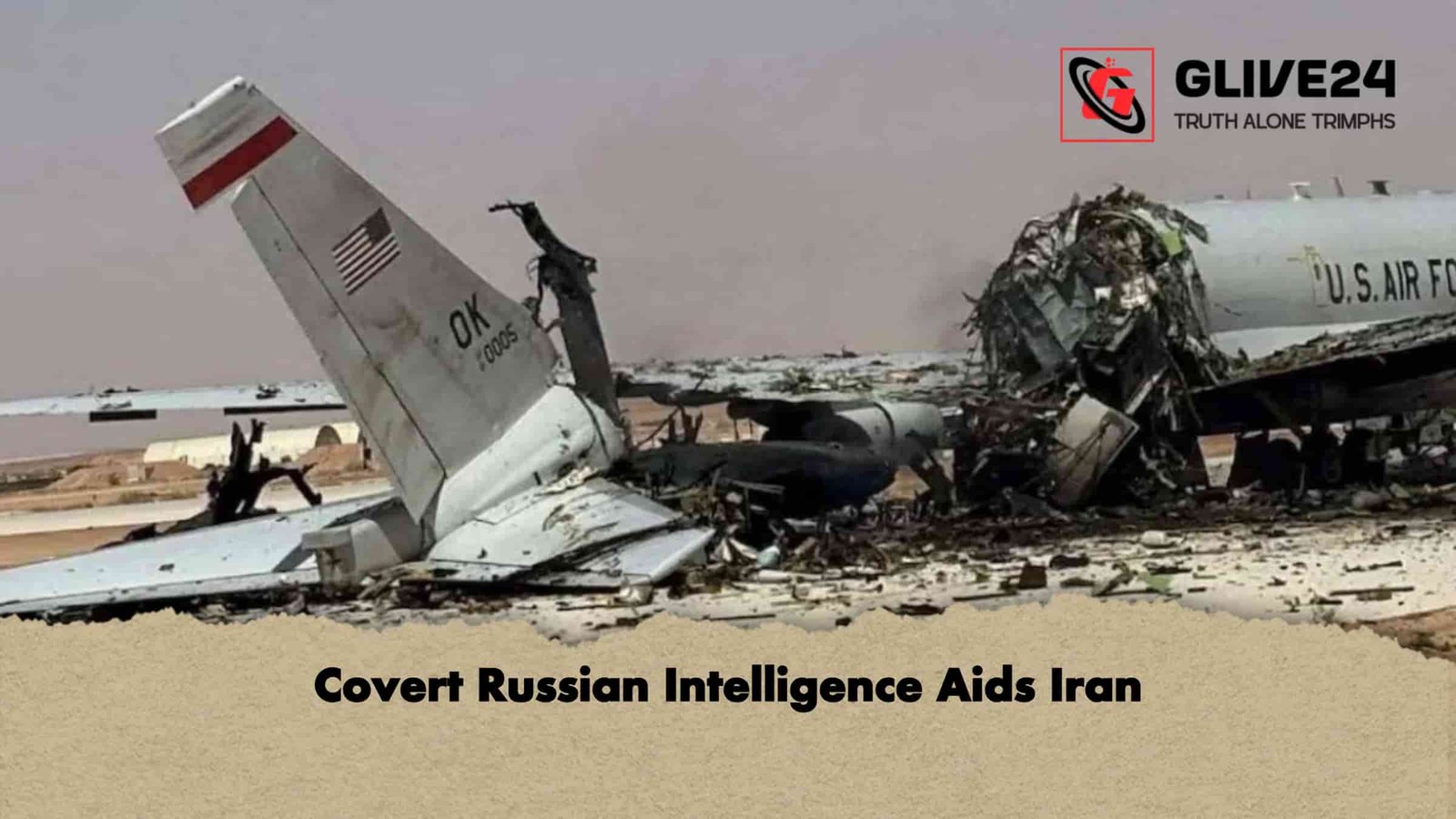
One notable incident cited in the report involved a Russian satellite capturing imagery of Prince Sultan Air Base in Saudi Arabia shortly before an Iranian strike on 27 March. The attack reportedly damaged a United States E-3 Sentry airborne early warning aircraft. A subsequent satellite pass the following day is believed to have assessed the extent of the damage.
The report further alleges growing coordination in cyber operations between Russian and Iranian actors. Several hacking groups from both countries are said to be collaborating, targeting critical infrastructure and telecommunications networks across Gulf states. Their activities reportedly intensified following escalating tensions in late February.
The White House has sought to downplay the significance of these developments. A spokesperson stated that no external assistance had affected the effectiveness of United States operations. Meanwhile, both Iran’s Foreign Ministry and Russia’s Defence Ministry have declined to comment on the allegations.
These developments come against the backdrop of an increasingly close strategic partnership between Moscow and Tehran. Since Russia’s full-scale invasion of Ukraine in 2022, military and intelligence ties between the two countries have expanded significantly. A strategic cooperation agreement signed last year formalised commitments to deeper intelligence sharing and joint efforts to address common security threats.
European leaders have reportedly raised concerns over these allegations during a recent Group of Seven meeting, pressing the United States Secretary of State for clarification. Although no detailed response was provided in private discussions, public remarks have dismissed the significance of Russian assistance to Iran.
The Ukrainian assessment concludes that intelligence sharing between Russia and Iran is conducted through a dedicated communication channel, possibly supported by Russian military intelligence personnel stationed in Tehran. If verified, these findings could signal a significant shift in the balance of power in the Middle East, with far-reaching geopolitical consequences.