
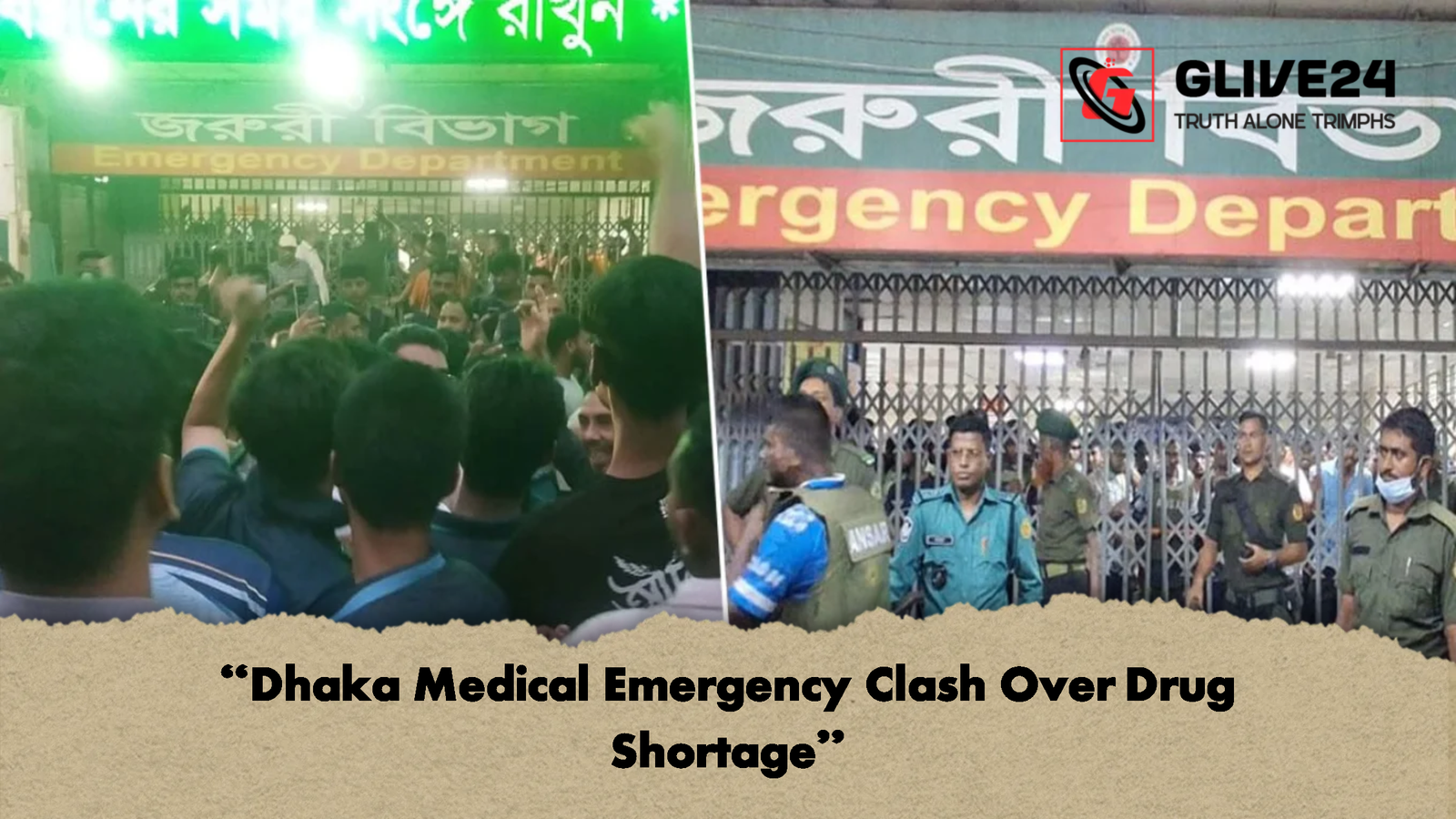
A serious altercation broke out in the emergency department of Dhaka Medical College Hospital (DMCH) on Wednesday (8 April), after a student of the University of Dhaka allegedly became involved in a physical confrontation with on-duty doctors over the unavailability of urgently prescribed injectable medicines.
The incident unfolded in the afternoon when Sanim, a student of the Botany Department (2023–24 academic session), was admitted to the emergency unit suffering from acute pancreatitis. Following clinical assessment, attending physicians prescribed three injectable drugs considered necessary for immediate treatment. However, tensions escalated when it emerged that the prescribed medicines could not be sourced from within or outside the hospital premises.
Table of Contents
Prescribed Medicines and Availability Status
| Medicine | Intended Clinical Purpose | Availability Situation |
|---|---|---|
| Algin | Pain relief in acute conditions | Not available in DMCH pharmacy; unavailable in nearby outlets |
| Nalban-2 | Strong analgesic for severe pain | Reported shortage in local market |
| Cosec | Acid suppression / supportive care | Reported out of stock in surrounding pharmacies |
According to hospital sources, the injections were not stocked in the DMCH pharmacy at the time of treatment. Medical staff reportedly advised the patient’s attendants to purchase the drugs externally. However, repeated attempts by the student and his peers to obtain the medicines from nearby pharmacies were unsuccessful, as pharmacists confirmed a shortage lasting several days.
Eyewitnesses stated that frustration over the inability to secure urgent treatment quickly escalated into a heated exchange between the student and emergency department staff. The situation then deteriorated further, resulting in a physical confrontation involving both sides within the emergency unit.
A physician working in the emergency department acknowledged that the medicines had been prescribed out of clinical necessity but admitted that the shortage in the local market had not been anticipated at the time of prescription. This mismatch between medical instruction and pharmaceutical availability is believed to have played a key role in triggering the misunderstanding.
Pharmacists operating in the vicinity of DMCH also confirmed that the injections in question had been unavailable for several days, raising broader concerns about disruptions in the supply chain of essential emergency drugs.
Administrative Response and Emergency Meeting
Following the incident, an emergency high-level meeting was convened at approximately 7:45 pm in the administrative building of Dhaka Medical College Hospital. The meeting brought together representatives from the Directorate General of Health Services, hospital authorities, the proctorial body of the University of Dhaka, senior police officials, and student representatives.
Initial discussions reportedly focused on the formation of an inquiry committee to investigate the circumstances leading to the confrontation. Authorities are also expected to review existing clinical procedures, emergency pharmacy management, and communication protocols between doctors, patients, and attendants.
Broader Concerns Over Drug Availability in Emergencies
The incident has once again drawn attention to ongoing concerns regarding the availability of essential injectable medicines in Bangladesh’s public healthcare system. Emergency departments depend heavily on immediate access to critical drugs, particularly in life-threatening conditions where delays can significantly worsen outcomes.
Medical professionals note that discrepancies between prescribed medications and actual market availability frequently create confusion and distress among patients’ families, particularly in high-pressure emergency settings such as DMCH. In such situations, the burden often falls on attendants to locate medicines externally within a very short time frame.
Healthcare observers argue that the incident highlights deeper structural issues involving coordination between hospital pharmacies, private suppliers, and national drug distribution networks. Any disruption in this chain can have immediate and serious consequences in tertiary care hospitals with high patient volumes.
Inquiry Underway
Authorities are continuing to collect statements from doctors, hospital staff, and student representatives as part of an ongoing investigation. The committee is expected to assess whether the confrontation was triggered by procedural gaps, communication breakdowns, or systemic shortages in essential medicines.
The incident has since sparked wider discussion within both medical and academic circles about the importance of ensuring uninterrupted availability of emergency drugs, as well as improving communication mechanisms in critical care environments to prevent similar situations in the future.