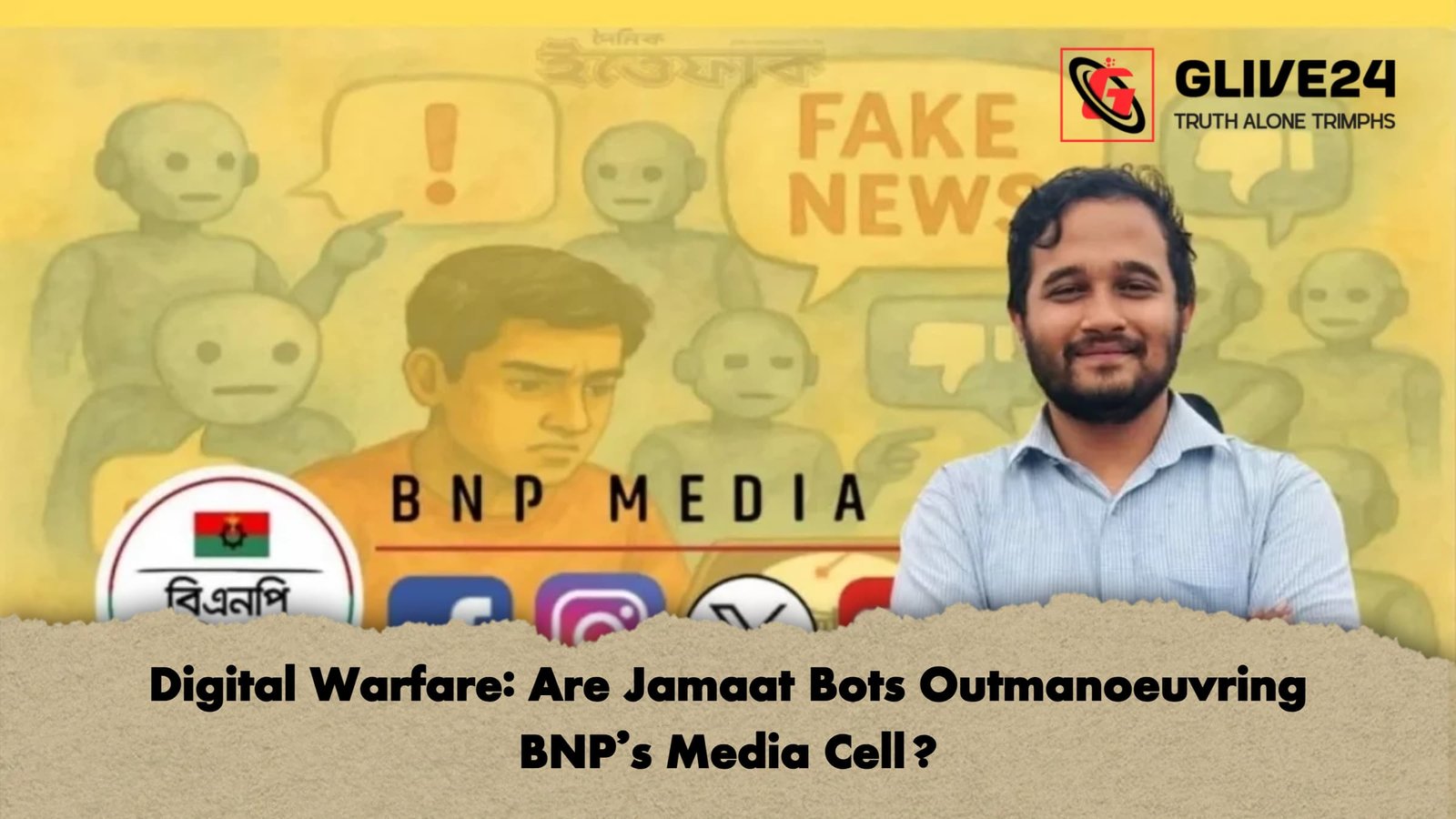
The digital frontline of Bangladeshi politics has been set ablaze following a provocative analysis shared by Mir Mahbubur Rahman Snigdho, a BNP leader and brother of the July Uprising martyr Mir Mugdho. The post, originally authored by researcher Atik UA Khan, questions whether the Bangladesh Nationalist Party (BNP) is being systematically outpaced online by a sophisticated network of “bot accounts” allegedly operated by Bangladesh Jamaat-e-Islami.
Table of Contents
The ‘Haha’ React Offensive
The crux of the controversy lies in the “reaction metrics” on Facebook and YouTube, which have become the primary barometer for political sentiment in the lead-up to the 13th National Parliamentary Election. Khan observed that major policy announcements by BNP Chairperson Tarique Rahman have been met with an unprecedented wave of derision.
For instance, the BNP’s flagship “Family Card Campaign” generated 130,000 reactions, yet a staggering 70% of these were “Haha” (laughing) emojis. A similar fate befell the pledge to provide flats for the Korail slum dwellers, which saw 65% negative engagement. Even senior leaders like Mirza Abbas have seen their digital reach curtailed by a deluge of mocking reactions.
Digital Sentiment Disparity: A Comparative Analysis
| Metric / Platform | BNP Media Performance | Jamaat/Alliance Performance |
| Primary Engagement | High “Haha” (Mockery) Reacts | High “Love/Like” Support |
| Response Speed | Slower / Reactive | Rapid / Highly Coordinated |
| Content Strategy | Traditional Press Releases | Viral Clips & Fact-Checking |
| Polling (National) | ~70% Popular Support (Daily Star) | Significant but lower than BNP |
| Digital Footprint | Predominantly Rural/Elderly | Urban Youth / Tech-Savvy |
Bots or Better Organisation?
Khan’s analysis poses a critical question for the BNP leadership: is their Media Cell simply ineffective, or are they facing an invisible army of “bot IDs”? The theory suggests that Jamaat-e-Islami has cultivated a disciplined digital vanguard capable of manipulating algorithms to make BNP policies appear unpopular.
The debate also extended to character scrutiny. When BNP activists questioned the medical credentials of Dr Khaliduzzaman, the Jamaat candidate for Dhaka-17, digital counter-offensives quickly “verified” his Indian infertility degree. While the degree may be unrecognised by local Bangladeshi boards, the speed of the rebuttal showcased a level of digital agility that the BNP currently lacks.
The Great Divergence
Perhaps the most curious aspect of this digital war is the disconnect from physical reality. While the BNP appears to be losing the “battle of the emojis,” traditional ground-level surveys suggest the party remains the heavy favourite to win the 12 February election.
The divergence implies that while the “Paddy Sheaf” remains a powerhouse in the villages and marketplaces of rural Bangladesh, it is struggling to find its voice in the echo chambers of social media. For the BNP, the challenge is clear: if they cannot secure their digital borders, they risk losing the narrative among the influential urban youth and the global diaspora.