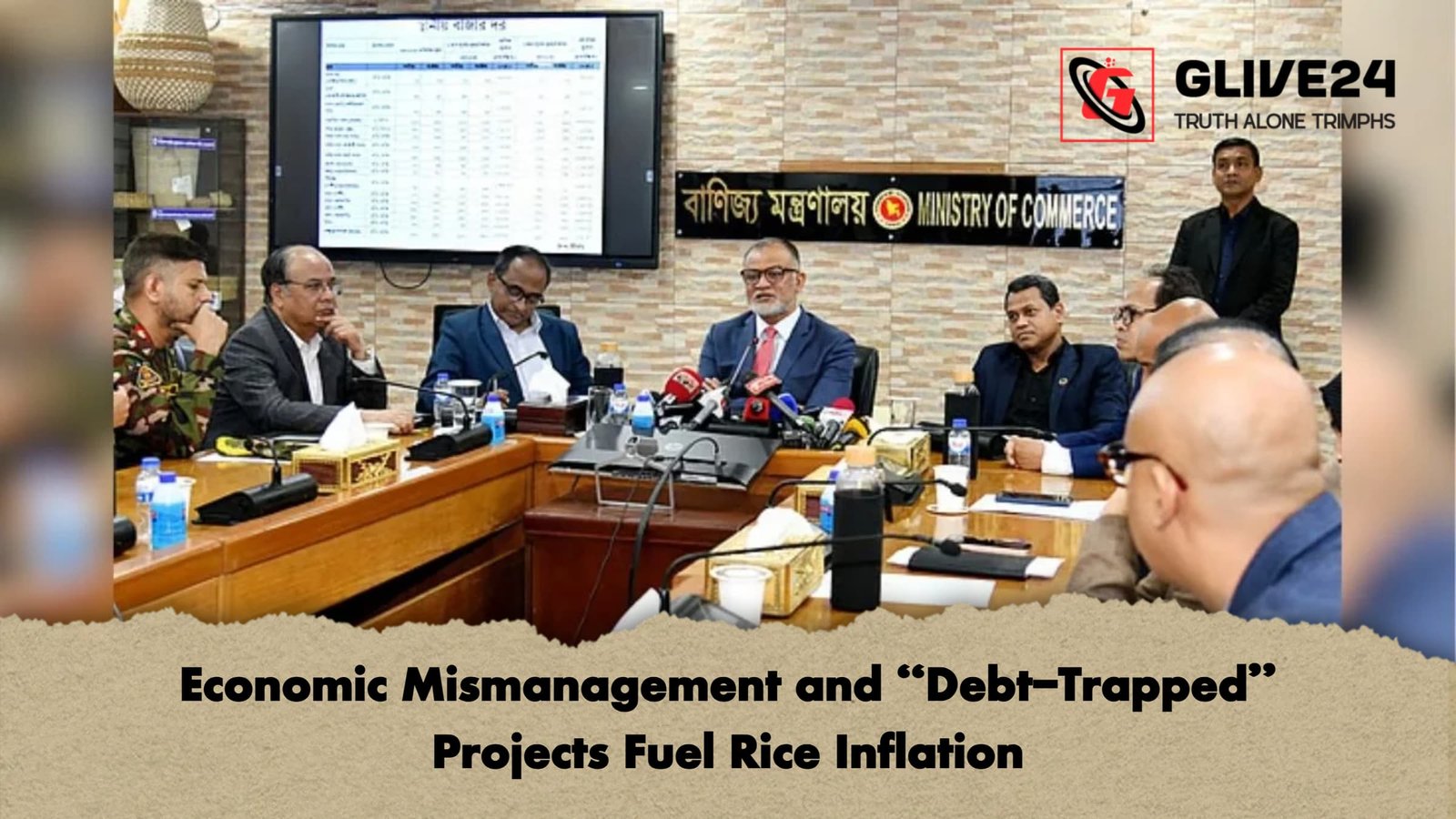
In a candid economic critique, Commerce Adviser Sheikh Bashiruddin has linked the rising cost of rice to the “reckless” expenditure on prestige infrastructure projects such as the Padma Bridge, Karnaphuli Tunnel, and Payra Port. Speaking at a press conference following a task force meeting at the Secretariat on Sunday, 26 January 2026, the Adviser argued that these ill-conceived ventures have saddled the nation with long-term liabilities that directly impact the kitchen markets.
Table of Contents
The Macroeconomic Link to the Rice Bowl
Explaining his recent assertion that the Padma Bridge project contributed to a 20 BDT per kg hike in rice prices, the Adviser highlighted a systemic failure in fiscal priority. He noted that the previous administration prioritised debt-funded infrastructure over agricultural productivity.
“Between 2008 and the end of the previous regime, the national debt surged from 2 trillion BDT to nearly 23 trillion BDT,” Bashiruddin revealed. He argued that the 46% devaluation of the Taka over the last 15 years—compounded by the need for massive IMF loans to service this debt—has decimated the purchasing power of the average citizen.
Projected vs. Actual Economic Performance
| Project/Indicator | Projected Impact | Real-World Outcome |
| Total National Debt | Managed Growth | Increased to ~23 Trillion BDT |
| Padma Rail Revenue | 1,400 Crore BDT | 26 Crore BDT (98% Shortfall) |
| GDP Contribution | +2% Growth | Growth Stagnation/Contraction |
| Currency Value | Stability | 46% Devaluation (Last 15 Years) |
| Agriculture Spend | High Priority (Claimed) | Diverted to Debt Servicing |
Opportunity Cost of Infrastructure
The Adviser was particularly critical of the “returns on investment” for these mega-projects. He pointed out that while the Padma Rail Link was marketed as a massive revenue generator, its actual earnings have been negligible compared to its maintenance and debt costs.
“If this capital had been invested in irrigation, high-yield seeds, and fertiliser subsidies, we would have seen a significant reduction in our import dependency,” he remarked. He argued that the current high price of rice is a direct consequence of a “debt-based” economy that failed to generate productive income, forcing the state to balance its books by cutting subsidies elsewhere.
Ramadan Market Stability
Looking ahead to the upcoming month of Ramadan, the Commerce Adviser offered a more reassuring outlook. He stated that the import of essential commodities has increased by 40% compared to the previous year, which should lead to more stable prices.
Currency Stability: The US Dollar crisis has reportedly eased, providing a more predictable environment for importers.
Energy Supply: Improved gas supplies are expected to support domestic food processing and transport.
Market Trends: The Adviser noted that current market indicators for essentials are showing a downward trend.
When asked about the irony of the government reportedly planning luxury flats for ministers during an economic crisis, Bashiruddin claimed no knowledge of such plans, insisting that the current administration’s focus remains squarely on mitigating the “long-term liabilities” inherited from the past.