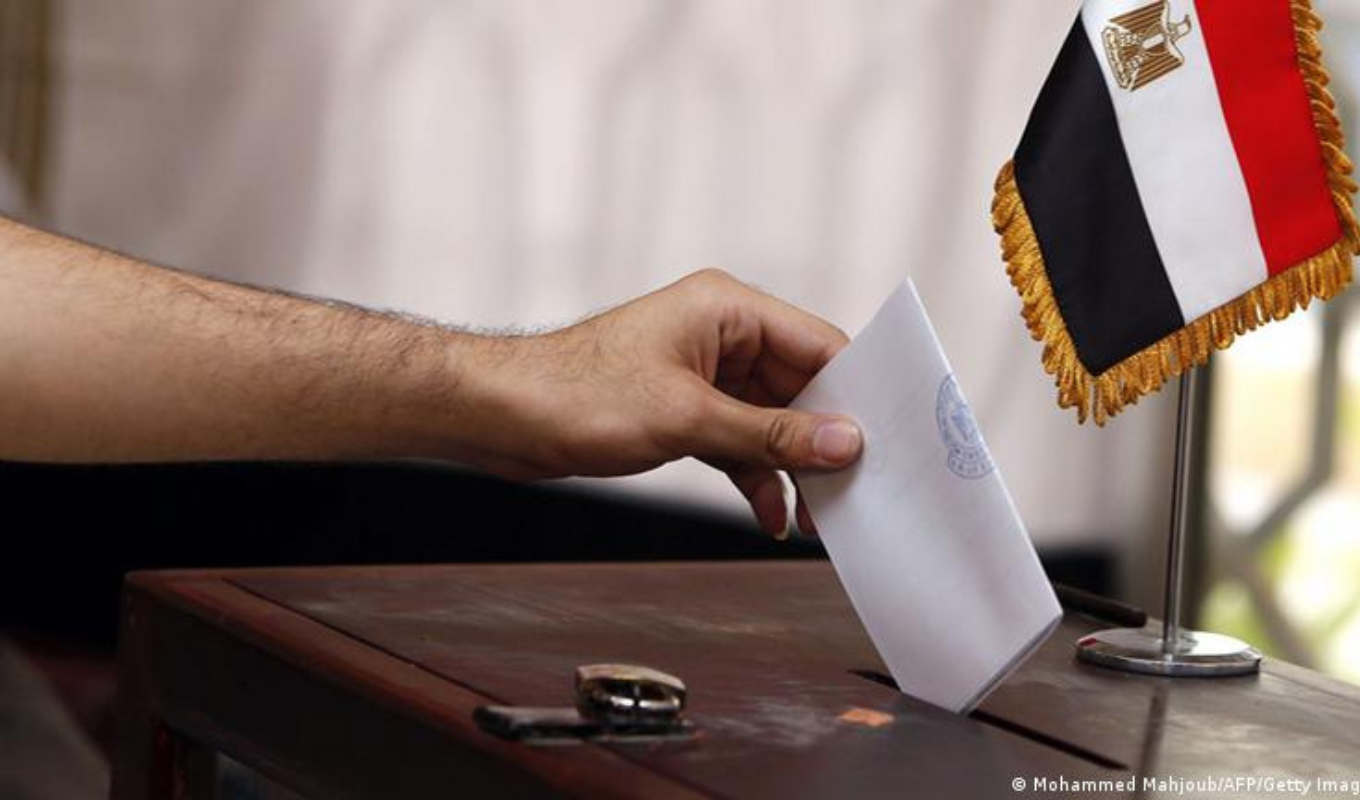
Egyptians began voting on Monday to elect a new parliament in an election widely seen by critics as a move to further entrench President Abdel Fattah al-Sisi’s hold on power.
Polling stations opened at 9:00 a.m. (0700 GMT), marking the beginning of a weeks-long process to fill 568 of the 596 seats in the lower house of parliament. Some provinces are set to vote later, with the final rounds concluding in two weeks’ time. The remaining 28 seats will be filled through direct appointments by President Sisi himself, the former army chief who seized power after ousting Islamist president Mohamed Morsi in 2013.
Egyptians living abroad cast their votes on Friday and Saturday. In some areas such as Alexandria, voters will be able to cast ballots until Tuesday in the first round, while other regions, including Cairo, will not hold their votes until November 24. Final results are expected by December 25.
Half of the parliamentary seats will be contested through closed party lists, while the other half will be filled by individual candidates. A quarter of all seats have been reserved for women, in line with recent electoral reforms.
The parliamentary election comes just over two months after the senate vote, which saw a turnout of only about 17 percent. In that contest, the pro-government “National List for Egypt” coalition swept to victory, running unopposed in the party list race. The same coalition is widely expected to dominate the current parliamentary vote as well.
Pro-Government Bloc Poised to Dominate
The Mostaqbal Watan (Nation’s Future) party, a staunch supporter of Sisi, leads the 12-member pro-government coalition alongside the National Front party, headed by former minister Essam al-Gazzar. Gazzar’s recently established party includes several former government officials and is financially backed by businessman Ibrahim al-Organi, a close ally of President Sisi.
Meanwhile, opposition forces remain deeply fragmented. Some opposition parties have chosen to run independently, while others have joined pro-government lists, further diminishing prospects for any unified challenge to the ruling establishment.
Analysts say the timing of the elections is particularly significant, as this will be the last parliamentary term before Sisi’s third and final presidential term ends in 2030.
“Sisi needs a parliament he can fully control,” Timothy Kaldas of the Washington-based Tahrir Institute for Middle East Policy told AFP. “If he wants to stay in power beyond 2030, it is this next parliament that would have to initiate any constitutional changes to make that possible.”
Tightening Grip and Crackdown on Dissent
Under constitutional amendments passed in 2019, Sisi’s presidential term was extended from four to six years, with his previous term counted as his first — effectively allowing him to remain in office until 2030.
While Sisi’s administration launched a “national dialogue” in 2022 in what appeared to be a gesture towards reconciliation with the opposition, rights groups argue that the move has done little to change the political landscape. They report an intensifying crackdown on dissent, with tens of thousands of political prisoners still believed to be held in Egyptian jails.
The election, held under heavy security and amid limited space for political opposition, is widely viewed as another step in consolidating President Sisi’s decade-long rule.