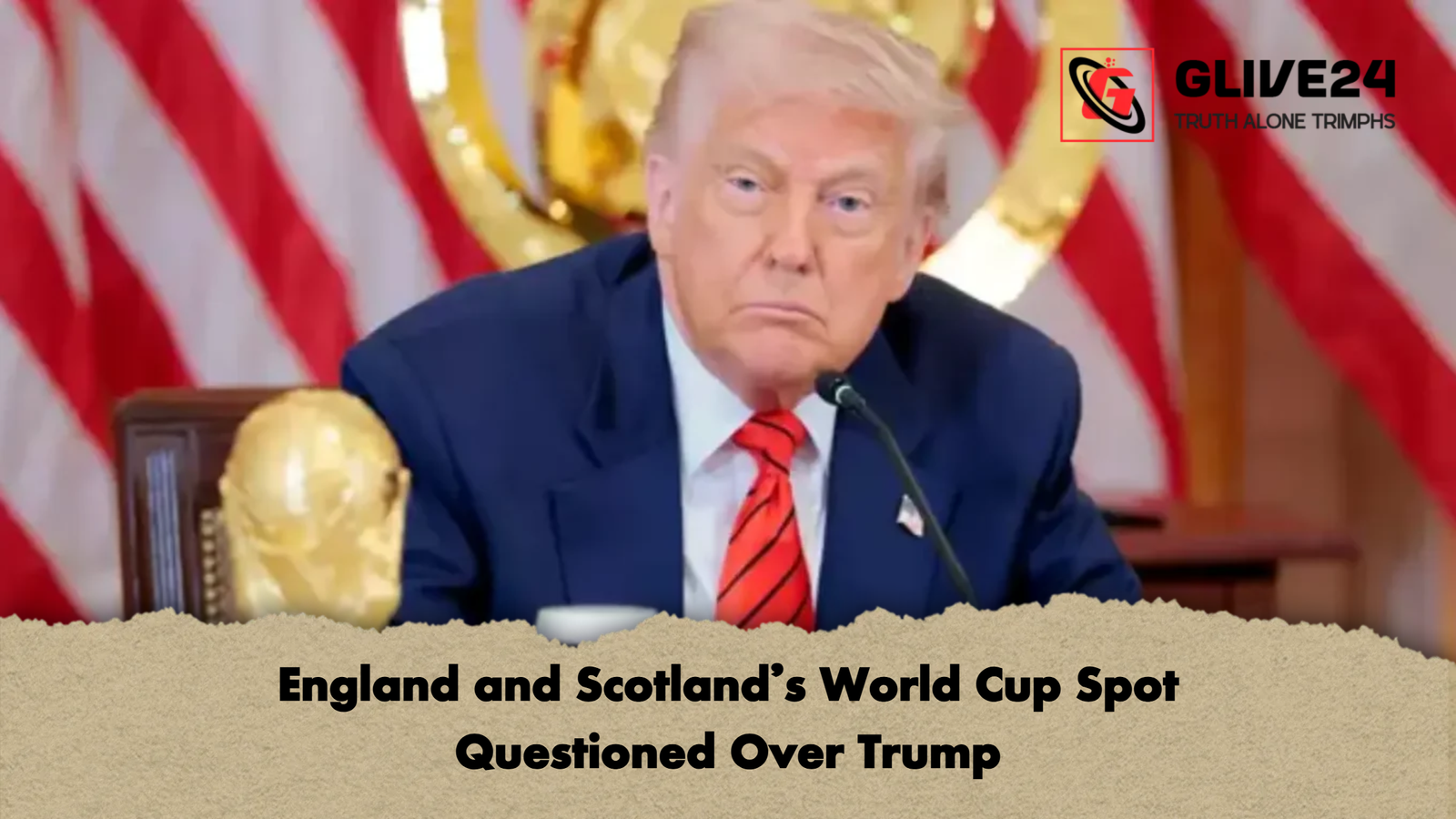
With just five months remaining until the 2026 FIFA World Cup, political controversy has already begun to overshadow preparations for the tournament hosted jointly by the United States, Canada, and Mexico. The controversy, however, is not about football itself but centres on the recent actions and statements of U.S. President Donald Trump, prompting renewed calls for boycotts from some political circles in the United Kingdom.
Political figures in both England and Scotland have urged their national teams to reconsider participation in the World Cup, scheduled for June 2026. British leaders have expressed concerns over what they describe as Trump’s “ambitions regarding Greenland” and conduct that falls outside internationally recognised ethical standards. They argue that under such circumstances, participation in the tournament may not be appropriate. It should be noted that these calls are entirely political in nature; football associations or governing bodies have made no formal decision regarding a boycott.
In terms of the sporting schedule, England is set to face Croatia, Ghana, and Panama in the group stage, while Scotland will take on Brazil, Morocco, and Haiti. Some members of parliament suggest that national teams should align their involvement in international events with the country’s broader political and ethical stance, particularly when geopolitical tensions are high.
The boycott discussions are largely linked to Trump’s political actions, including his aggressive proposals concerning Greenland and controversial remarks directed at European nations. Opposition politicians have emphasised that such political tensions should not overshadow the spirit of international sport, warning that players and fans could be placed in an uncomfortable environment where political conflict eclipses athletic competition.
Among football supporters, reactions are mixed, with uncertainty over the level of backing a boycott might receive. Some Scottish representatives have voiced similar concerns, though their intention remains primarily to support the tournament rather than advocate withdrawal.
Preparations for the tournament are already well underway. The official World Cup schedule, released last December, sees all participating nations, including England and Scotland, engaged in training camps and friendly matches to ensure readiness. No team has officially announced a boycott or withdrawal. FIFA and other governing bodies have also refrained from commenting publicly on the issue.
2026 World Cup Group Stage Fixtures: England & Scotland
| Team | Opponents | Match Date (Estimated) | Venue |
|---|---|---|---|
| England | Croatia | 10 June 2026 | New York |
| England | Ghana | 15 June 2026 | Los Angeles |
| England | Panama | 20 June 2026 | Chicago |
| Scotland | Brazil | 11 June 2026 | Miami |
| Scotland | Morocco | 16 June 2026 | Toronto |
| Scotland | Haiti | 21 June 2026 | Dallas |
Football and politics have long intersected, but the 2026 World Cup is already demonstrating how geopolitical tensions can influence sport. The debate surrounding a potential boycott highlights the delicate balance between athletic competition and political considerations, a discussion likely to persist in the months leading up to the tournament.