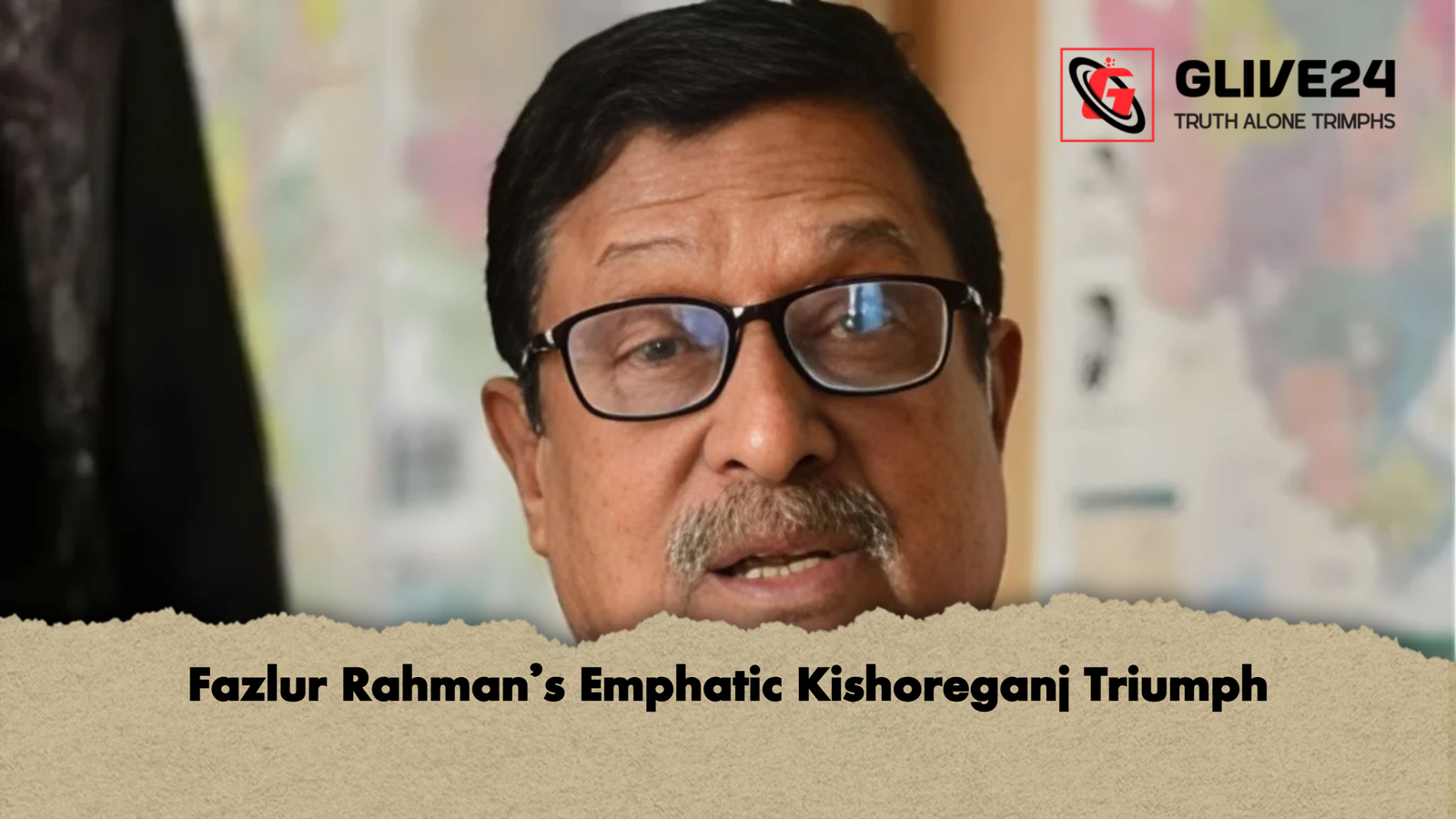
Fazlur Rahman has secured a resounding victory in the Kishoreganj-4 constituency (Itna–Mithamoin–Austagram), emerging as a newly elected Member of Parliament and reigniting political debate both locally and nationally. Defeating Jamaat-backed candidate Rokon Reza Sheikh by a substantial margin, the BNP candidate’s win has been widely interpreted as a statement result, particularly in the context of ideological positioning around the Liberation War and the spirit of independence.
Shortly after the announcement of the results, Rahman took to social media to articulate the principles he believes underpinned his success. In a brief but pointed Facebook post, he wrote: “Independence, the Liberation War, freedom fighters, Bangabandhu—the very existence of sovereign Bengal.” The reference to Bangabandhu Sheikh Mujibur Rahman and the foundational values of 1971 signalled a clear alignment with the historical narrative of the country’s independence struggle.
In a subsequent post, Rahman expanded on this theme, stating that he had offered prayers of gratitude at dawn following the confirmation of victory. He described the outcome as “not a personal triumph, but a clear verdict of the people in favour of the spirit of the Liberation War and independence, against all collaborators and anti-independence forces.” His remarks have drawn considerable attention, particularly given the ideological contest that framed the campaign.
Election Results Overview
| বিষয় | তথ্য |
|---|---|
| Constituency | Kishoreganj-4 (Itna–Mithamoin–Austagram) |
| Winning Candidate | Fazlur Rahman (BNP) |
| Runner-up | Rokon Reza Sheikh (Jamaat-backed) |
| Margin | Significant lead in official results |
| Key Campaign Issue | Liberation War values and independence |
According to Rahman, the victory reflects not merely electoral arithmetic but a broader ideological endorsement. He noted that well-wishers from home and abroad had reached out to congratulate him, though he acknowledged that the demands of campaigning and subsequent responsibilities had limited his ability to respond individually. He further stated that he had conveyed his message through television interviews, newspaper statements, YouTube platforms and social media.
Reaffirming his commitment to Parliament, Rahman pledged to remain steadfast in defending the values of independence and the Liberation War. “Inshallah,” he wrote, “an unwavering light in support of independence and the Liberation War will shine in Parliament. I shall never allow the dignity, trust and sacrifices of the people to be diminished.”
Yet amid the celebratory atmosphere, Rahman also spoke of personal distress. In a video message, he revealed that one of his campaign workers had been sentenced to two years’ imprisonment, a development he said had overshadowed his joy. “My victory feels diminished,” he remarked, referring to the worker who, he said, had left behind two young children. He alleged that the sentence was unjust and intended to appease “dark forces,” and vowed to pursue all necessary legal avenues to seek redress.
Political analysts suggest that the outcome in Kishoreganj-4 carries wider implications. The constituency’s verdict, framed around historical memory and national identity, may influence the tenor of parliamentary debate in the months ahead. As such, Rahman’s emphatic win represents not only a local electoral success but a development of broader symbolic significance within Bangladesh’s evolving political landscape.