
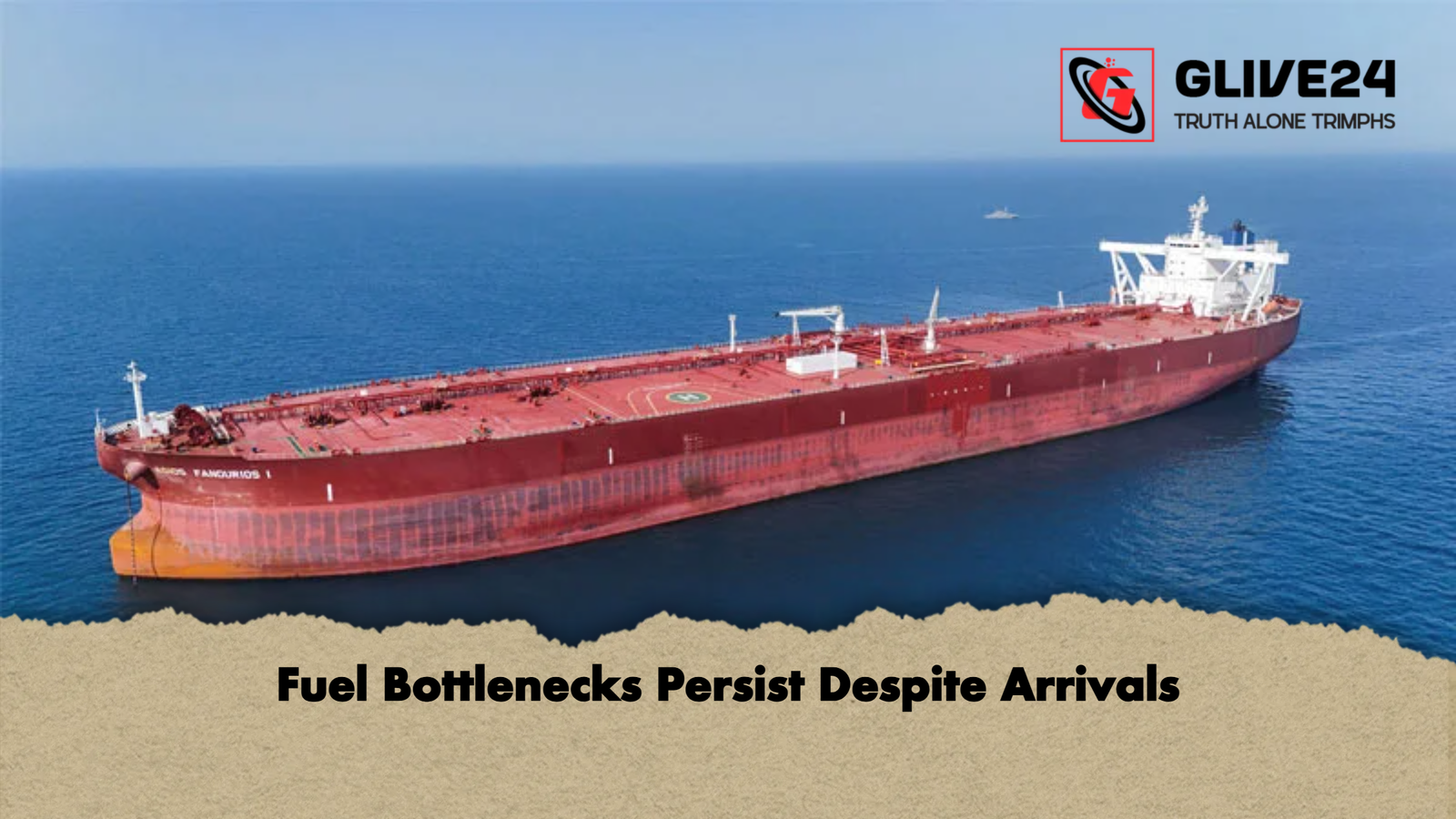
Despite a steady influx of fuel-laden vessels docking at Chattogram Port, petrol stations across Bangladesh continue to face severe operational strain, leaving motorists and consumers enduring long queues and extended waiting times. The situation persists even though storage tanks and tankers reportedly hold sufficient reserves at the national level.
According to port and energy sector sources, five fuel vessels have recently delivered approximately 169,000 tonnes of petroleum products into the country. Of this, around 142,000 tonnes is diesel and 27,000 tonnes is octane. Two of the vessels have already begun unloading a combined 68,000 tonnes of diesel, while the remaining ships remain either mid-process or anchored offshore awaiting clearance.
Table of Contents
Status of Fuel Vessels at Chattogram
| Vessel Name | Fuel Type | Quantity (Tonnes) | Status |
|---|---|---|---|
| MT Oaktree | Diesel | ~35,000 | Unloading ongoing |
| MT Cape Bony | Diesel | ~33,000 | Unloading ongoing |
| MT Lian Song Hu | Diesel | ~41,000 | Awaiting offshore |
| MT Pacific Indigo | Diesel | ~33,000 | Awaiting offshore |
| MT Navy Cielo | Octane | ~27,000 | Awaiting offshore |
Officials report that depot and terminal storage capacity is nearly saturated, significantly slowing down the discharge of incoming shipments. As a result, several vessels have been forced to remain anchored in the Bay of Bengal, contributing to logistical delays.
National Storage and Supply Situation
Data from the Bangladesh Petroleum Corporation indicates that the country’s total octane storage capacity stands at 53,361 tonnes. As of 20 April, existing stock levels were approximately 27,612 tonnes. Meanwhile, unloading of an additional 27,000 tonnes is currently in progress, further tightening short-term storage space.
During the first 18 days of April, octane consumption reached 20,404 tonnes, averaging 1,134 tonnes per day. In addition, private refineries supplied another 15,170 tonnes over the first 19 days of the month, helping to stabilise overall availability at the wholesale level.
National Octane Balance
| Indicator | Volume (Tonnes) |
|---|---|
| Total Storage Capacity | 53,361 |
| Current Stock (20 April) | 27,612 |
| April Consumption (18 days) | 20,404 |
| Average Daily Consumption | 1,134 |
| Private Refinery Supply (19 days) | 15,170 |
Officials estimate that, under normal supply conditions, current reserves are sufficient to meet demand for nearly two months.
Disruption at Retail Level
However, the situation on the ground presents a stark contrast. In Tejgaon, Dhaka, petrol stations have witnessed long queues extending onto main roads, with motorists reportedly waiting three to four hours without guarantee of fuel availability. A motorcyclist described spending an entire afternoon in line without being served.
Similar conditions have been reported in Sundarganj, Gaibandha, where farmers dependent on diesel for irrigation have faced significant difficulties. With the ongoing Boro rice cultivation requiring regular irrigation, the shortage has created additional pressure on agricultural activities.
Operational Gaps Highlighted
While national fuel stocks appear broadly adequate, industry observers suggest that inefficiencies in depot management, distribution logistics, and coordination between supply chain actors are contributing to artificial shortages at the retail level. The imbalance between upstream availability and downstream delivery continues to undermine public confidence, despite the absence of a fundamental supply deficit.