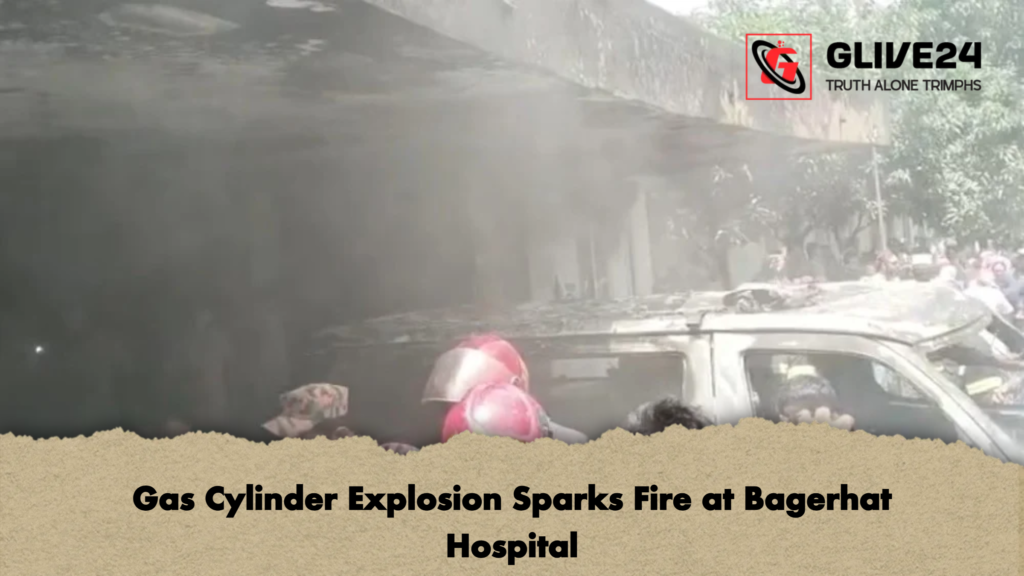
A gas cylinder explosion inside an ambulance triggered a fire at Bagerhat 250-bed District Hospital on Tuesday afternoon, injuring the vehicle’s driver and destroying the ambulance along with nine nearby motorcycles.
The incident occurred at around 12.30pm in front of the hospital’s old building. According to hospital authorities and eyewitnesses, an ambulance was parked in the area when its gas cylinder suddenly exploded. The blast was followed almost immediately by a fire that engulfed the vehicle.
The ambulance driver, 55-year-old Faridul Islam, reportedly jumped into a pond in front of the hospital in an attempt to escape the flames. He was injured in the incident and was subsequently taken for medical attention.
The fire quickly spread to motorcycles parked on both sides of the ambulance. Nine motorcycles were caught in the flames and were badly damaged or destroyed. The blaze also produced thick black smoke that rapidly covered parts of the hospital premises.
Smoke entered the hospital building, causing considerable alarm among patients, relatives and staff. With the fire breaking out close to the main hospital facilities, people inside the premises began moving towards safer areas amid fears that the flames could spread further.
Fire Service personnel were called to the scene and arrived shortly afterwards. They battled the blaze for about half an hour before bringing it under control. Their prompt response prevented the fire from spreading to other parts of the hospital complex, where a larger incident could have posed a serious risk to patients and staff.
Dr Asim Kumar Samaddar, superintendent of Bagerhat 250-bed District Hospital, said the fire originated after the gas cylinder of the ambulance exploded in front of the old hospital building. He confirmed that smoke entered the hospital, creating panic among patients and their relatives.
He also confirmed that Faridul Islam was injured and that the ambulance and nine motorcycles were damaged in the fire.
The precise cause of the cylinder explosion was not immediately established. Such incidents can be associated with a range of factors, including gas leakage, excessive heat, defects in a cylinder, or problems with valves, hoses and other connection equipment. However, none of these factors can be identified as the cause in this case without an appropriate investigation.
The incident has also highlighted the particular fire-safety challenges faced by hospitals. Medical facilities remain operational around the clock and often contain vulnerable patients who may have difficulty evacuating quickly. Ambulances and other vehicles using gas cylinders or similar pressurised equipment therefore require careful inspection, safe parking arrangements and appropriate emergency precautions.
Keeping vehicles at a safe distance from hospital buildings and ensuring that areas where gas cylinders are stored or used remain properly ventilated and free from potential ignition sources are among the measures generally considered important for reducing fire risks. Regular inspection of cylinders and their associated connections is also essential.
Although no large-scale loss of life was reported, the rapid spread of the fire from one vehicle to nine motorcycles created a potentially serious situation within a busy hospital compound. A detailed assessment will be needed to establish the full extent of the damage and determine exactly what caused the cylinder to explode.
The incident has raised concerns over fire prevention and vehicle management within the hospital premises, particularly in areas close to buildings occupied by patients. The findings of any subsequent investigation are expected to provide a clearer picture of the cause and whether additional safety measures are required.