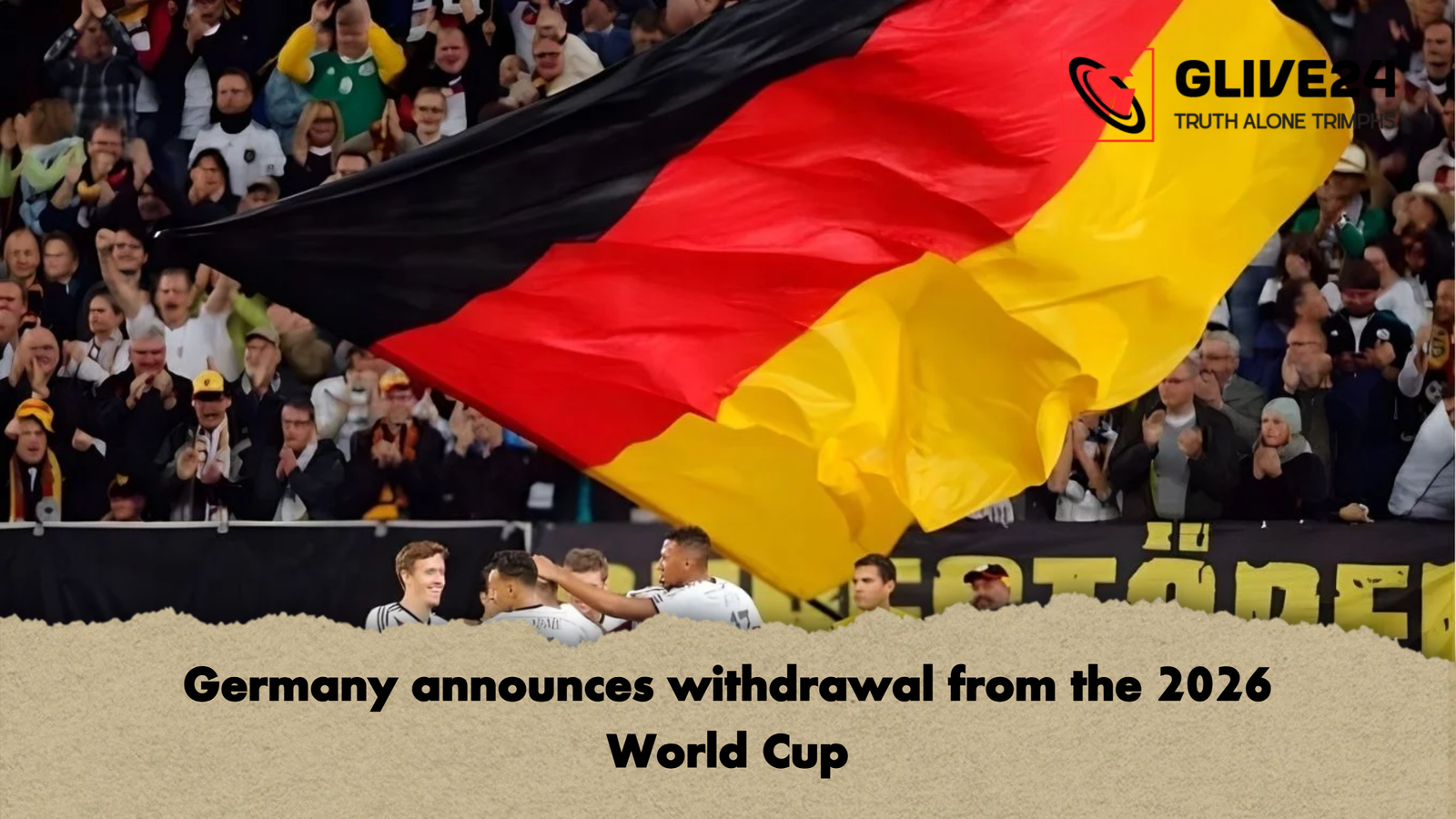
Amid escalating tensions over Greenland, Germany has signalled it may boycott the 2026 FIFA World Cup. The controversy stems from US President Donald Trump’s persistent plans to acquire Denmark’s autonomous territory, a move that has drawn sharp criticism from several European nations, including Germany.
Political leaders and members of the German parliament have urged the German Football Association (Deutscher Fußball-Bund, DFB) to take a swift position on the matter. The federal government has reportedly expressed support for this approach, indicating that a boycott could be considered as a diplomatic response to the potential geopolitical crisis.
President Trump has threatened to impose steep tariffs on Denmark, Germany, and six other European countries if they oppose his Greenland acquisition plans. Should these tariffs come into effect, Germany may face economic repercussions, prompting some politicians to advocate for a World Cup boycott as a form of protest.
Although the 2026 World Cup will be hosted across three countries, the majority of matches are scheduled to take place in the United States. Analysts warn that if the US proceeds with military measures to claim Greenland, several other European countries might follow Germany’s lead in boycotting the tournament.
In the meantime, Germany is continuing preparations for the competition while carefully weighing its options. The DFB is expected to announce a final decision on participation in the coming months. Meanwhile, political figures have launched campaigns to shape public opinion in favour of a boycott, framing it as a stand against unilateral territorial aggression.
Public sentiment appears divided. A recent survey revealed that 47% of Germans support a boycott, while 35% favour participation, with the remainder undecided or neutral. The figures illustrate the growing debate within Germany over balancing sporting commitments with diplomatic and ethical considerations.
German Public Opinion on 2026 World Cup Participation
| Option | Percentage of Respondents |
|---|---|
| Support Boycott | 47% |
| Support Participation | 35% |
| Undecided/Neutral | 18% |
As international scrutiny mounts, the coming months are likely to prove decisive, not just for Germany, but for the broader European stance on the 2026 World Cup. Observers note that sports and politics are increasingly intertwined, and the outcome could set a precedent for future international events.