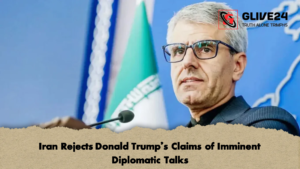
A significant easing of geopolitical tensions in international politics has triggered a wave of optimism across global financial markets. The tangible prospect of a formal peace treaty between the United States of America and the Islamic Republic of Iran has led to a substantial contraction in crude oil benchmarks. This notable shift has effectively cooled an energy market previously defined by months of volatility, whilst simultaneously inducing robust upward movements across major international stock exchanges.
According to prominent market analysts, the emerging resolution to this long-standing geopolitical impasse has directly restored confidence amongst institutional investors. This sudden infusion of market stability has altered trading sentiment, shifting capital allocations away from safe-haven assets and back into equities and cyclical commodities.
Table of Contents
Sharp Contractions Across Global Crude Oil Benchmarks
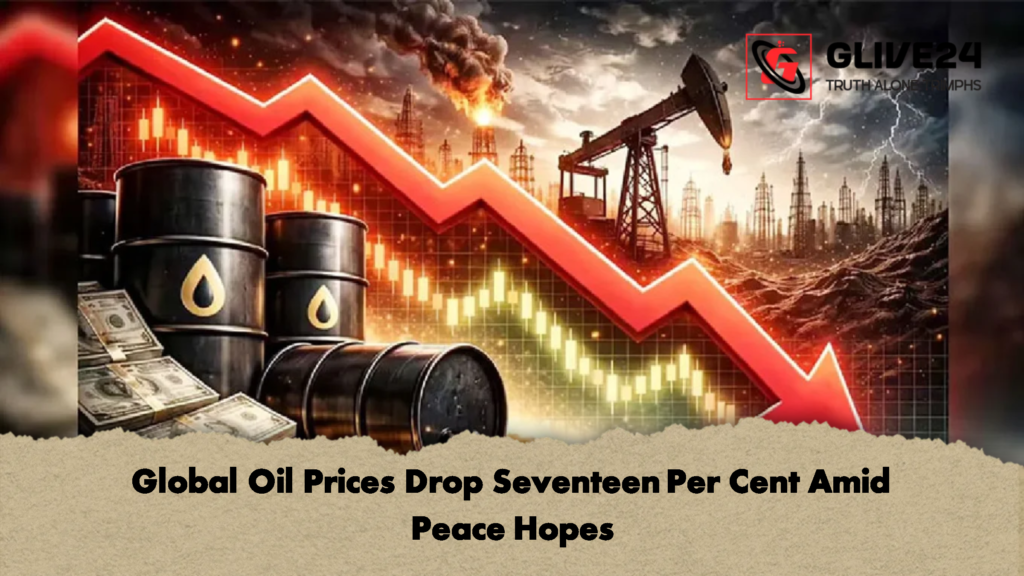
During Friday’s trading session, Brent crude—the definitive international benchmark for global oil pricing—contracted by 1.3 per cent, settling at $91.54 per barrel. When evaluated from the commencement of May 2026, the aggregate market value of Brent crude has plunged by approximately 17 per cent. Financial economists categorize this downward trajectory as one of the most pronounced price corrections recorded in recent market history.
Concurrently, the American energy benchmark, West Texas Intermediate (WTI) crude, experienced a parallel contraction of 1.4 per cent, declining to $87.64 per barrel. This sharp adjustment represents a distinct reversal from the trading patterns observed earlier in the week, when heightened geopolitical anxieties had driven WTI pricing to a weekly peak of $94.70 per barrel.
Diplomatic Initiatives Triggering Market Corrections
According to an investigative report published by the prominent British newspaper The Guardian, this positive shift in international market dynamics followed a specific diplomatic intervention by the United States executive branch. US President Donald Trump drafted a definitive framework for a comprehensive peace treaty aimed at permanently concluding hostilites with Iran. This draft documentation was subsequently circulated to key American allied nations, immediately triggering a corrective recalibration across commodity trading desks.
Furthermore, data released by the American news outlet Axios indicates that the United States and Iran have successfully engineered a preliminary mutual understanding to extend a bilateral ceasefire for a duration of 60 days. This temporary truce is designed to halt active hostilities while broader diplomatic parameters are established.
Although the framework has been mutually acknowledged, President Donald Trump has not yet appended his final, formal executive signature to the documentation. Providing clarification on the administrative progress, US Vice-President JD Vance confirmed that whilst the accord has not achieved absolute finalisation, both sovereign nations are positioned at the ultimate threshold of a binding mutual agreement.
Relief from Months of Severe Economic Disruption
The prospective diplomatic breakthrough follows an intensely destructive 90-day conflict with Iran that had imposed severe structural strain and systemic instability on the global economy. At the height of the military engagement, Iran strategically executed a complete closure of the Strait of Hormuz—a maritime chokepoint vital to international commerce.
The subsequent blockade severely disrupted the export of vast volumes of crude oil departing from the Persian Gulf region to international destinations. This containment triggered an acute supply crisis across global energy markets, artificially inflating fuel costs and feeding global inflationary pressures, which caused widespread institutional concern among central banking authorities.
Corporate and Global Stock Market Responses
Evaluating the current intersection of geopolitics and macroeconomics, Henry Allen, the Lead Analyst at the multinational financial institution Deutsche Bank, noted that market participants are now trading on the firm belief that a permanent cessation of hostilities is achievable. The steady decline in energy input costs has effectively neutralised the imminent threat of stagflation and uncontrolled hyperinflation that had hung over global markets.
This cooling of energy prices catalysed substantial rallies across major Asian equity markets during Friday’s business hours. In Japan, the benchmark Nikkei 225 index advanced by 2.5 per cent, while South Korea’s primary Kospi index registered a record surge of 3.6 per cent. This bullish momentum was replicated across European and American bourses, where primary indices maintained an upward trajectory, mitigating immediate anxieties regarding a broader global economic recession.
Statistical Energy and Equity Trading Matrix
The precise financial figures, market contractions, and index shifts recorded across global sectors during Friday’s trading session correspond directly to the following verified economic data:
| Market Metric / Sector | Baseline Trading Level | New Adjusted Level / Close | Net Percentage Shift |
| Brent Crude Oil | May Peak Pricing | $91.54 per Barrel | -17.0% (Cumulative May Drop) |
| Brent Crude (Friday) | Opening Session | $91.54 per Barrel | -1.3% (Single Session Drop) |
| WTI Crude Oil | Weekly Peak of $94.70 | $87.64 per Barrel | -1.4% (Single Session Drop) |
| Nikkei 225 (Japan) | Pre-Announcement Close | Composite Index Close | +2.5% (Market Rally) |
| Kospi Index (S. Korea) | Pre-Announcement Close | Composite Index Close | +3.6% (Record Market Surge) |
| Active Conflict Duration | Foundational Phase | Ceasefire Extension Phase | 90 Days Active / 60-Day Truce |
Long-Term Macroeconomic Outlook
Central bank governors and global financial institutions are already modifying their fiscal models to reflect the declining cost of unrefined petroleum. If the 60-day ceasefire holds and transitions into the permanent peace accord outlined by the US administration, the reduction in transport and manufacturing overheads is expected to cool consumer price indices globally.
While logistics companies are waiting for formal confirmation that the Strait of Hormuz is permanently safe for commercial shipping before altering their maritime routes, the drop in oil futures indicates that the market has already priced in a peaceful resolution. Shipping insurance premiums, which had spiked during the 90-day war, are also expected to undergo downward revisions in the coming weeks, further lowering the overhead costs of international trade.