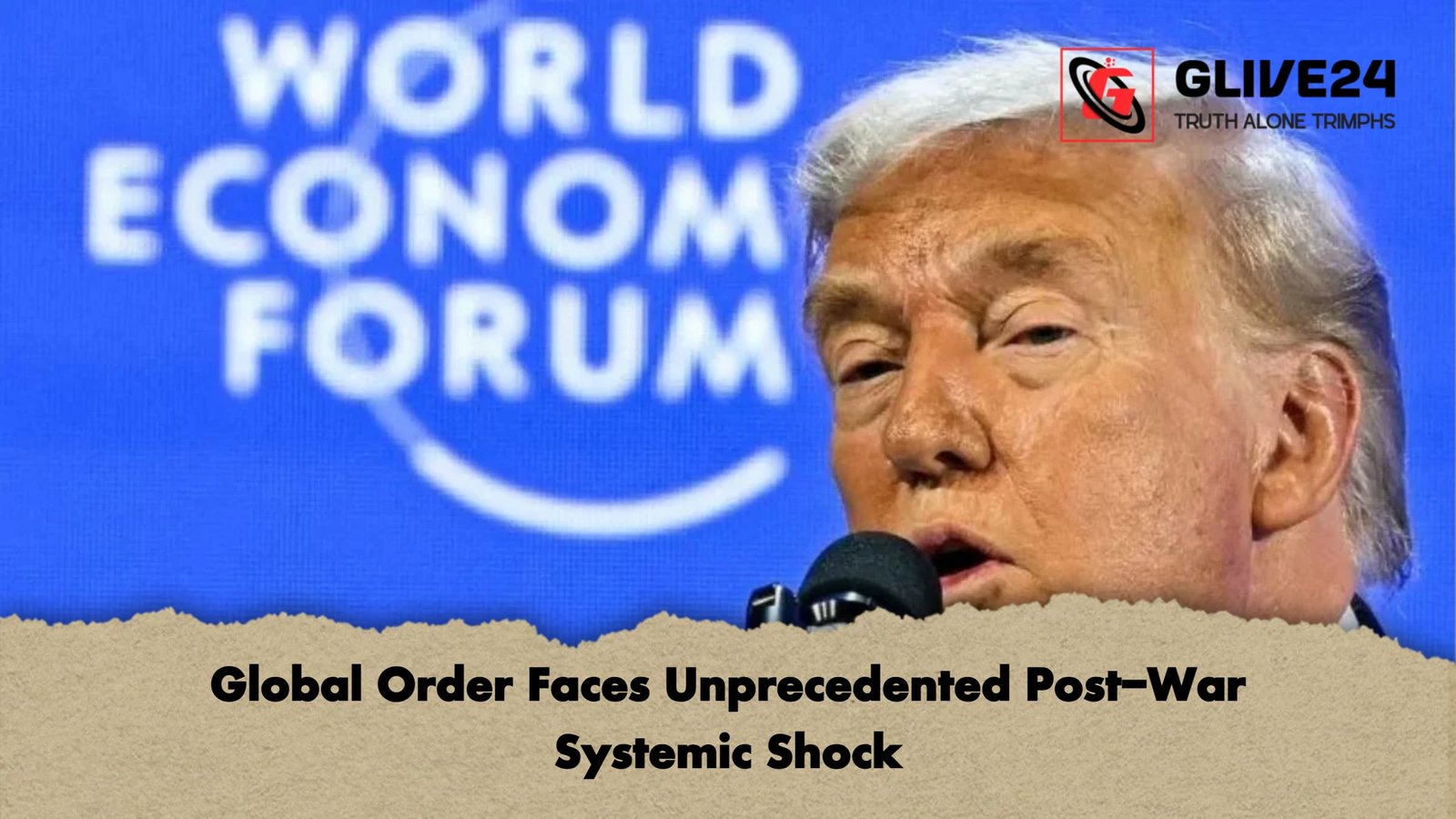
The historical narrative of the United States is punctuated by instances of regime change, controversial interventions, and clandestine operations. However, for decades, no American president had dared to threaten the annexation of an ally’s territory or the systematic dismantling of post-1945 alliances. That era of restraint has abruptly ended. In the first year of his second term, Donald Trump has effectively rattled the foundational pillars of the international order, creating a geopolitical tremor that surpasses any disruption seen since the end of the Second World War.
Table of Contents
The Rise of “Muscle Power”
Trump is increasingly viewed as the most “transformational” president in American history. While his supporters celebrate his “America First” disruption, the broader global community remains in a state of acute apprehension. During the World Economic Forum in Davos, French President Emmanuel Macron articulated this fragility, describing a “lawless world” where international norms are being trampled and “muscle power” has become the only effective currency. Though Macron avoided naming Trump directly, the re-emergence of imperialist ambitions is a clear byproduct of Washington’s new transactional doctrine.
Global Economic Pressure: Trump’s Tariff Escalations
| Target Nation / Region | Current Tariff Impact | Proposed/Pending Actions | Primary Catalyst |
| India | 50% Burden | 500% Tariff Hike | Procurement of Russian Oil |
| France | Standard EU Trade | 200% on Luxury Goods | Dissent over Greenland Policy |
| China | Sector-specific | Energy Sector Sanctions | Strategic rivalry/Russia trade |
| Canada | Trade Realignment | Border Adjustments | Seeking alternative Asian ties |
The Weaponisation of Trade
The 76-year-old NATO alliance is currently facing its gravest existential crisis, exacerbated by Trump’s unprecedented interest in acquiring Greenland. To punish European dissent, the administration has threatened a 200% tariff on French wine and champagne.
South Asia, particularly India, is bearing the brunt of this “Mafia-style” economic diplomacy. India currently staggers under a 50% tariff burden, with a draconian 500% hike awaiting implementation under the “Sanctioning Russia Act.” This legislation would grant the White House the power to cripple the trade of any nation doing business with Moscow’s energy sector.
A Fragmenting World
The instability extends beyond trade. In the Middle East, the “Peace Plan” that initially brokered a ceasefire in Gaza has proven to be a transient transactional arrangement rather than a sustainable resolution. In Latin America, the rhetoric has shifted towards direct resource control, with threats of military action issued against leaders in Mexico, Cuba, and Colombia.
Zanny Minton Beddoes, Editor-in-Chief of The Economist, noted that Trump functions as a financial actor who cares little for collective values or the long-term benefits of alliances. This has forced traditional allies like Canada to seek new horizons. Canadian Prime Minister Marc Carney recently pivoted towards Beijing, signing trade agreements and declaring that historical alliances no longer guarantee security.
The Multi-Polar Response
As the US retreats from its role as a global stabiliser, a new international system is emerging. At the Shanghai Cooperation Organisation summit, President Xi Jinping called for a clear stance against “hegemonism and power politics,” offering financial incentives for countries to join a Beijing-led economic framework. The global governance structure has reached a turning point where “middle powers”—nations such as Australia, Brazil, and South Korea—must now forge their own paths to survive a crumbling world order.