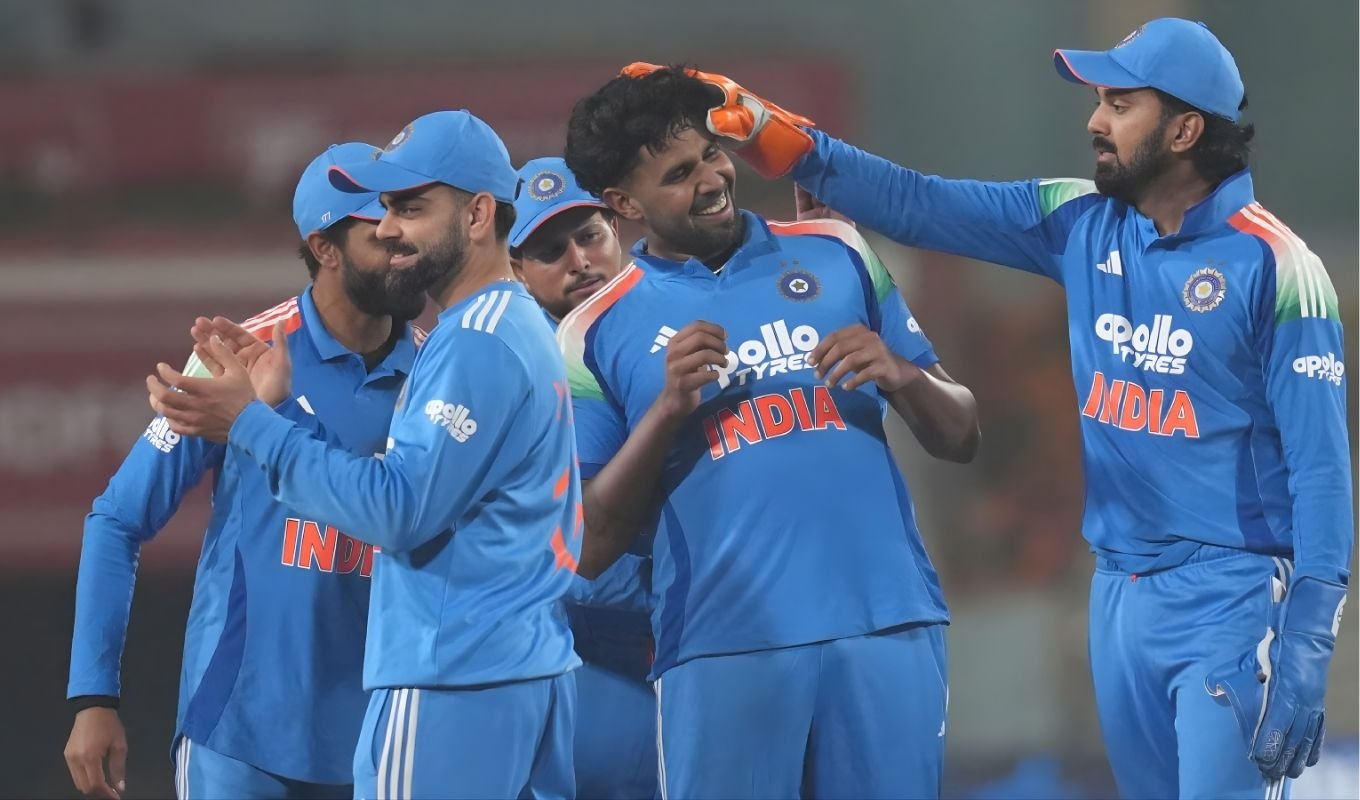
Harshit Rana has found himself at the centre of disciplinary action after a Level 1 breach of the ICC Code of Conduct in India’s opening ODI against South Africa at Ranchi. The fast bowler’s conduct, specifically a gesture aimed towards the dressing room following the dismissal of South African batter Dewald Brevis, was deemed by officials to have the potential to provoke an aggressive reaction.
The ICC’s disciplinary framework categorises offences by levels, with Level 1 being the least severe but still warranting action. Rana’s conduct fell under Article 2.5, which prohibits language, gestures, or actions that demean or could incite opponents. After reviewing the incident, match referee Richie Richardson imposed a formal reprimand along with one demerit point, marking Rana’s first offence in a two-year period.
On-field umpires Jayaraman Madanagopal and Sam Nogajski, alongside third umpire Rod Tucker and fourth umpire Rohan Pandit, were responsible for reporting the incident. The fast bowler accepted the charge, removing the need for a formal hearing and allowing the ICC to issue the sanction promptly.
Level 1 offences carry varying consequences, ranging from an official reprimand to fines up to half the match fee and one or two demerit points. The ICC maintains a strict policy regarding point accumulation: players receiving four or more demerit points within 24 months convert them into suspension points. Two suspension points lead to an automatic ban from one Test match, two ODIs, or two T20Is.
Rana’s gesture has sparked debate over sportsmanship and on-field behaviour in international cricket. Analysts have discussed the line between emotional celebration and inappropriate conduct, highlighting the pressure on players in high-intensity matches. Despite this, the ICC’s handling of the matter demonstrates its commitment to upholding the integrity of the sport while giving players a chance to learn from minor breaches.
For Rana, the reprimand serves as a cautionary reminder. It remains on his record for two years and will influence his approach in future international games. While the incident may fade from public memory, its implications for player discipline and the management of emotions on the field are long-lasting.