The attempted assassination of Sharif Osman Hadi has taken a gripping new twist as details emerge about the alleged escape of the shooter. What was once a localised act of violence has now evolved into a cross-border mystery involving political connections, covert travel, and intercepted communications.
Journalist Julkarnain Sayer has claimed that Faisal Karim Masud, accused of firing at Hadi with intent to kill, fled Bangladesh within hours of the incident. Faisal, a former student political leader known by the alias Daud Khan, reportedly crossed the Haluaghat border into India on the evening of 12 December, accompanied by motorcycle driver Alamgir Hossain.
Sources familiar with the investigation allege that Faisal did not act alone in planning his escape. Upon arrival in India, he was allegedly assisted by Masudur Rahman Biplob, the personal secretary of a senior political figure. This assistance reportedly included arranging an Indian mobile phone connection—an act that investigators say enabled Faisal to maintain contact while evading immediate capture.
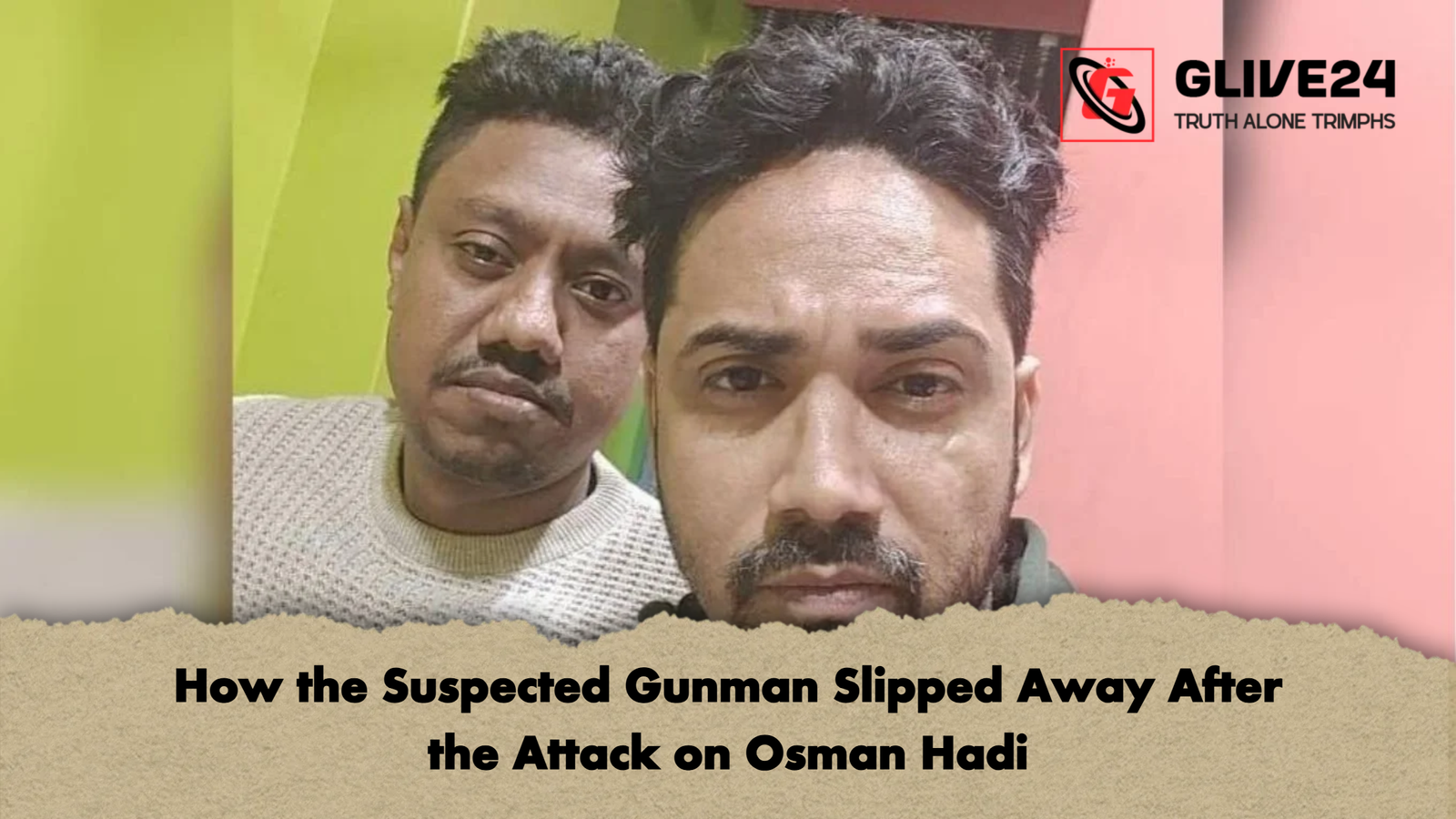
What stands out is Faisal’s behaviour after reaching Guwahati. Rather than maintaining complete secrecy, he allegedly sent selfies to trusted contacts using his new phone number. Intelligence agencies reportedly intercepted one such transmission, confirming that the image was taken in Assam’s capital city.
Observers say this suggests a sense of security on Faisal’s part, raising uncomfortable questions about whether he believes himself untouchable. Critics argue that such confidence reflects deeper systemic problems, where political influence and personal connections can undermine justice.
The attack itself shocked many, as Osman Hadi is known not just as a political candidate but also as a vocal organiser and spokesperson. His survival was described as miraculous, but the incident has left his supporters shaken. Many now fear that the escape of the alleged attacker could encourage further acts of violence.
Political analysts warn that allowing such cases to fade without resolution could set a dangerous precedent. The involvement of alleged facilitators has intensified calls for a transparent and independent investigation.
As the story unfolds, the public remains glued to each new detail. Will Faisal be apprehended? Will those accused of aiding him be held accountable? For now, the case remains open, but one thing is certain: this is no longer just an attack—it is a test of justice itself.