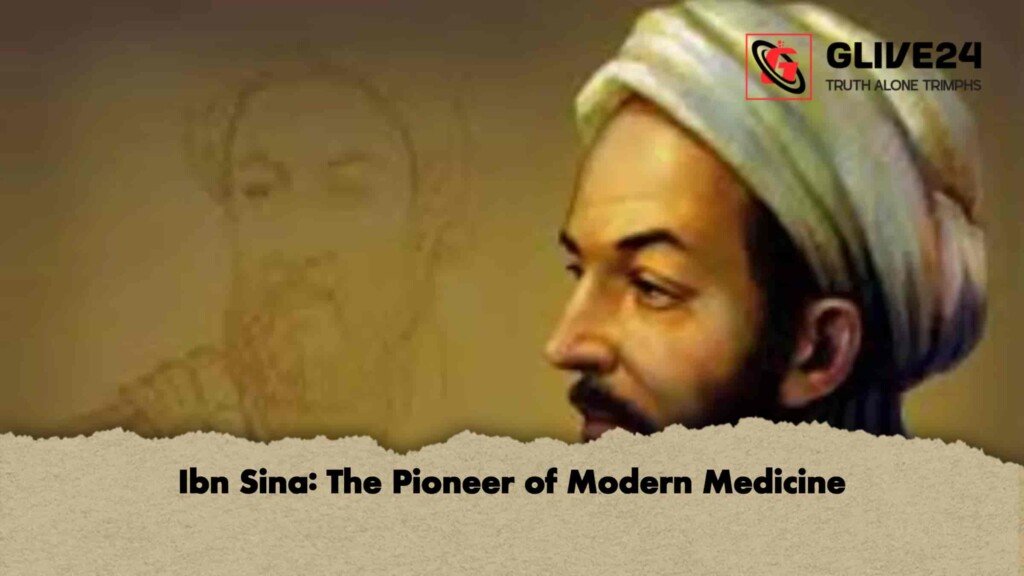
The history of human civilisation has been profoundly shaped by extraordinary polymaths whose intellect and contributions continue to guide humanity across generations. Within the annals of medical history, Abu Ali al-Husayn ibn Abdallah ibn Sina—widely known in the Western world as Avicenna—remains one of the most luminous figures.
Early Life and Exceptional Intellect
Ibn Sina was born on 22 August 980 CE. From an early age, he demonstrated an extraordinary aptitude for learning. By the age of ten, he had completely memorised the Holy Qur’an. Driven by an insatiable thirst for knowledge, he subsequently embarked on the study of almost all contemporary branches of science and humanities, including theology, Fiqh (Islamic jurisprudence), Tafsir (Qur’anic exegesis), mathematics, geometry, philosophy, and logic.
It is recorded that he gained access to a vast library, where he deeply studied and mastered the majority of the critically important texts preserved there. By the age of seventeen, he had achieved proficiency in almost all major branches of contemporary knowledge. By the time he was nineteen, he had established himself as an exceptional scholar in science, philosophy, history, economics, politics, literature, and medicine.
Masterpieces and Legacy
At the age of twenty-one, Ibn Sina authored an encyclopaedia titled Al-Majmu’at (The Compendium), which encompassed almost all fields of knowledge with the exception of mathematics. Throughout his lifetime, he wrote more than one hundred treatises covering a diverse range of subjects, including medicine, philosophy, theology, literature, physics, and mathematics.
Among his immortal contributions, the most celebrated is Al-Qanun fi al-Tibb (The Canon of Medicine). This monumental medical encyclopaedia served as a standard textbook in various medical institutions across Europe and Asia for nearly five centuries. Translated into numerous languages, including Latin, English, and Hebrew, the text brought about a revolutionary transformation in the medical world.
Divided into five volumes, Al-Qanun provides comprehensive discussions on human anatomy, pathology, diagnostics, pharmacology, and therapeutic methods. His detailed documentation regarding the causes, symptoms, and treatments of various complex diseases served as a reliable guide for physicians for centuries.
Medical and Philosophical Contributions
Ibn Sina was a pioneer of modern pharmacology and clinical medicine. He provided accurate descriptions of the structure of the human eye, correctly identified tuberculosis as an infectious disease, and offered early descriptions of meningitis. Furthermore, his observations regarding waterborne and soil-borne diseases were groundbreaking for his era.
One of his most significant contributions to medical science was the concept of holistic medicine, which advocates for treating a patient by comprehensively considering their physical, mental, and spiritual states. This approach laid an essential foundation for modern integrated healthcare systems.
In addition to his medical achievements, Ibn Sina achieved equal renown in philosophy. His other famous work, Kitab al-Shifa (The Book of Healing), served as a vast repository of knowledge spanning philosophy, logic, politics, economics, zoology, and botany. Although he studied the philosophy of Aristotle extensively, he expressed independent views on many subjects through the lens of his own reasoning and logic.
Enduring Influence
Ibn Sina dedicated his life to the pursuit of knowledge and human welfare, travelling from one region to another to open new horizons of understanding. His thoughts, research, and writings remain invaluable assets not only to the Islamic world but to the entirety of human civilisation.
This great physician, philosopher, and scientist passed away on 21 June 1037 CE. Nevertheless, his work, intellect, and legacy continue to be esteemed worldwide. Ibn Sina was not merely a physician; he was an ocean of knowledge whose enlightenment continues to illuminate the path of medical science and human civilisation.
Overview of Key Academic Dimensions
| Life Event / Work | Details |
| Date of Birth | 22 August 980 CE |
| Date of Death | 21 June 1037 CE |
| Major Medical Text | Al-Qanun fi al-Tibb (The Canon of Medicine) — 5 Volumes |
| Major Philosophical Text | Kitab al-Shifa (The Book of Healing) |
| Early Encyclopedia | Al-Majmu’at (Written at age 21) |
| Key Medical Discoveries | Structure of the eye; infectious nature of tuberculosis; early descriptions of meningitis; holistic medicine concepts |