The geographical distance of approximately 2,400 kilometres separating Bengaluru and New Chandigarh has been bridged by a shared cricketing narrative between India and Afghanistan. Statistically, Afghanistan have emerged as India’s most straightforward opponents in the longest format of the game. To date, the two nations have faced each other in exactly two Test matches, with the Indian team securing comprehensive victories by an innings in both encounters.
Historic Context and Test Milestones
Afghanistan officially made their debut in Test cricket against India in 2018 at the M. Chinnaswamy Stadium in Bengaluru. That inaugural match concluded within just two days, resulting in Afghanistan suffering a defeat by an innings and 262 runs. Eight years after that encounter, the newly constructed stadium in New Chandigarh hosted the latest single Test match between the two sides, which concluded within three days.
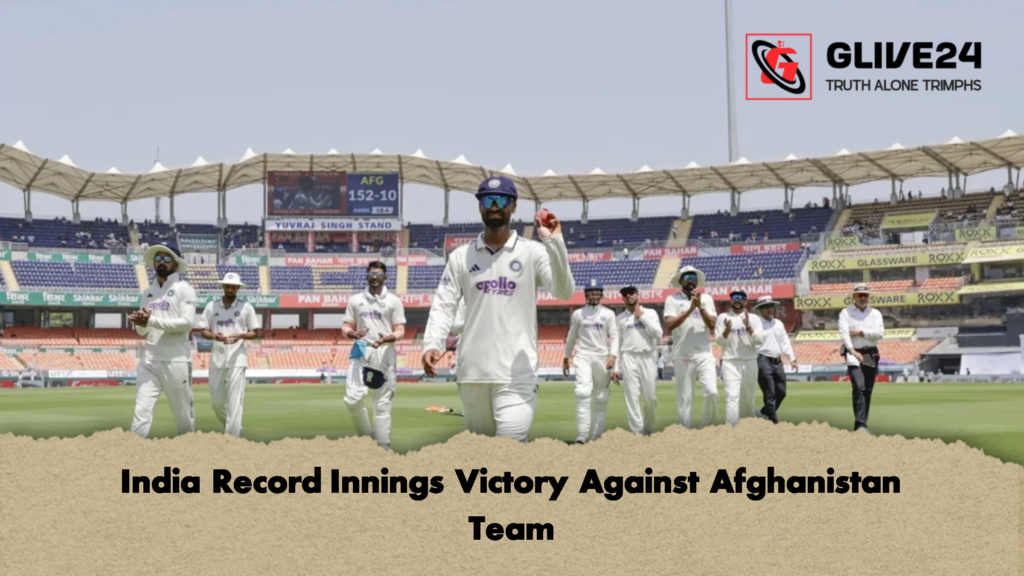
By defeating Afghanistan by an innings and 300 runs in New Chandigarh, India have established a new milestone for their largest-ever victory margin by an innings in Test cricket history. This performance surpasses their previous joint-highest winning margin recorded eight years prior in 2018, when they defeated the West Indies by an innings and 262 runs during a Test match held in Rajkot.
First Innings Collapse and Left-Arm Spin Dominance
On the third day of the solitary Test match in New Chandigarh, Afghanistan resumed their first innings from an overnight score of 113 runs for the loss of five wickets after 39.5 overs. However, India’s disciplined bowling attack quickly dismantled the remaining batting line-up. The touring side collapsed rapidly during the morning session, losing their final five wickets whilst adding only 39 runs to their total.
Afghanistan’s first innings concluded after 58.4 overs for a total of 152 runs, failing to withstand the pressure applied within the first 19 overs of the day’s play. Rahmat Shah provided the only notable resistance for the visitors, scoring a resilient 60 runs. The primary architect of Afghanistan’s batting downfall was Indian debutant and left-arm orthodox spinner Manav Suthar, who claimed exceptional bowling figures of six wickets for 33 runs.
Follow-On Decisions and Second Innings Capitulation
Possessing a massive first-innings lead of 412 runs, Indian captain Shubman Gill chose not to bat a second time and instead enforced the follow-on, compelling Afghanistan to bat again immediately. The visitors experienced an even greater batting capitulation during their second turn at the crease. Afghanistan’s second innings lasted only 35.5 overs before they were completely bowled out for a meagre 112 runs.
Opening batsman Sediqullah Atal top-scored for the touring side in the second innings with a modest contribution of 42 runs, as no other batsmen managed to build a significant partnership against the hosts. Manav Suthar was officially named the player of the match for his outstanding all-round contributions on his Test debut. In addition to scoring 28 runs during India’s solitary batting turn, Suthar supplemented his first-innings haul of six wickets by capturing one more wicket in the second innings.
Match Fundamentals and Upcoming White-Ball Schedule
Earlier in the match, India had won the toss and elected to bat first, eventually declaring their first innings at a formidable total of 564 runs for the loss of eight wickets. The foundation of this massive score was laid by centuries from captain Shubman Gill, who scored 126 runs, and KL Rahul, who contributed exactly 100 runs. Despite the heavy run-scoring by the hosts, Afghan pace bowler Mohammad Saleem achieved a notable personal milestone by taking six wickets.
Following the conclusion of this standalone Test match, the bilateral engagement between India and Afghanistan will transition into the white-ball format. The two Asian nations are scheduled to compete in a three-match One Day International (ODI) series. The three 50-over fixtures are scheduled to take place on 13 June, 17 June, and 20 June respectively.